Kelly Konrad
Ornamenting Princely Aspiration: An Extended Analysis of the Early Empire Style Ornamentation within Paris’s Hôtel de Beauharnais
The Hôtel de Beauharnais, the subject and source material of my thesis, stands at 78 rue de Lille in Paris’s seventh arrondissement. Its historic early Empire style interiors date to the early nineteenth century when the hôtel served as the private residence of Eugène de Beauharnais, stepson of the Emperor Napoleon Bonaparte. My analysis focuses upon the decoration and ornamentation of five rooms: Le salon vert, La bibliothèque, Le salon des quatre saisons, Le salon de musique, and La chamber à coucher, that is, The Green Drawing Room, The Library, The Salon of the Four Seasons, The Music Room, and The Ceremonial Bedroom.
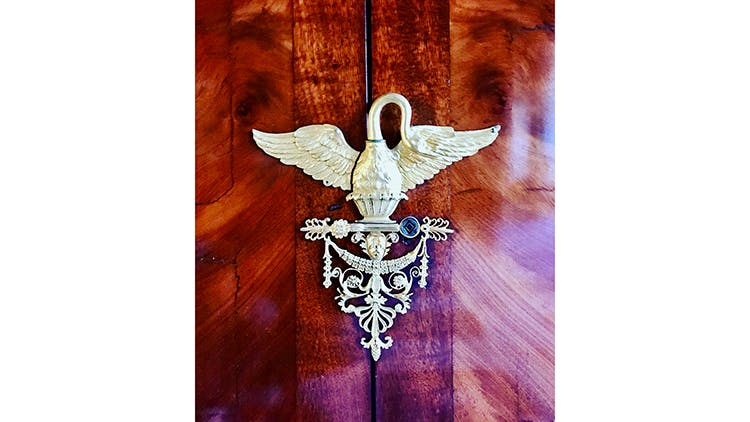
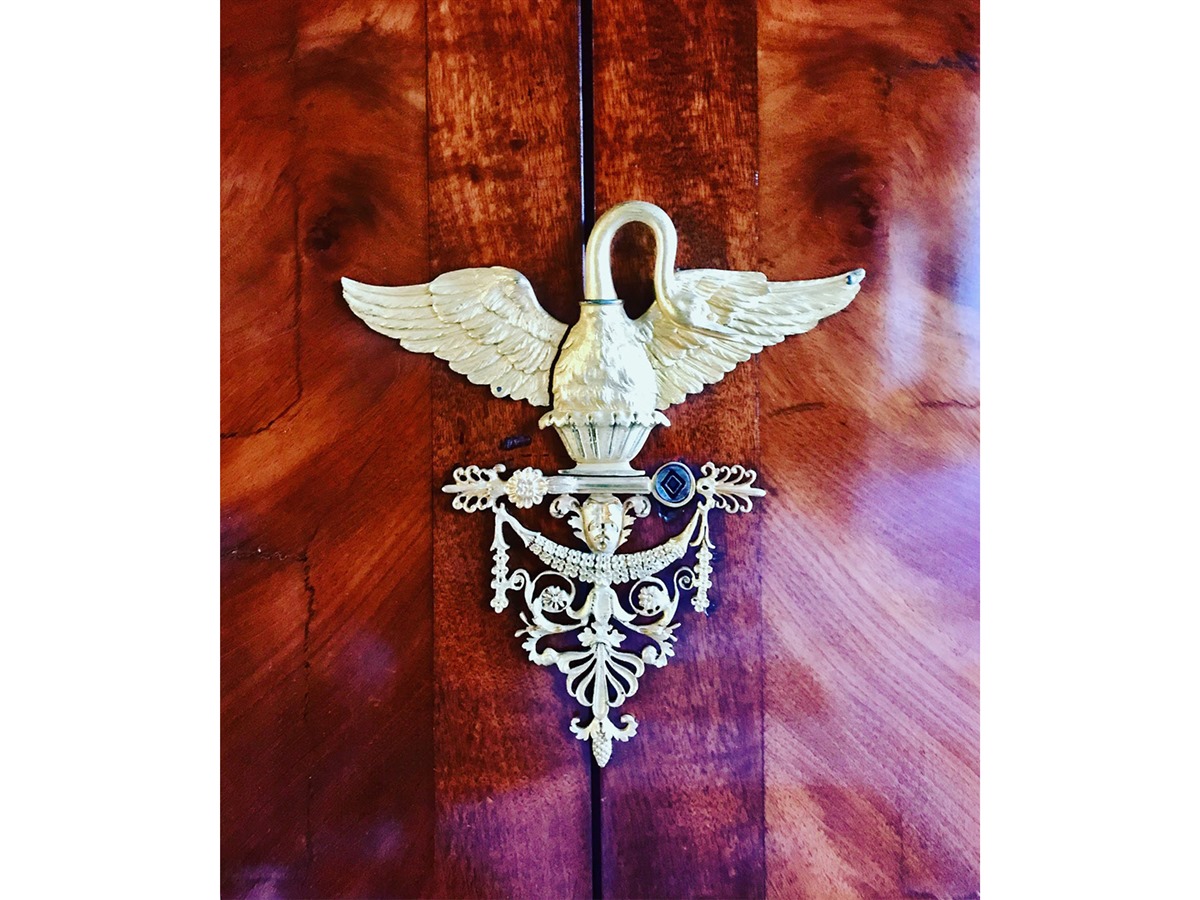
In my formal analysis, I determine instances of inspiration and quotation from late eighteenth- and early nineteenth-century sources of ornament, both published and unpublished, with particular emphasis upon the contemporary publications and drawings of the architects Charles Percier and Pierre François Léonard Fontaine. Furthermore, in the ornamentation of each room, I perceive allusions to three historical epochs: the ancien regime, the brief Republic that followed the French Revolution, and Napoleon’s burgeoning Empire.
In my iconographic analysis, I detail the multiple and various ways in which the ornamentation of the Hôtel de Beauharnais presents Eugène de Beauharnais as the heir apparent to Napoleon. In my social analysis, I examine the circumstances surrounding the commission of Eugène’s early Empire style interiors, arguing for the involvement of his mother Josephine Bonaparte. Formal, iconographic, and social in its scope, my extended ornamental analysis seeks to elucidate the historic interiors, at once iconic and enigmatic, of Paris’s historic Hôtel de Beauharnais.
Kelly Konrad
Ornamenting Princely Aspiration: An Extended Analysis of the Early Empire Style Ornamentation within Paris’s Hôtel de Beauharnais