Paul Rand
In his 50-year career, graphic designer Paul Rand helped reinvent the grammar of American design, bringing to advertising, layout, and logos a precise yet heartfelt kind of modernism that would influence generations of designers. “Simplicity is not the goal,” Rand said. “It is the by-product of a good idea and modest expectations.”
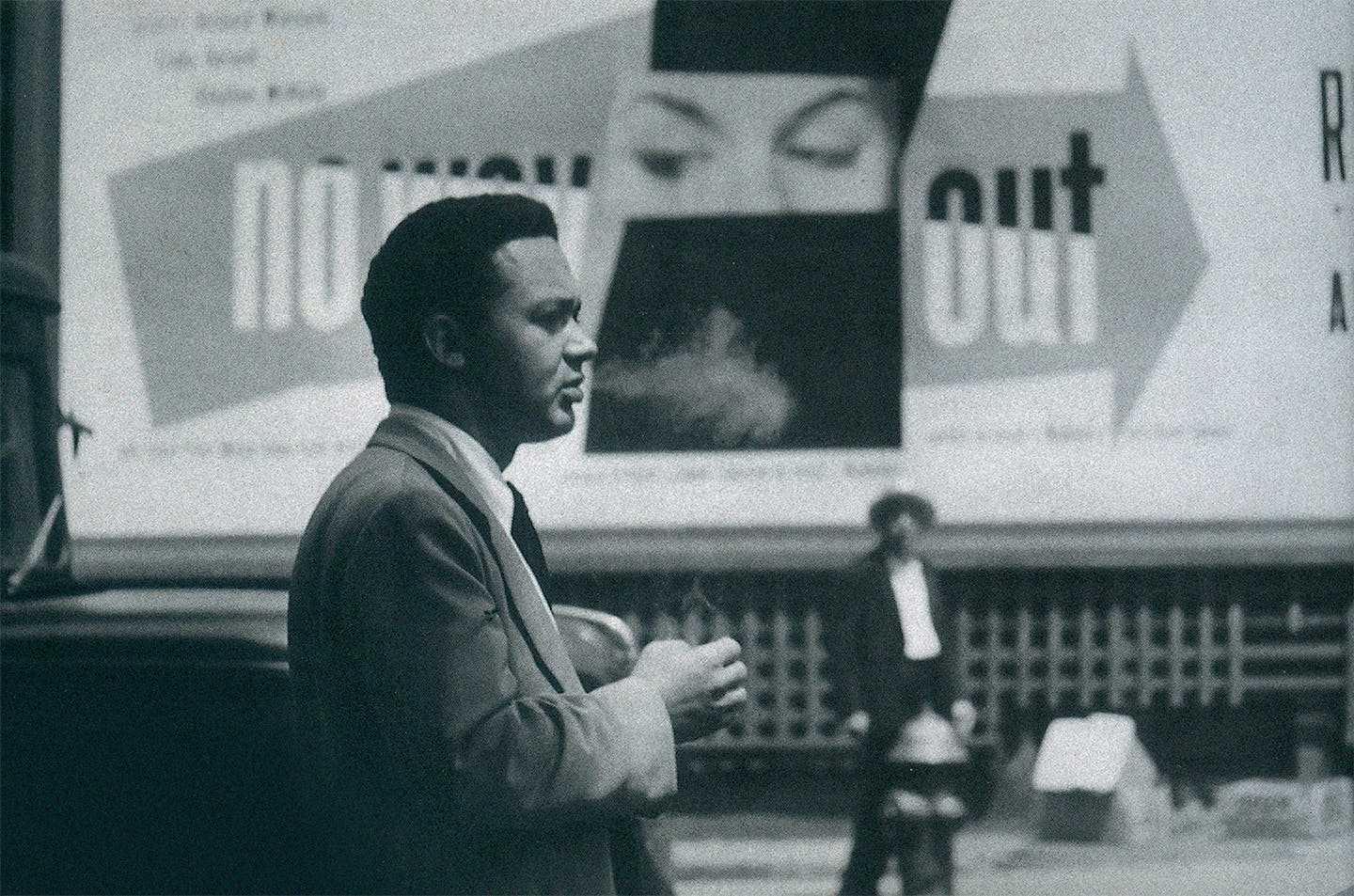
Born Peretz Rosenbaum in Brooklyn in 1914, Rand began his design career painting signs for his family’s grocery store. Against his father’s wishes, he studied advertising design at Parsons, absorbing the modernist influences of Bauhaus visionary László Moholy-Nagy and German Sachplakat ads — which he soon transformed into a distinctly American look.
By his mid-20s, Rand had changed his name to avoid anti-Semitism and had won renown for his inventive magazine layouts and daring covers for the antifascist magazine Direction. He even earned the praise of his hero Moholy-Nagy, who hailed him as “an idealist and a realist, using the language of the poet and businessman.”
Rand is credited with bringing the aesthetic of and grid system used in Swiss design to the United States in the postwar period. He taught at institutions including Yale while applying his avant-garde principles for a growing roster of major American companies, including IBM, ABC, and UPS. Rand was also known for his sense of whimsy, evident in his humorous, now iconic IBM rebus. But perhaps Rand’s most lasting contribution is the wealth of writing he left behind, including three essential treatises on graphic design: Thoughts on Design, A Designer’s Art, and Design, Form, and Chaos.
Although he died in 1996, Rand is still remembered as an artist, theorist, and teacher — and one of the founding fathers of modernist American graphic design.
To learn more about Rand, visit paul-rand.com.
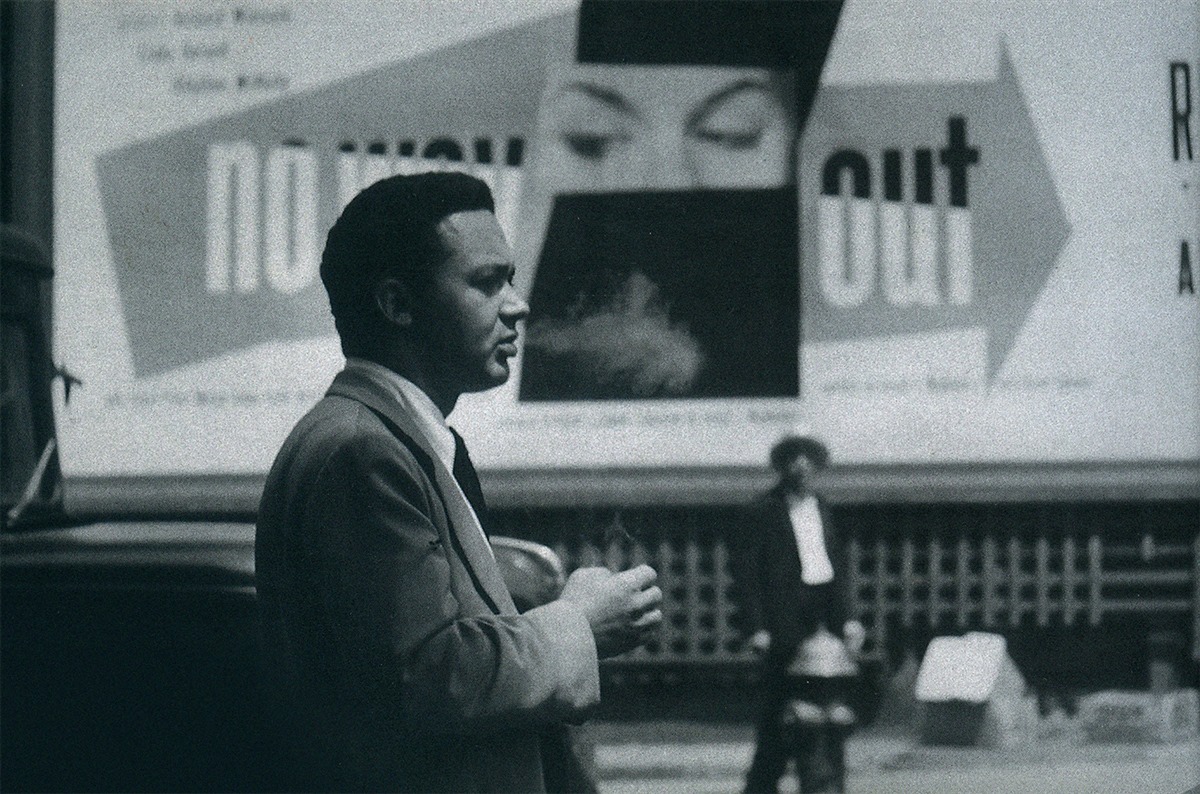
Rand photographed in front of his poster design for the 1950 film <i>No Way Out</i>.

The iconic rebus logotype Rand created for IBM in 1981.
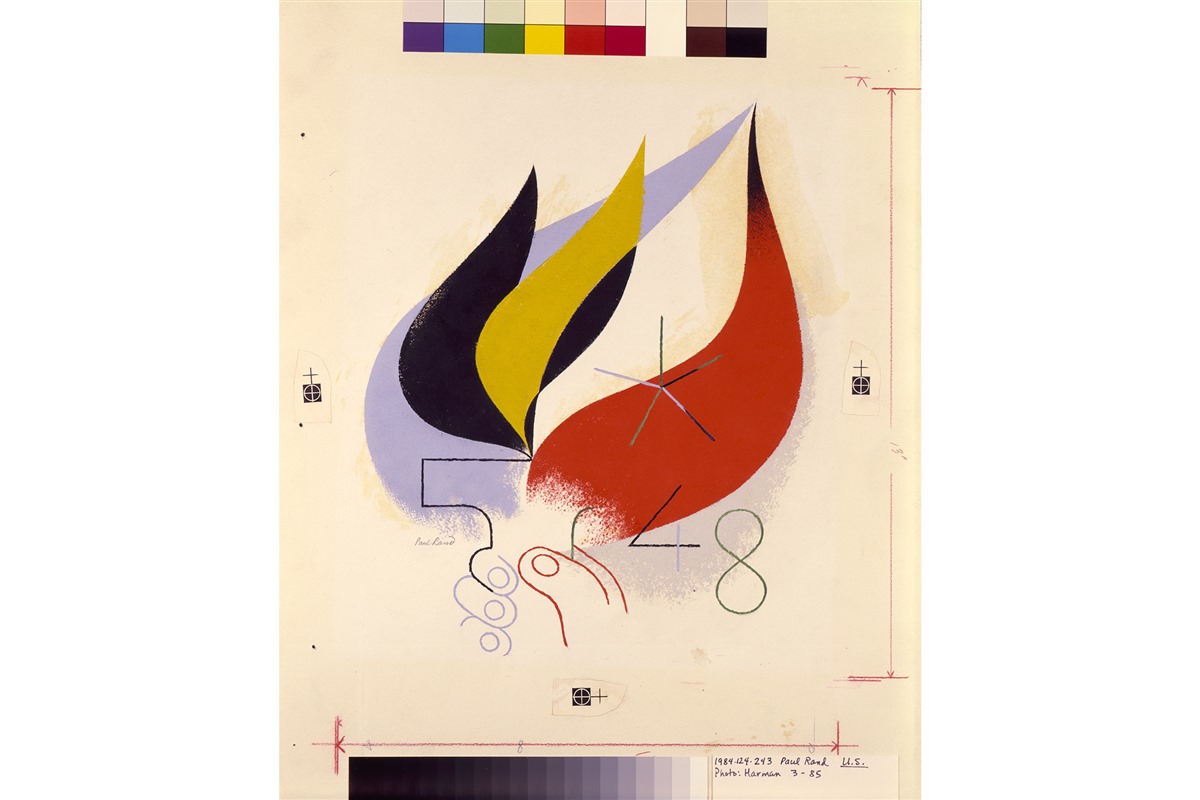
An original gouache by Rand — titled <i>U.S.</i> (1945), from the United Nations series — commissioned by the Container Corporation of America. Photo courtesy of Art Resource. Used permission of The Rand Trust.