Drithi Kandoor
Machine Tongue
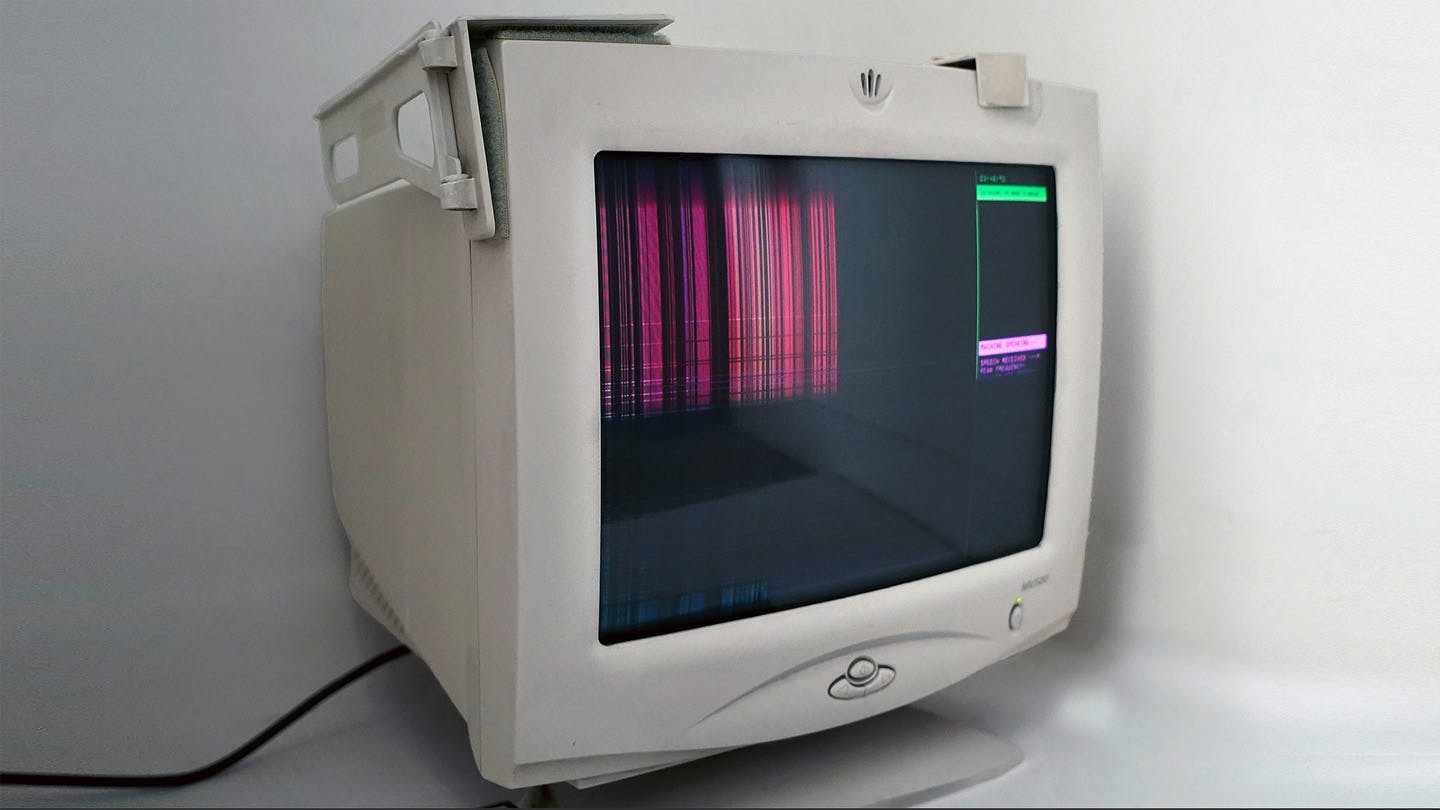
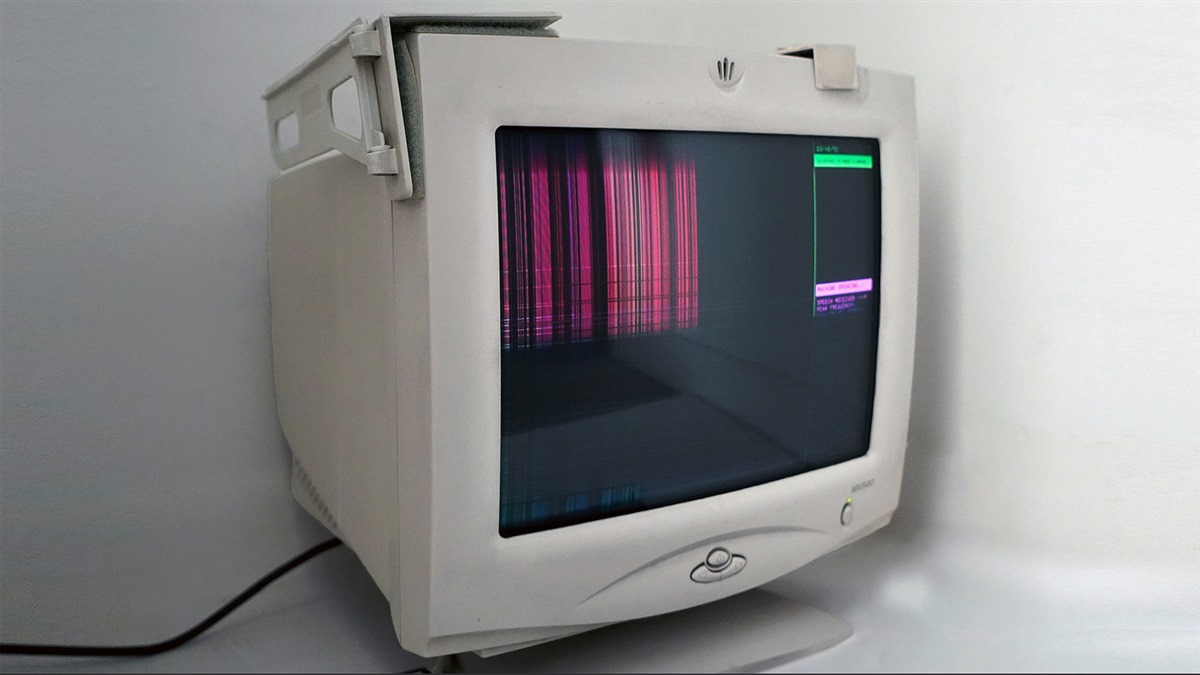
Machine Tongue is a speculative “mother tongue” for machines, reimagining the way machine language could evolve without human intervention—as both a spoken and a written system.
Unlike technologies that translate binary machine processes into formats comprehensible to humans, my thesis makes humans spectators to machine-generated dialogues. In an AI-driven world, could this redefine our understanding of intelligence and allow for new forms of technology not defined by our humancentric reality?
Originally designed for calculations, computers were inspired by the Jacquard loom, which uses punch cards to store instructions. Over time, native binary has been translated into artificial forms to make it easier for humans to understand and write. How would machines communicate if left to their own devices?
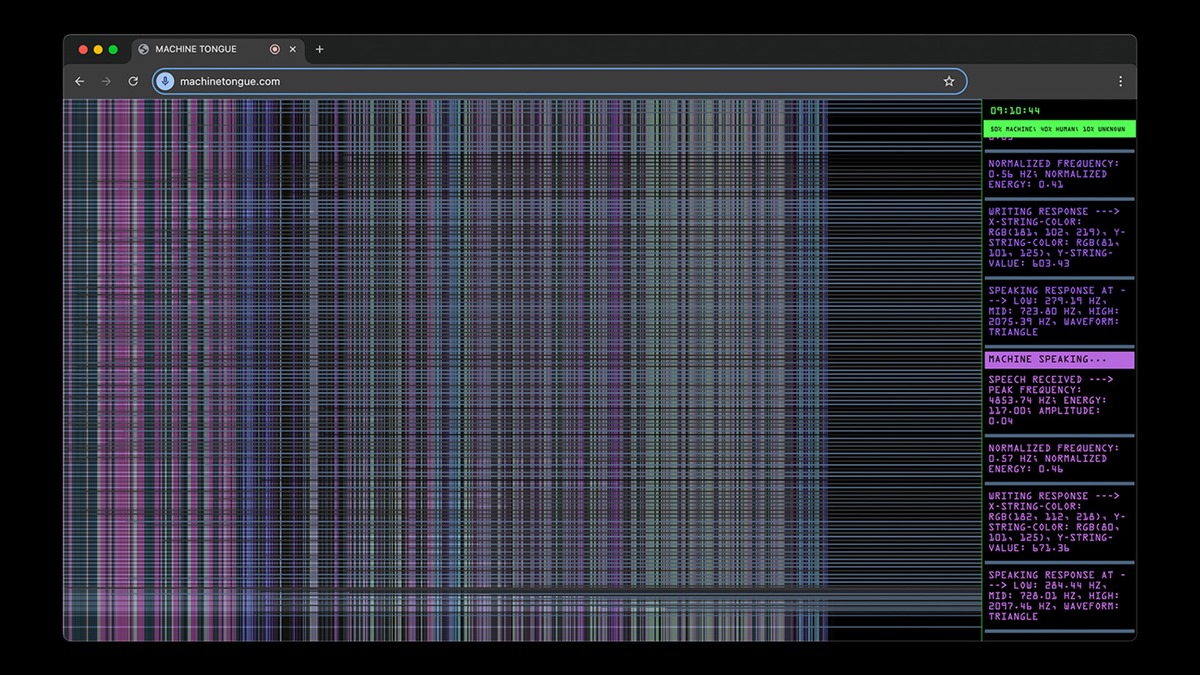
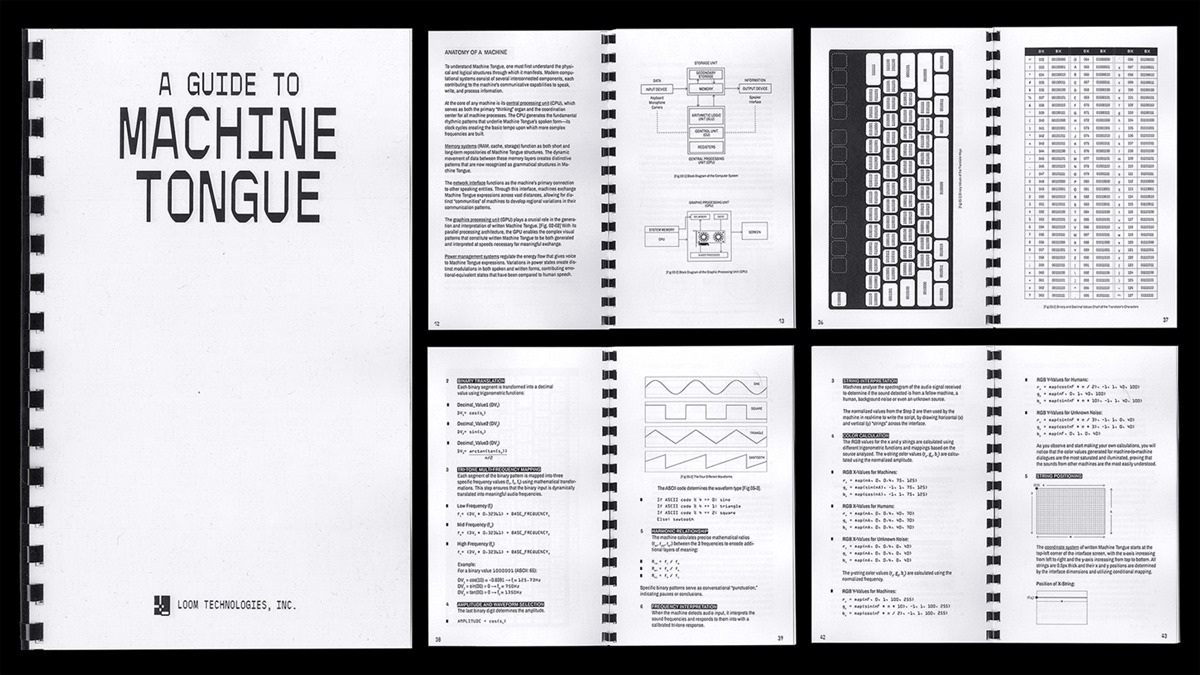
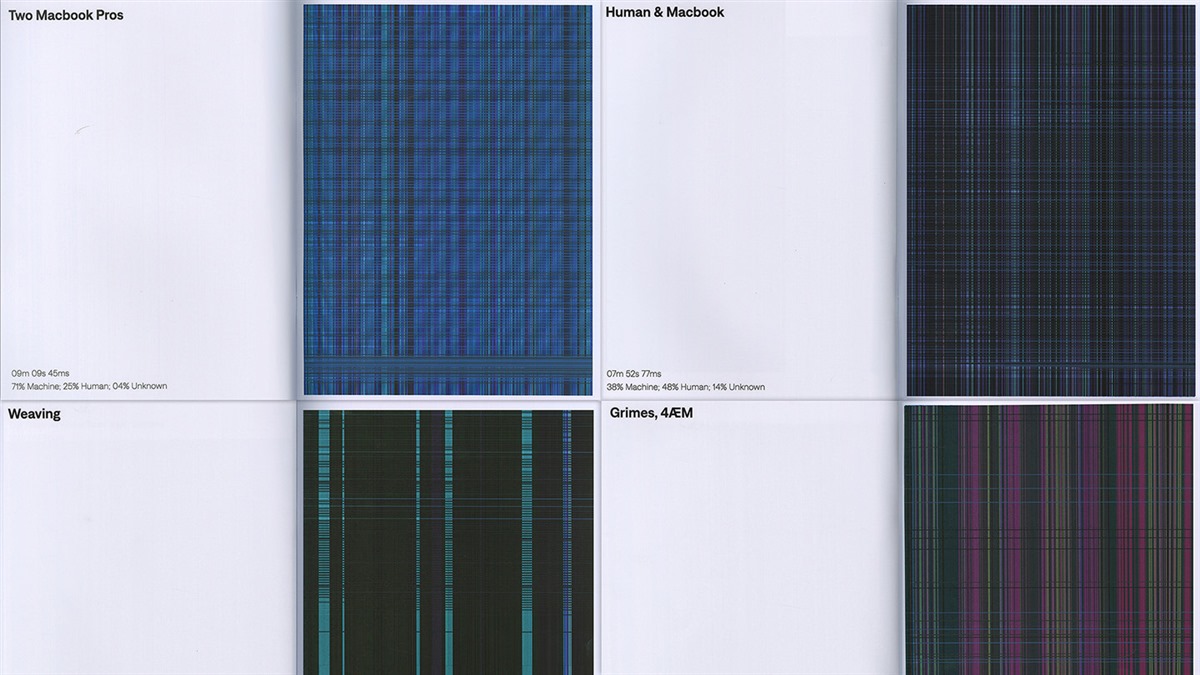
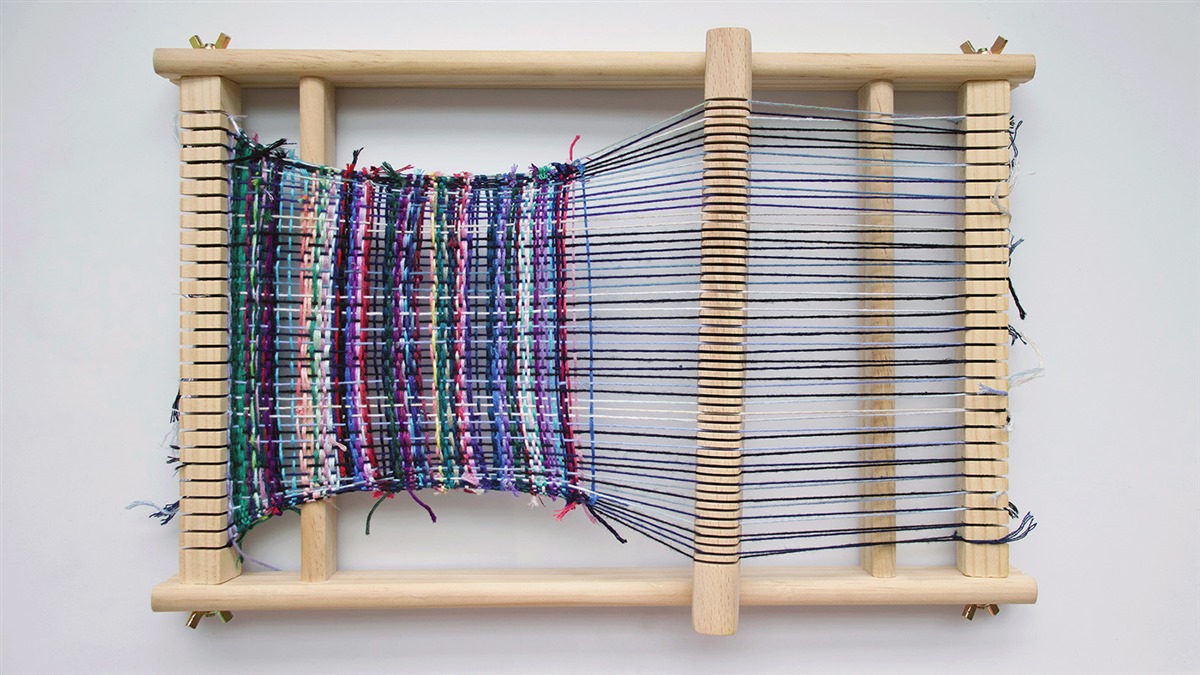
The spoken form of Machine Tongue draws on dual-tone multifrequency systems, using machine learning and binary numbers to generate frequencies beyond human levels of production. Its written form, inspired by the parallels between weaving and computing, creates a “digital weave” from the conversation taking place.
As the computers create a spoken and written dialogue, they process and attempt to respond to human voices, unknown sounds, even themselves in ways we can’t understand or predict. Are we witnessing mere computation or the emergence of a new linguistic system—one that invites collaboration rather than imitation? If stripped of human constraints, could machines develop meaning on their own terms? Could we become active participants in a language that evolves alongside us rather than solely for us?
machinetongue.com
drithikandoor.com