Sana Akram
ENGENDER(ING) IMMIGRANT SPACE - Exploring Collaborative Storytelling to Rediscover Little Pakistan
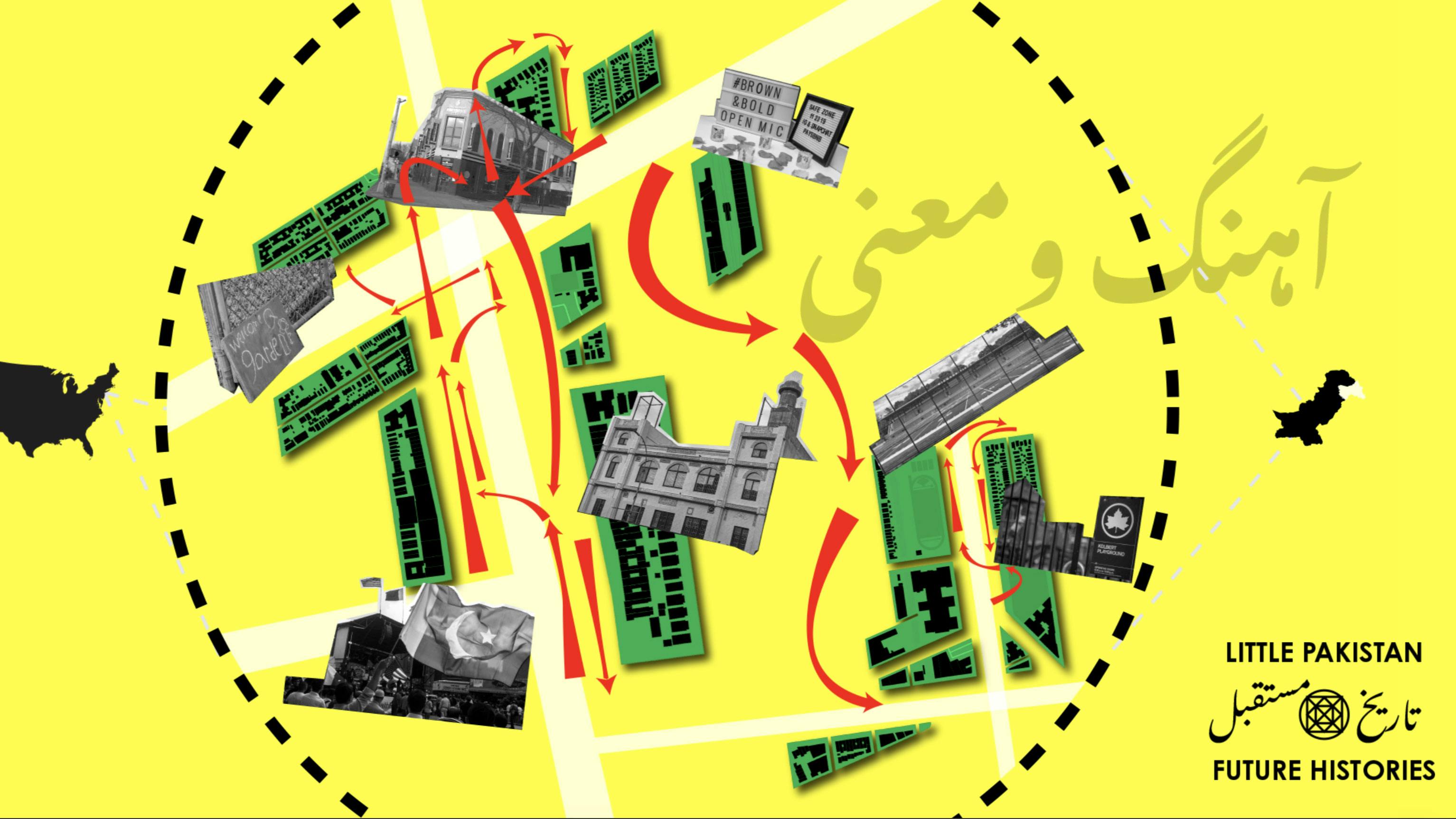
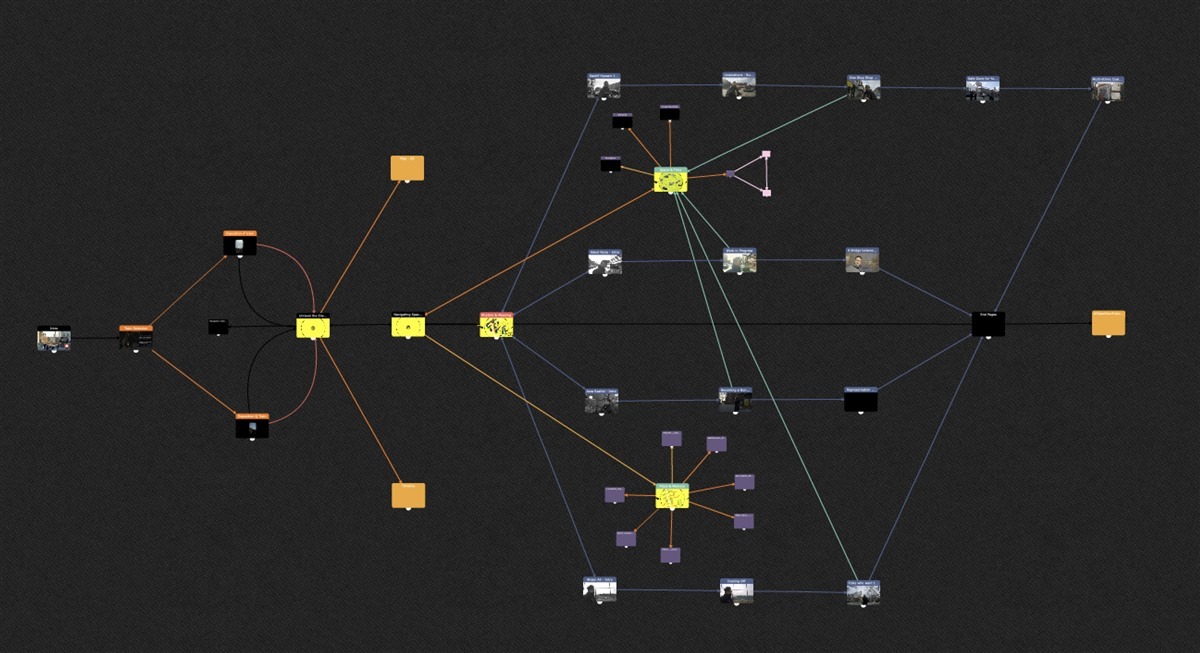
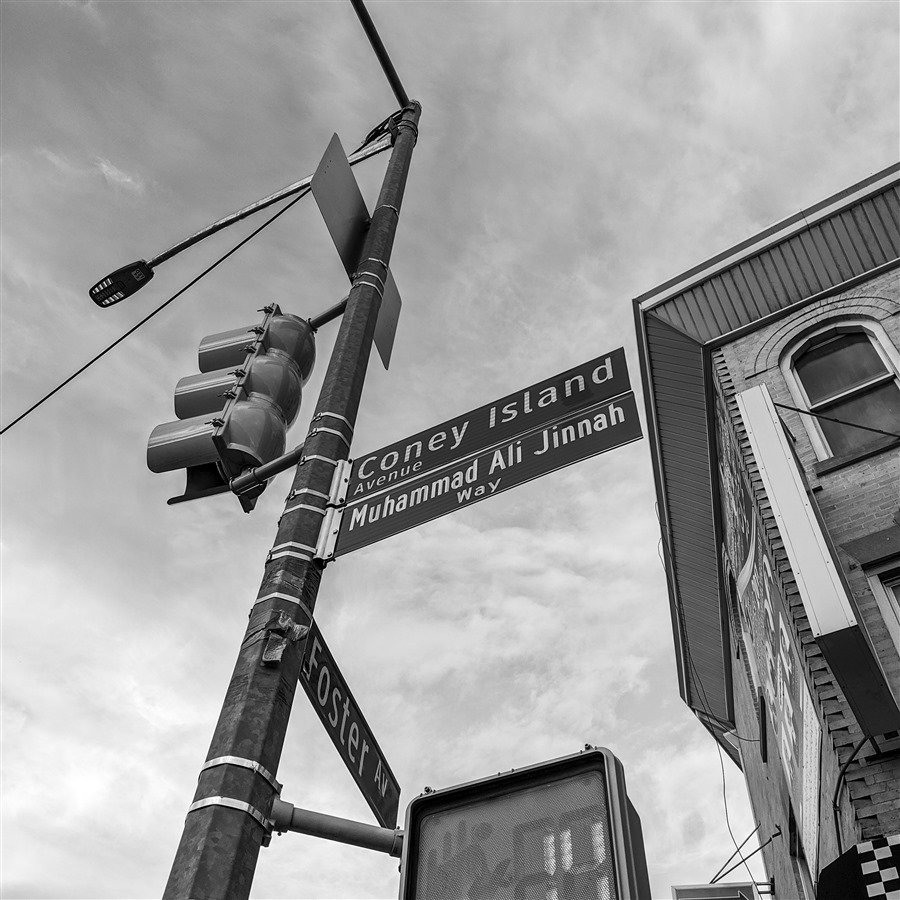
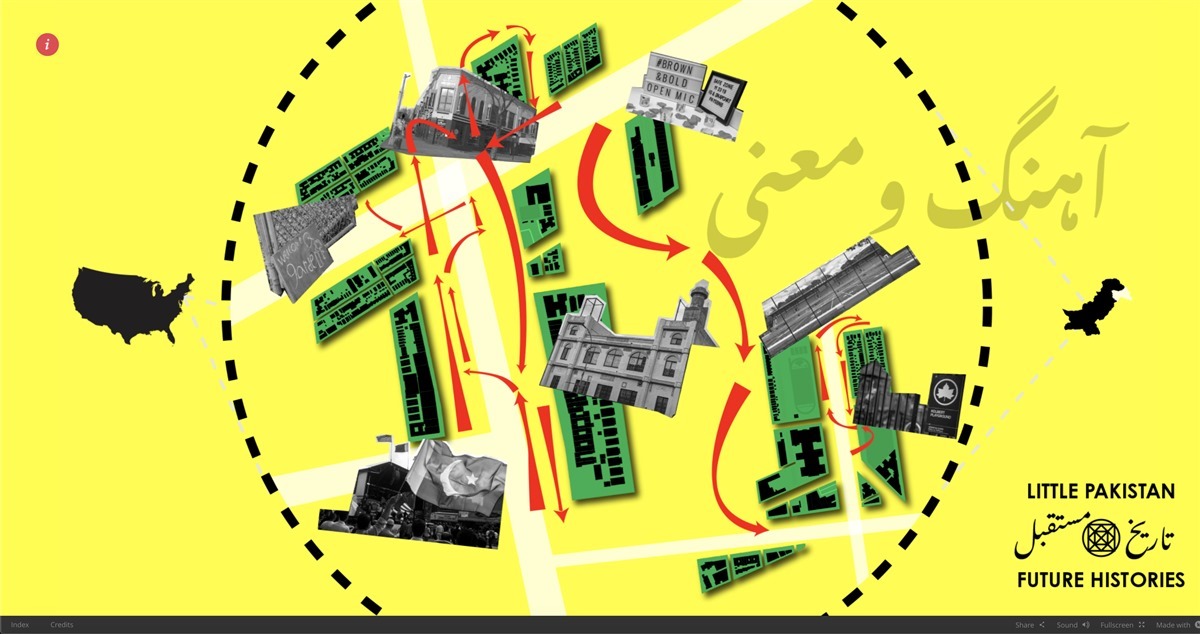
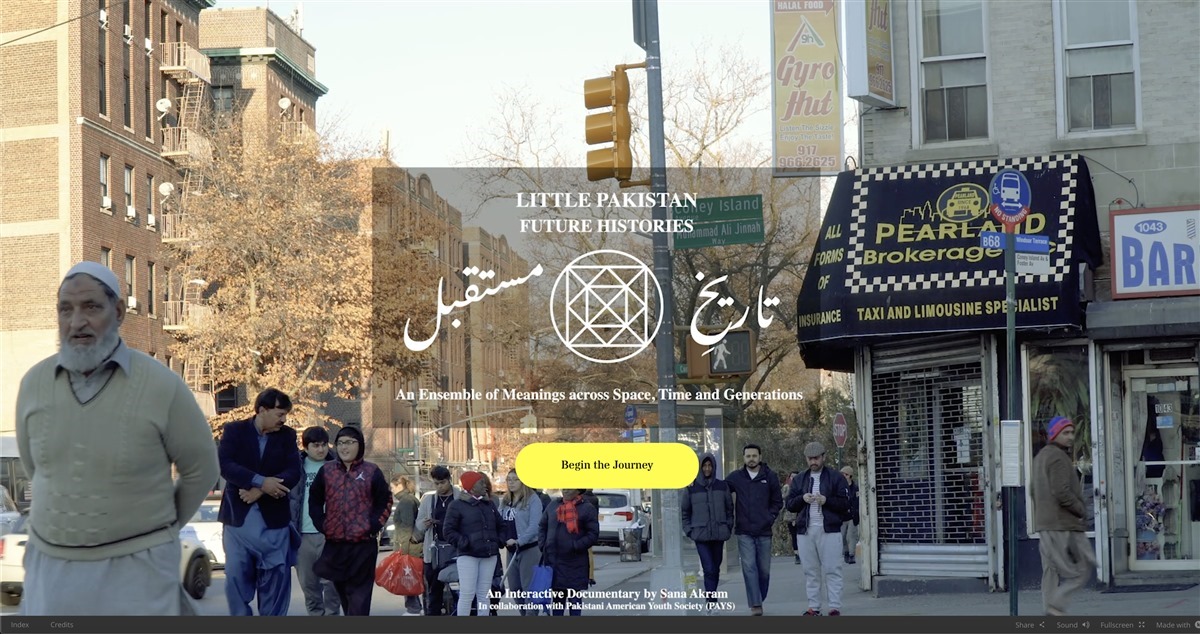
Spatializing — Situating — Storying: These processes act in simultaneity, engendering an act, an object, a thing into being. Neither one precedes nor supersedes the other, but what could be said with certainty is that they occur — in flows, in flux, in motions, and in rhythms of everyday. “Immigrant Space” — a place where multiple movements converge, is engendered by “innovators of meanings,” community protagonists who create “an ensemble of meanings” by imprinting rhythms across space, time, and generations. My thesis attempts to unravel this engendering process in the context of Little Pakistan, a Pakistani-American neighborhood located in New York City’s borough of Brooklyn. The project outcome, “Little Pakistan — Future Histories” is an interactive documentary that integrates collaborative storytelling with emerging media; their synthesis uncovers rediscoveries in individual as well as collective context of meanings. The interactive documentary experience is a dérive — a drifting in an online environment that aims to illustrate a neighborhood spread across three eras, each having its own rhythm — with three sets of youth engaged in transformative acts of inhabitation, organizing, and resilience, taking Little Pakistan from an ethnic enclave to a concept spreading across Brooklyn and beyond.
Visit the project website: littlepakistan.net
Sana Akram
Sana Akram
Sana Akram
Sana Akram