David Maria d'Olimpio
Let the Tide in
The latest report from the New York City Panel on Climate Change names compounding flood threats as one of the fundamental challenges the city faces today. Currently proposed resilience efforts lack the flexibility needed to respond to this challenge, as they are based on the rigid, lot-based framework inherited from the Commissioners' Plan of 1811, the original design for much of the city. Resulting projects, such as seawalls proposed by the Army Corps of Engineers, damage ecological systems and cultural relationships between residents and their waterfront. New tools for reimagining a resilient city are long overdue.
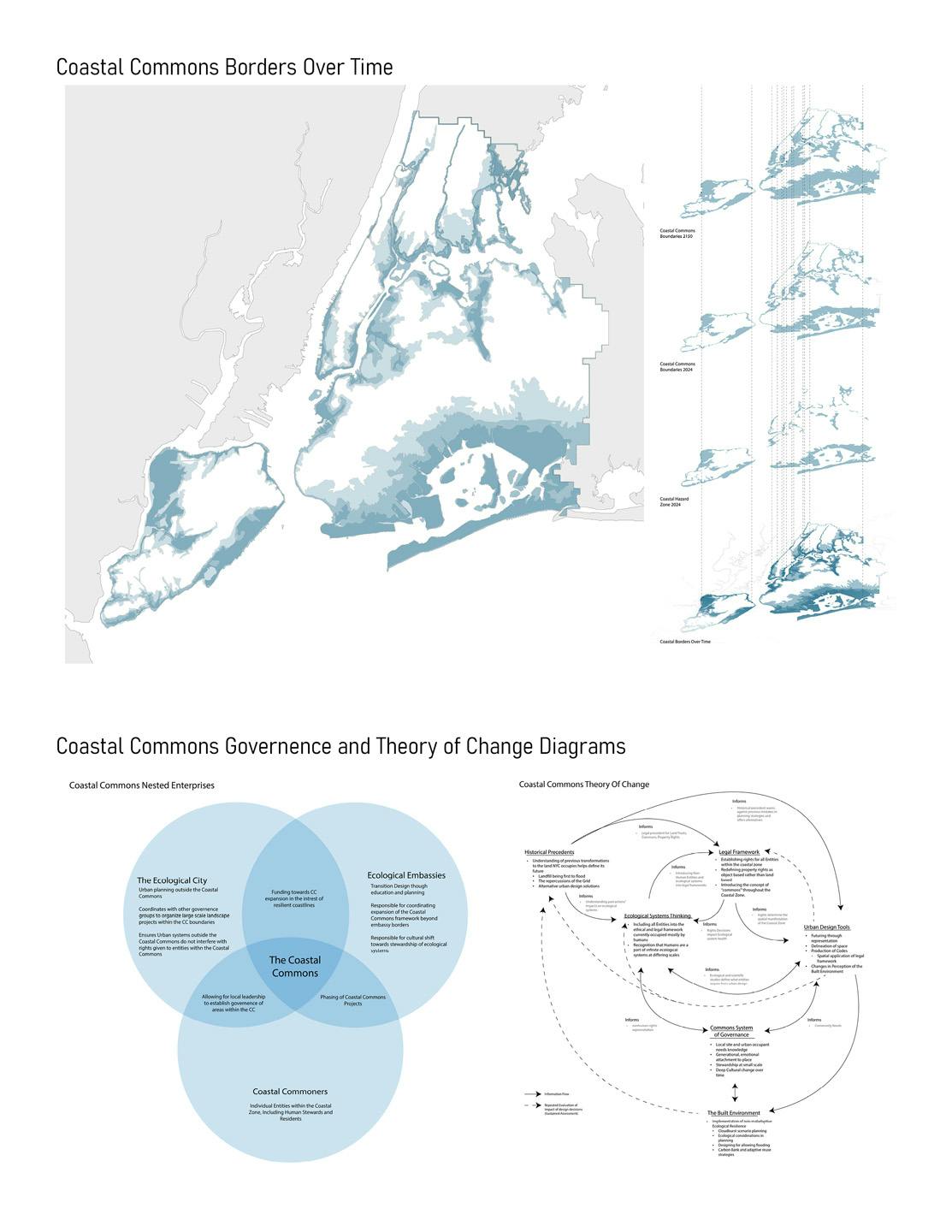
In my thesis, I explore a flexible but unified framework to promote coastal resilience in NYC by integrating nature-based rights with urban design principles. The rights-based framework that emerges is to be implemented in a newly zoned coastal area of New York City called the Coastal Commons. The use of nature-based rights as an urban development tool ensures that all resilience-focused action is informed by respect for both human and non-human entities and for the uniqueness of each part of the city’s coastline. The framework enables the city to evolve alongside its changing environment, allowing for a resilient, systems-based adaptation of the vulnerable coastline while maintaining relationships between residents and varied coastal ecologies.
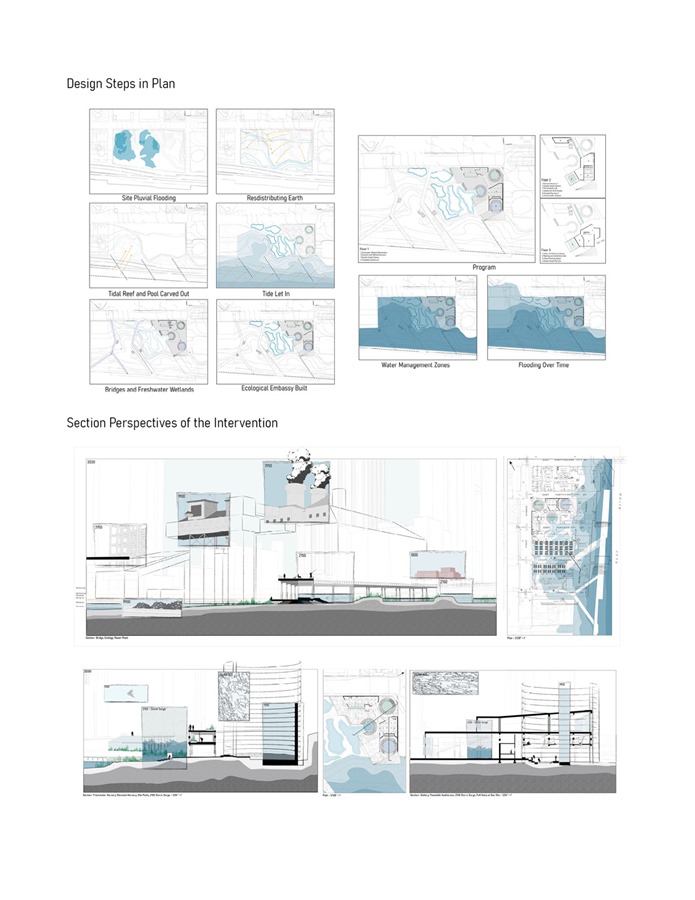
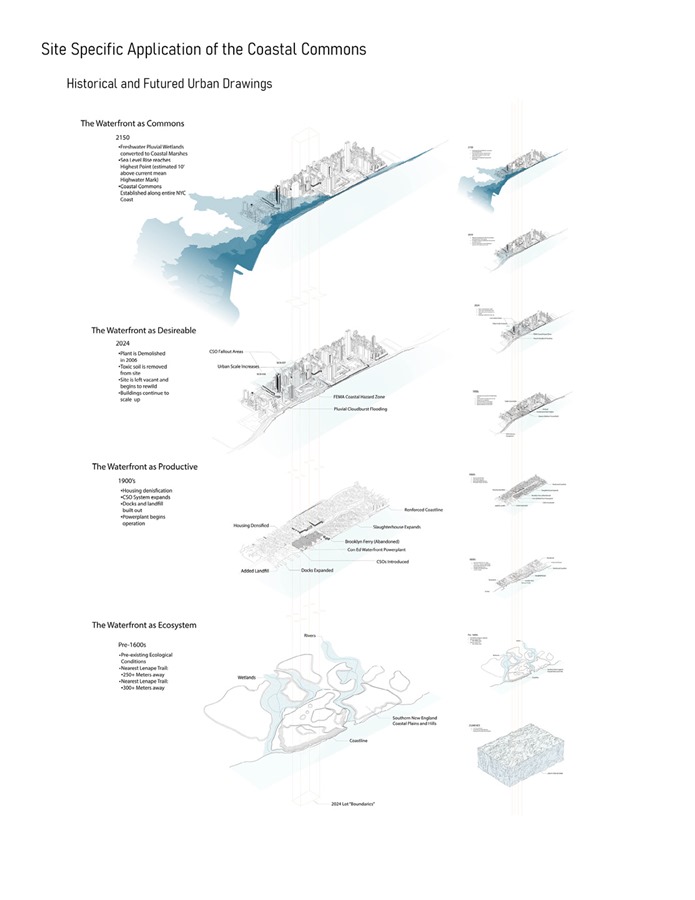
As a design proposal, the Coastal Commons framework would allow designers to imagine alternative futures in which urban resilience is integrated with the ecology of the coastline. As an urban design tool, the Coastal Commons would allow an resilient, ecologically sensitive city to emerge at the edges of the urban coastline by encouraging the development and application of nature-based solutions. It serves as a radical counterproposal to current resilience plans and would allow the city to sustainably, equitably, and proactively evolve and grow alongside rising tides.
In my thesis, I explore a flexible but unified framework to promote coastal resilience in NYC by integrating nature-based rights with urban design principles. The rights-based framework that emerges is to be implemented in a newly zoned coastal area of New York City called the Coastal Commons. The use of nature-based rights as an urban development tool ensures that all resilience-focused action is informed by respect for both human and non-human entities and for the uniqueness of each part of the city’s coastline. The framework enables the city to evolve alongside its changing environment, allowing for a resilient, systems-based adaptation of the vulnerable coastline while maintaining relationships between residents and varied coastal ecologies.
As a design proposal, the Coastal Commons framework would allow designers to imagine alternative futures in which urban resilience is integrated with the ecology of the coastline. As an urban design tool, the Coastal Commons would allow an resilient, ecologically sensitive city to emerge at the edges of the urban coastline by encouraging the development and application of nature-based solutions. It serves as a radical counterproposal to current resilience plans and would allow the city to sustainably, equitably, and proactively evolve and grow alongside rising tides.
David Maria d'Olimpio