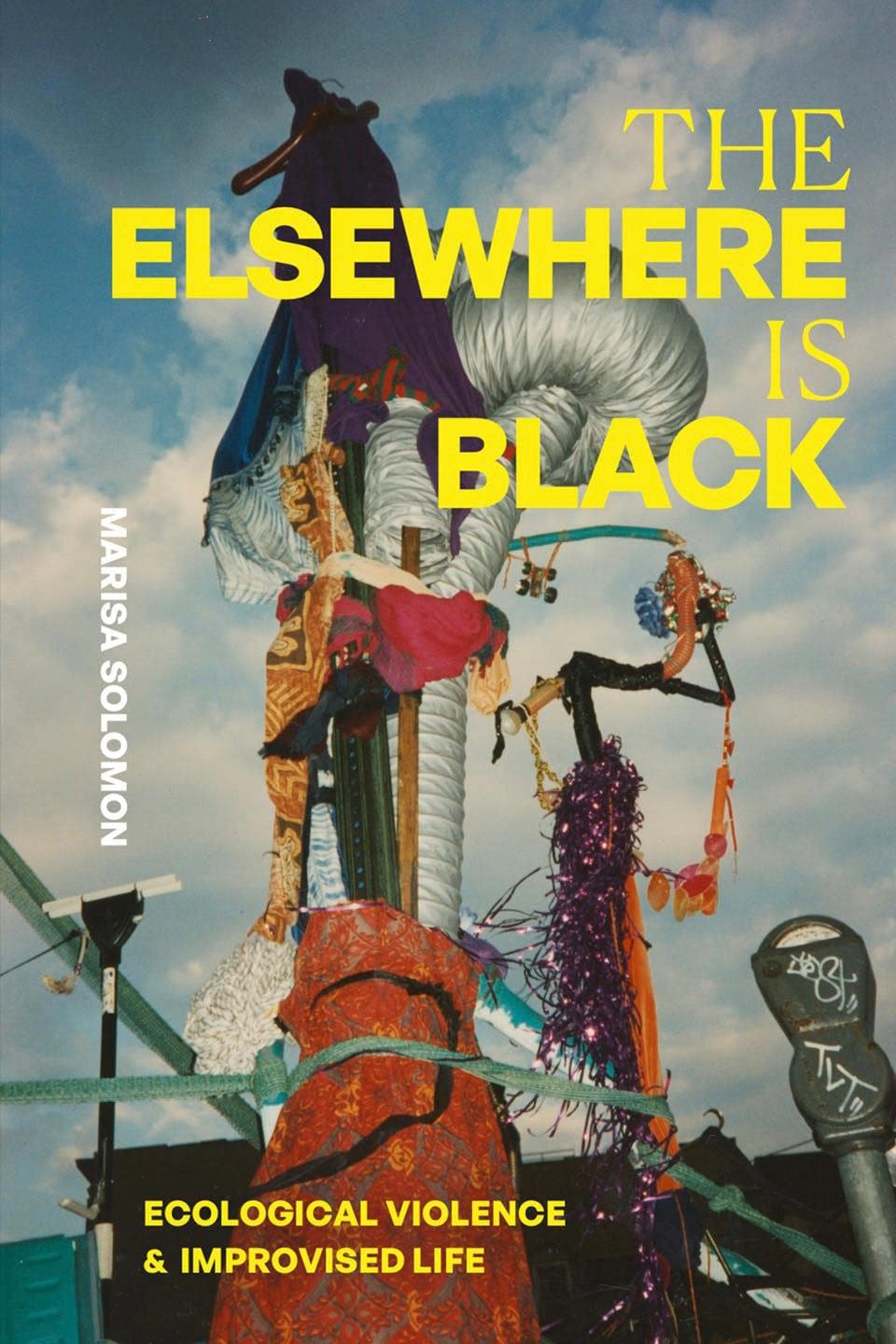
The Elsewhere Is Black: Ecological Violence and Improvised Life
In The Elsewhere Is Black, Marisa Solomon examines waste as part of poor Black people’s lives and a product of settler colonial racial capitalism. Tracing the flow of trash and waste across Black spaces, from Brooklyn’s historically Black Bedford-Stuyvesant to the post-plantation towns of Virginia’s Tidewater, Solomon contends that waste infrastructures concentrate environmental risk in an elsewhere that is routinely Black. Solomon emphasizes that ecological violence is a form of racialized heteropatriarchal environmental control that upholds whiteness as a propertied way of life and criminalizes Black survival. As she points to acute sites of toxicity, Solomon theorizes the relationship between the devaluation of land and Black and more-than-human life to reveal how the risks of poisoning, police violence, dispossession, and poverty hold Black life captive. Locating Black survival as a site from which alternative ecopolitical imaginations spring, she explores the way people live and dream amid the daily accumulation of waste. Solomon opens up new ecological horizons to ask: What forms of environmentalism emerge when Black un/freedom has never been distant from waste?