NSSR - Layout Settings
Hero Media Image

Economics

Contact Us

General Admission Contact
The New School for Social Research
Office of Admission
72 Fifth Avenue, 1st floor
New York, NY 10011
212.229.5600 or 800.523.5411
SocialResearchAdmit@newschool.edu

Admissions Liaison
EconLiaison@newschool.edu

Department of Economics
6 East 16th Street, room 1124A
New York, NY 10003
212.229.5717 x3044
Fax: 212.229.5724

Mailing Address
79 Fifth Avenue, room 1124A
New York, NY 10003

Chair
Paulo dos Santos

Senior Secretary
Silvina Palacio

Student Advisor
Leah Masci

2026-27 Economics Student Handbook (coming soon)

The Economics department at The New School for Social Research (NSSR) is a globally recognized leader in critical and pluralist scholarship in economics. We are one of a small number of PhD-granting programs offering technically rigorous training in economic analysis while embracing a broad range of intellectual traditions and their contemporary applications. Our research and programs emphasize economic theory, political economy, the history of economic thought, quantitative methods, and the connections between economic inquiry and disciplines beyond economics. We recognize the importance of history and social institutions in determining current economic outcomes. Our mission is to generate scholarship, train researchers, and educate professionals to face the multiple challenges afflicting contemporary societies with a combination of analytical sophistication, creativity, and theoretical breadth. Faculty in our department pursue these goals through their research, teaching, public scholarship, and policy interventions.

Ever since Thorstein Veblen, Harold Laski, and Wesley Clair Mitchell taught the first courses in economics at NSSR more than a century ago, The New School has enjoyed and nurtured a distinctive identity as an internationally leading center of critical scholarship in economics. In a discipline that has too often clung to a narrow set of methodological, theoretical, and empirical conventions, the Department of Economics at NSSR has always stood out for its intellectual breadth, as a place for scholarship that draws critically and creatively on a wide range of schools of thought and analytical tools to shed light on and transform contemporary societies.

Today, amid rising social and economic inequality, a planetary climate emergency, and a general sense that new generations face diminished prospects and heightened economic insecurity, our commitment to pluralism in economic thinking is more necessary than ever. This is a time to approach economics not only as the study of markets and their functioning but as an expansive field of inquiry into ways present and future societies can provide all their members with the means to lead comfortable and fulfilling lives. It is a time for contemporary versions of what former New School economics professor Robert Heilbroner so influentially termed the Worldly Philosophy.

Our faculty engage critically with the dominant marginalist approaches that shape much of contemporary economic thought while also developing and advancing insights from classical political economy, Marx and his modern interpreters, and the Keynesian, post-Keynesian, and structuralist traditions. Their research also engages with institutionalist, feminist, Austrian, stratification, and ecological approaches to economic analysis; the political economy of relations between the Global South and the Global North; and innovative perspectives emerging from mathematics, the physical and environmental sciences, and social inquiry beyond economics, including political and sociological analyses.

Our academic programs draw on this plurality of approaches, not as a catalog of disparate alternatives but as a means of providing students with a comprehensive framework for thinking about contemporary economic and social life. Graduate curricula are organized around four domains: microeconomics, macroeconomics, quantitative methods, and political economy. Courses in each domain provide students with both the high-level technical training expected of leading economics programs and the critical breadth that is distinctive to The New School. They are also designed to be inclusive, offering pathways that enable students with or without extensive training in mathematics and statistics to master the quantitative tools needed for contemporary economic analysis.

Graduates go on to careers in academia, international organizations, research institutes, government policymaking, and a wide range of private-sector industries. Our location in New York City provides unparalleled access to these opportunities, and its international reputation allows graduates to thrive wherever their careers take them.

Many of our faculty and students contribute to the research activities of The New School’s interdisciplinary institutes and centers, including the Heilbroner Center for Capitalism Studies; the Schwartz Center for Economic Policy Analysis; the Institute on Race, Power and Political Economy; and the India-China Institute. These centers, along with our seminars and working papers, contribute to the department’s continuing role as a vital international hub for critical, pluralist, and engaged economics.
Economics Degrees

The Department of Economics offers MA, MS, and PhD degrees in Economics and an MA in Global Political Economy and Finance. Students who complete MA and MS requirements with sufficient distinction may be considered for admission to PhD study. The department also grants direct PhD admission to well-qualified applicants who have completed a comparable MA in Economics at another institution. New School graduate students in other disciplines may also complete a graduate minor in Methods and Concepts of Political Economy. 
Media Block Image

Renowned, imaginative, and groundbreaking—meet some of our faculty.

Learn More

Noteworthy

  • One Minute with Kirstin Munro and the New Institute

    One Minute with Kirstin Munro and the New Institute

    Kirstin Munro, an assistant professor of economics, challenges the myth that technologies like washing machines and vacuums reduced domestic work. Instead, they shifted labor from paid services to unpaid household work, mostly done by women, and increased expectations for cleanliness and consumption. 

  • Cuts to Medicaid Put Older Americans and Their Families at Risk

    Cuts to Medicaid Put Older Americans and Their Families at Risk

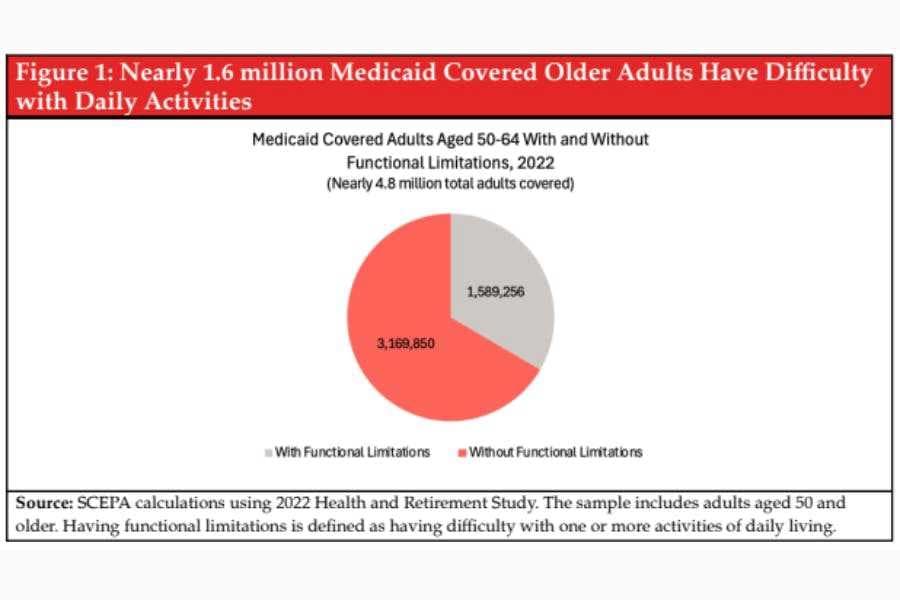
    New research from the Schwartz Center for Economic Policy Analysis shows that sweeping federal budget cuts passed in July 2025 in a partisan reconciliation bill (the OBBB) threaten to weaken support for the more than five million older Americans and adults with disabilities who rely on Medicaid for long-term care services.

Scholars and Work

Look closer at our empirically-based, historically-informed, and critically-oriented ethnographic work:
  • SCEPA fellow Kyle Moore joins the Democratic staff of the Joint Economic Committee as a Senior Policy Analyst
  • Economist Kate Bahn on the evolving world of feminist economics, labor organizing, and the new narratives of policy change

Take The Next Step

Notice of Nondiscriminatory Policy

The New School admits students of any race, color, national and ethnic origin to all the rights, privileges, programs, and activities generally accorded or made available to students at the school. It does not discriminate on the basis of race, color, national and ethnic origin in administration of its educational policies, admissions policies, scholarship and loan programs, and athletic and other school-administered programs.