Glassbox Espace d’Art: Interrogating the Influence of Fashion Publishing
Students in Parsons Paris’ MA Fashion Studies program developed multi-media installations exploring the influence of fashion publications on global identity for an exhibition staged by the Fashioning Theory Lab.
Fashion Studies (MA)
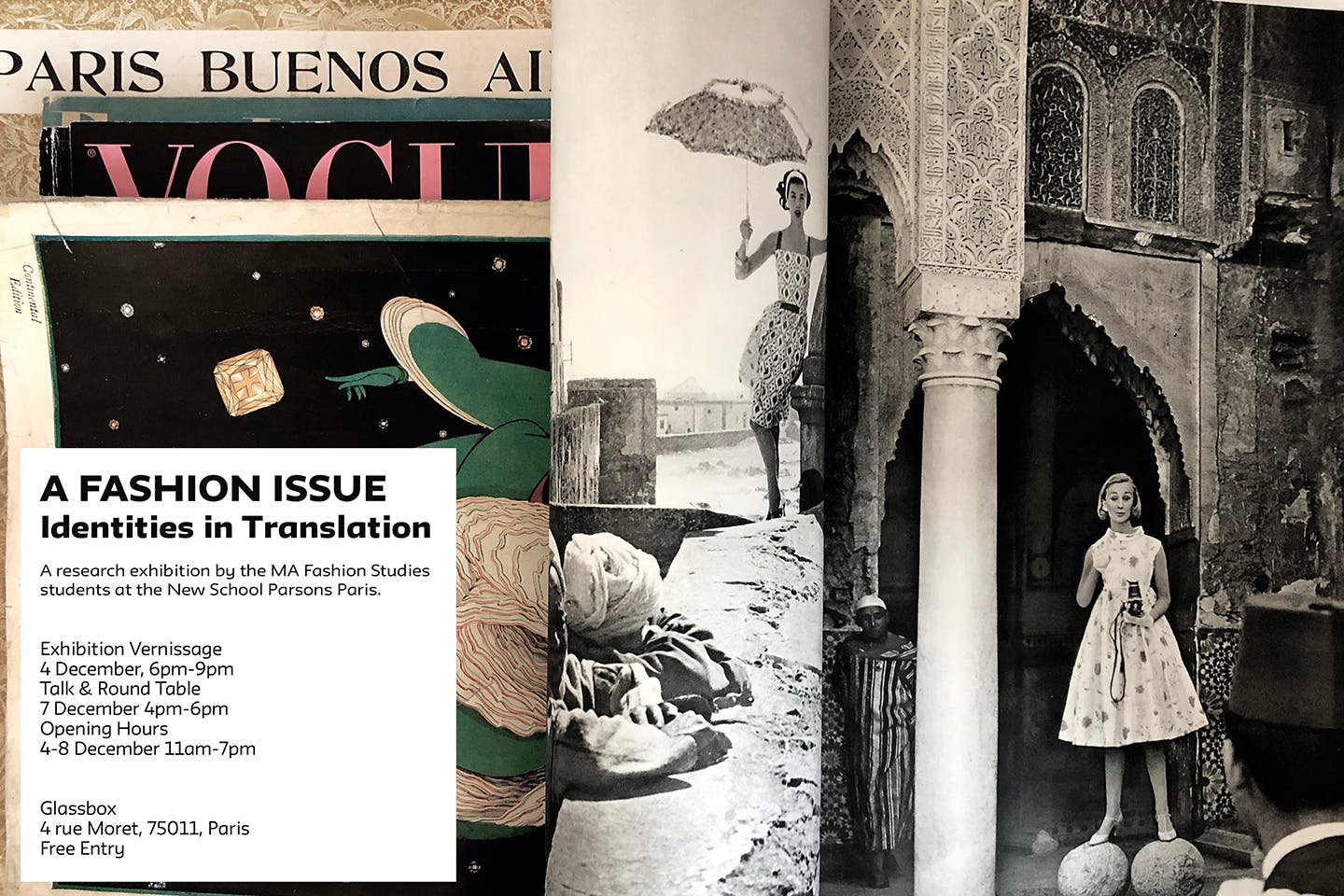
Historically, fashion magazines have been motors and mirrors of the industry, portraying its innovative practices, actors, hierarchies, and geographies. They have been a barometer for the industry’s shifts and ambitions, as well as the rise of the global market. At the same time, these publications have served as containers of discourses, ideologies, and stereotypes related to topics ranging from race to femininity, from class to creativity.
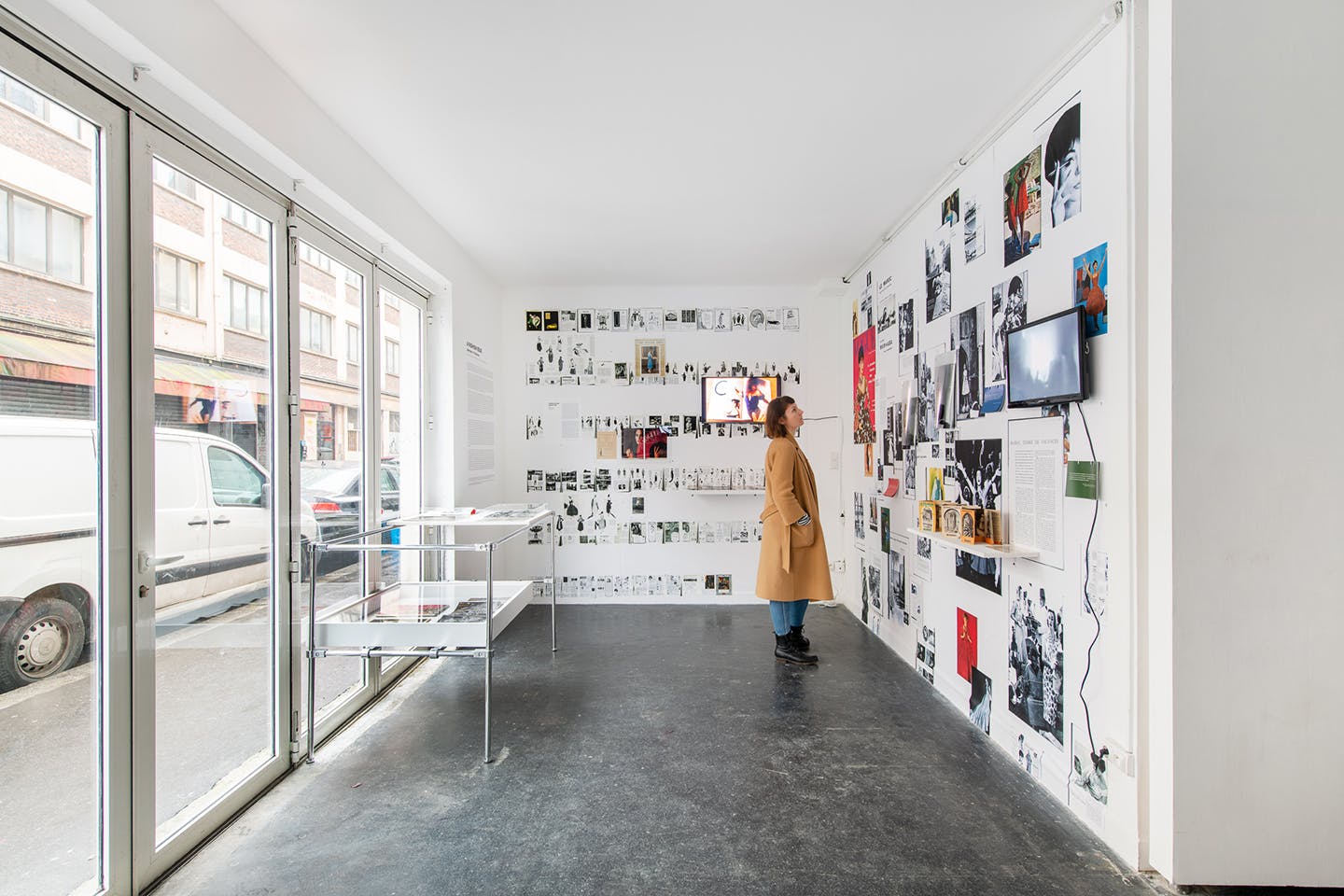
Part of the Fashioning Theory Lab, the exhibition titled A Fashion Issue: Identities in Translation, which took place from December 4–8, 2019, navigated these territories, exploring different issues from national editions of Vogue — Spanish, Paris, Italia, and Arabia — at different historical moments. Students in Parsons Paris’ MA Fashion Studies program were asked to develop reflections based on these four issues and explore the discursive mechanics behind these magazines. What identities are these magazines constructing? How are these identities built? What type of gaze is adopted? How is a fashion gaze used to build a projected national or local identity? What representational strategies are employed in fashion magazines? The exhibition attempted to respond to these questions, presenting the results of students’ research through a multimedia installation that placed each Vogue issue into historical and geographical context.
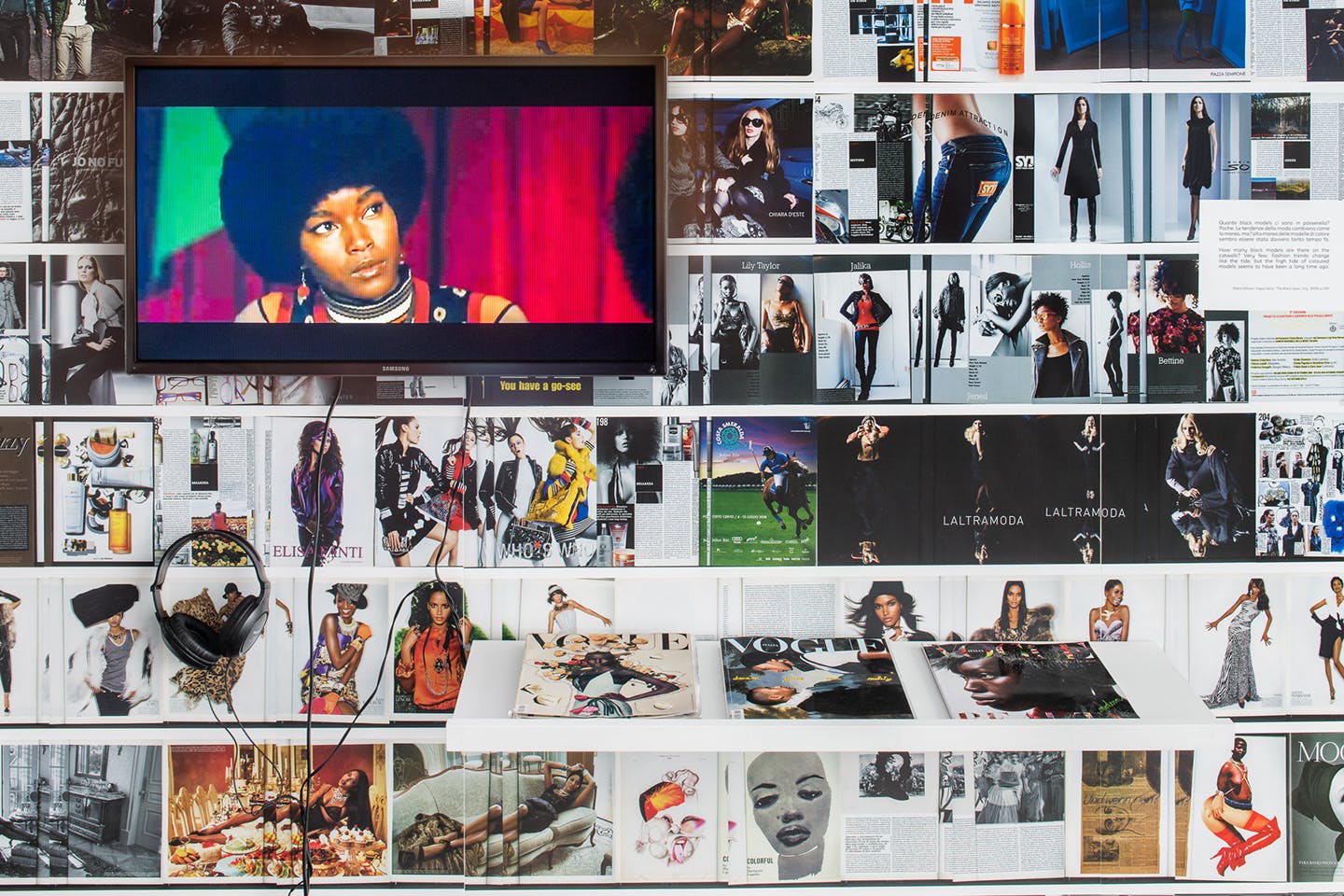
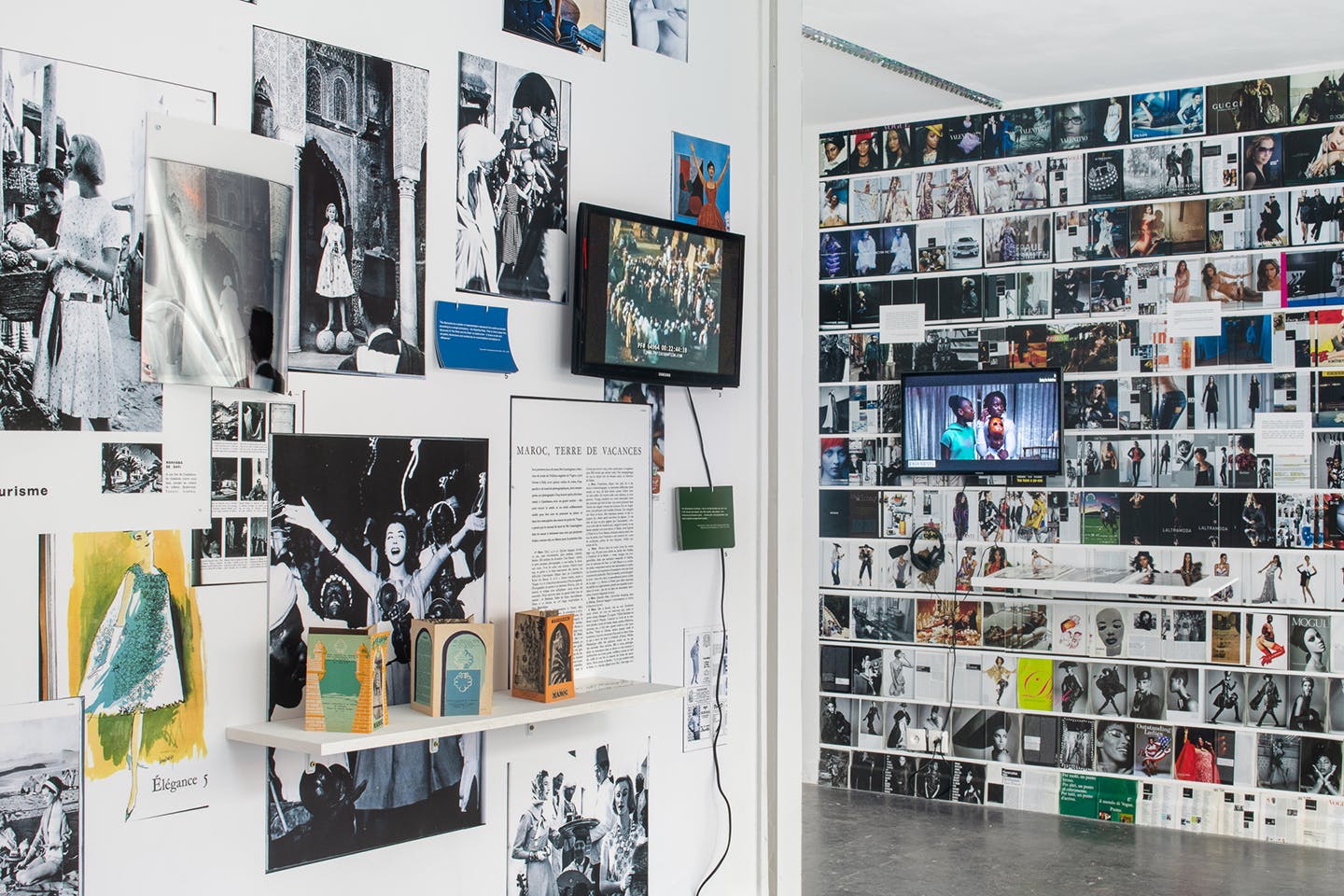
The exhibition consisted of four sections — Translating into Identities, Unlayered: Through the Colonial Gaze, A Fashion of Diversity, and Behind the Veil. Starting from a single issue for each section, students built a narrative exploring controversial fashion tropes, categories, and representations that have emerged in the magazine. In each section, the pages of the magazine were projected onto a wallpaper inspired by a visual practice employed in the making of a fashion magazine — from thumbnails to the double page. The aim was to re-perform the self-reflexive languages produced by the publishing industry while showing how magazines can become unique springboards for evaluating representational strategies in the fashion industry.
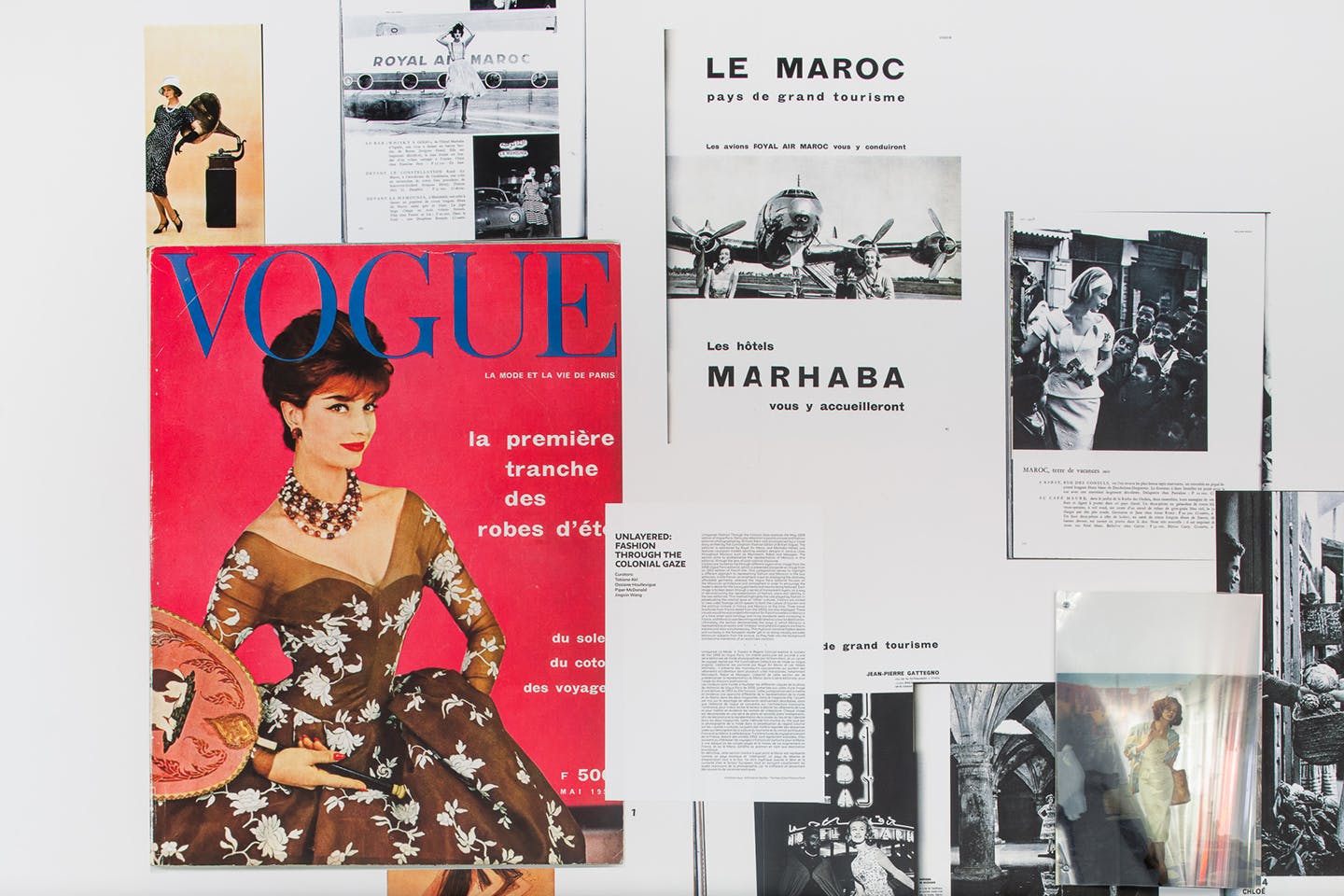
Four magazines became a point of departure for questioning how Condé Nast and the various editions of Vogue have evidenced, shaped, and negotiated different subject positions, national and local identities, the dialogue between the institutional and the individual, and discourses about race, diversity, and postcolonialism. Through exploring these themes, this project provided a springboard for evaluating representational strategies in the fashion publishing industry.
A Fashion Issue: Identities in Translation project team
Faculty (concept and coordination): Antoine Bucher, Morna Laing, Justin Morin, Marco Pecorari
Student curators: Amani Abdallah, Tatiana Akl, Angélique Frizzell, Chloe Hawkins, Szu-Ning Hsu, Sheri Klak, Kritika Kohli, Piper McDonald, Arianna Padfield-Seleman, Katherine Sinner, Kayla Stokes, Tiffany Van Boom, Jingxin Wang
Exhibition Design: Justin MorinGraphic Design: Olivia Johnston
Communications: Lisa Sarma and PRC Communication
Production Coordinator: Olivia Johnston