Ann Demeulemeester: Decoding Fashion Poetics
First-year Parsons Paris MFA Fashion Design and the Arts students recently collaborated with Stefano Gallici, the creative director of legendary fashion house Ann Demeulemeester to create original looks that brought together individual expression and the brand’s creative voice.
Fashion Design and the Arts (MFA)
In the semester-long initiative focused on fashion as cultural commentary, students were challenged to reinterpret the house’s iconic codes—poetry, androgyny, and dark romanticism—in their own creative practice. The project began with a design brief from Gallici, who invited students to explore the creative DNA of Demuelemeester, who is one of a small group of groundbreaking fashion designers known as the Antwerp Six.
“The most unique and irreplaceable aspect of the Ann Demeulemeester brand is its ability to capture the intangible—a dream-like quality that allows fashion to transcend mere garments,” says Gallici.
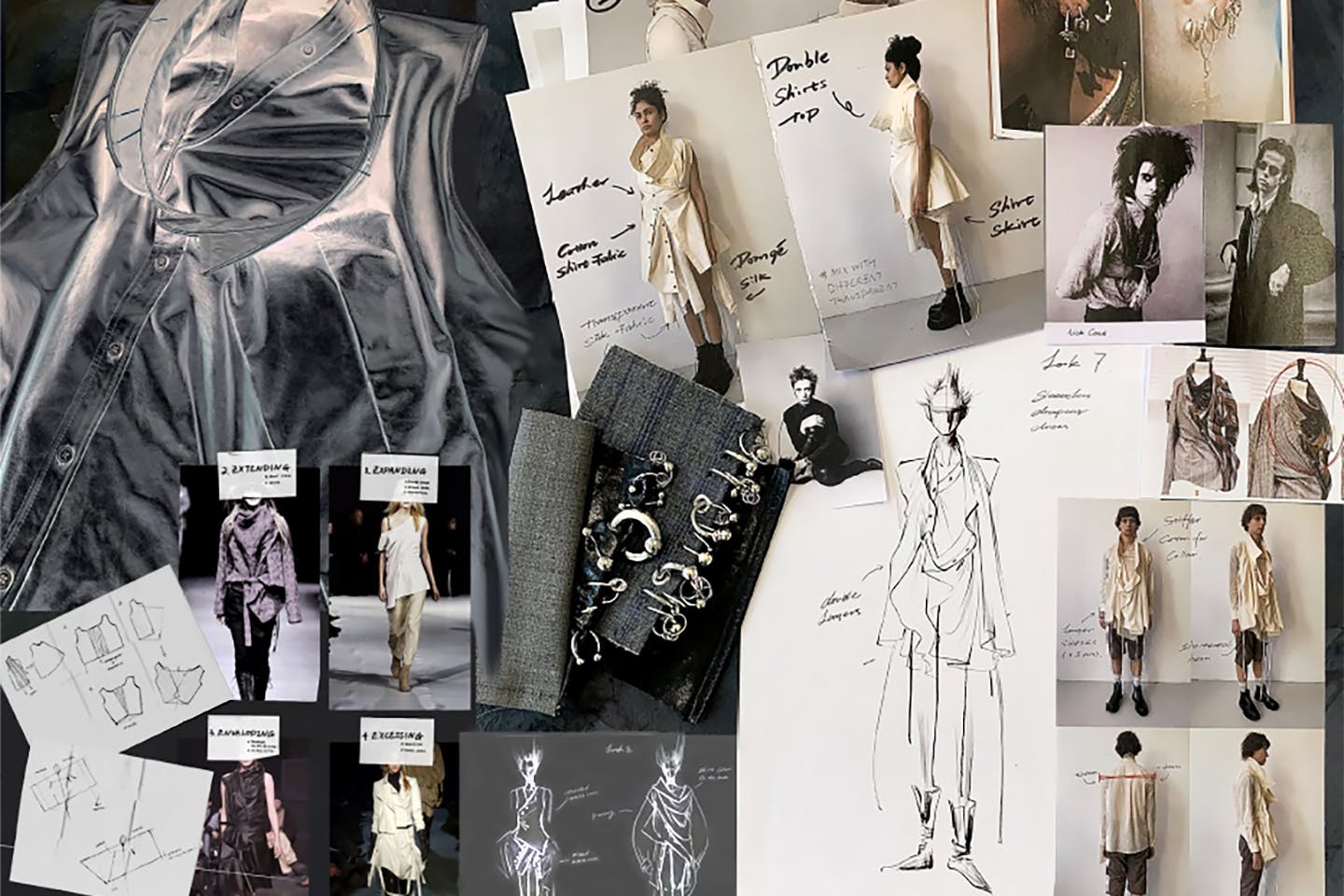
Students studied the house’s archives—garments, sketches, and mood boards tracing Demeulemeester’s poetic design language—and examined how the brand merges strength and fragility, punk language and poetry, and fashion and music, art, and subculture. Their process included concept development, sketching, 3D sampling, fabric manipulation, and the creation of toiles.
Gallici encouraged students to draw from a range of media, including cinema, music, literature, and photography. Siling Chen imagined a road trip through Tibet with Robert Mapplethorpe and Anne-France Dautheville, fusing biker wear with Tibetan silhouettes. Chandler Burke reimagined Demeulemeester’s layering through the lens of 1980s youth rebellion, inspired by The Outsiders and Mary Ellen Mark’s photography. Logan Goff Monroe was inspired by post-punk bands like The Birthday Party and goth aesthetics.
“In my collection,” says student Yumu Li, “I was captivated by Ann’s masterful deconstruction techniques, which I categorized into four approaches: Expanding (enlarging garments and retying them with cords), Extending (elongating specific sections, often the front placket and collar), Enveloping (utilizing rectangular patterns and one-piece cutting), and Excessing (repetition and double layers).”
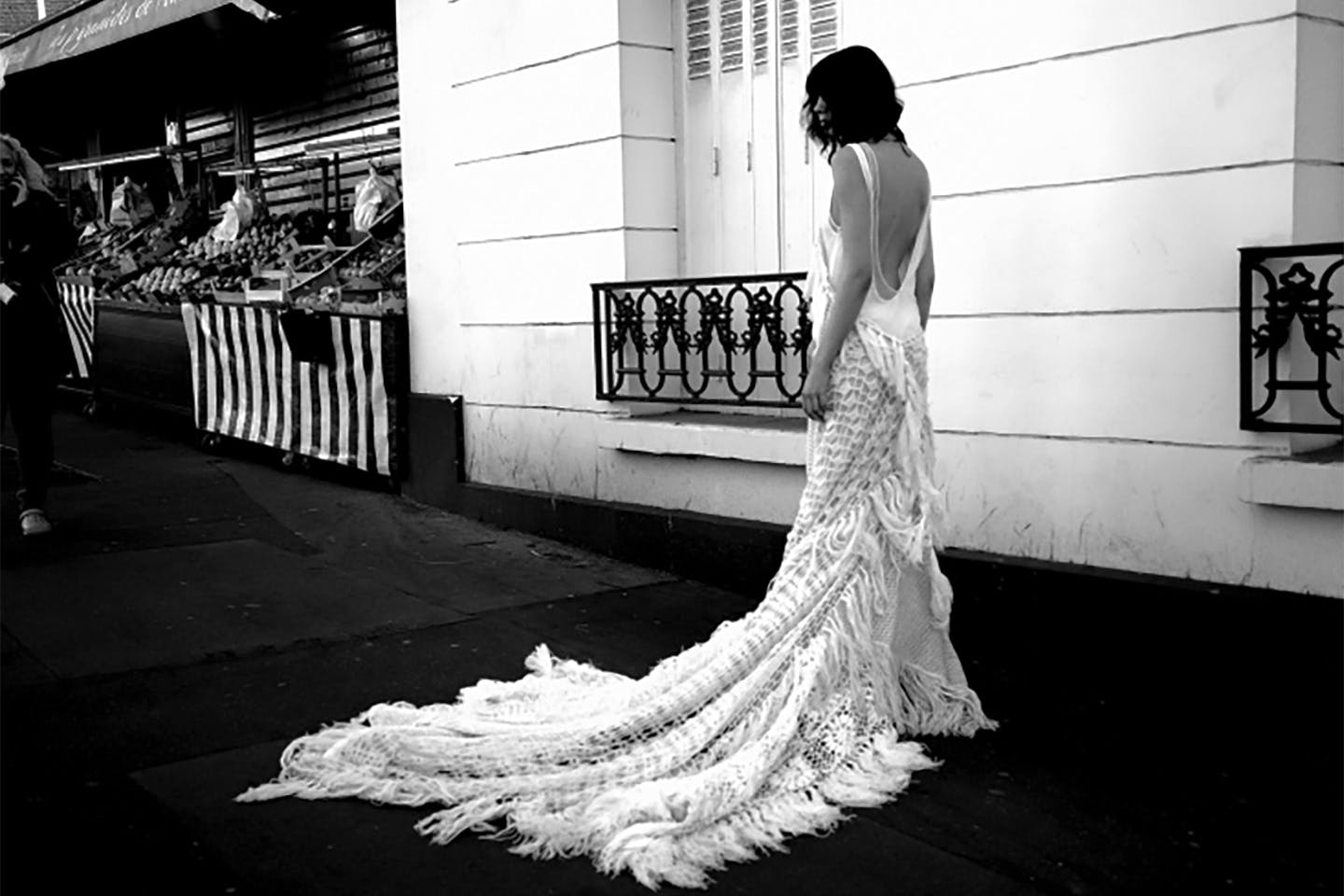
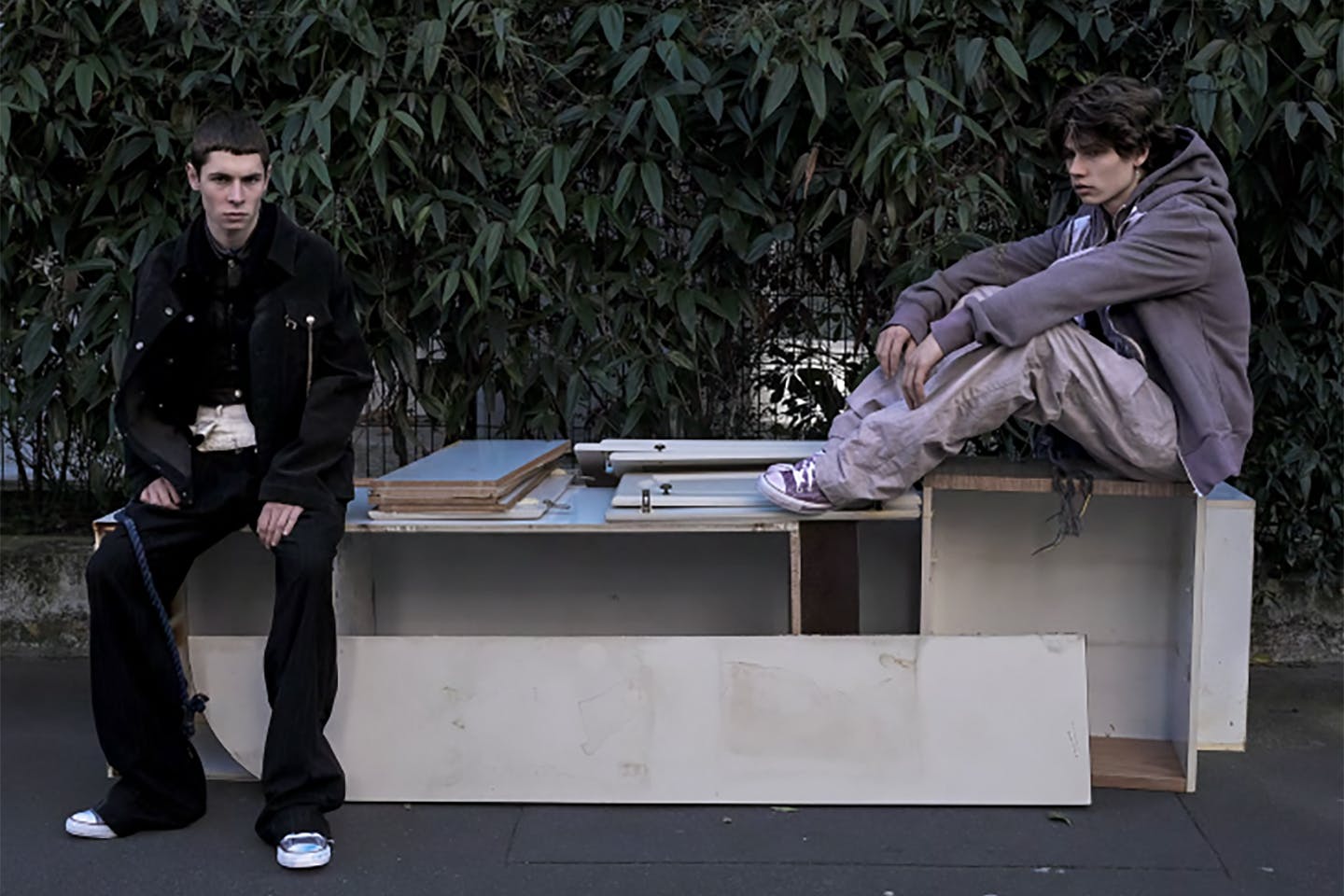
The project culminated in a collaborative photoshoot across Paris, with students photographing each other’s designs. Cinematic and deeply personal, the resulting work reflects Parsons Paris’ commitment to bold, boundary-pushing design education.
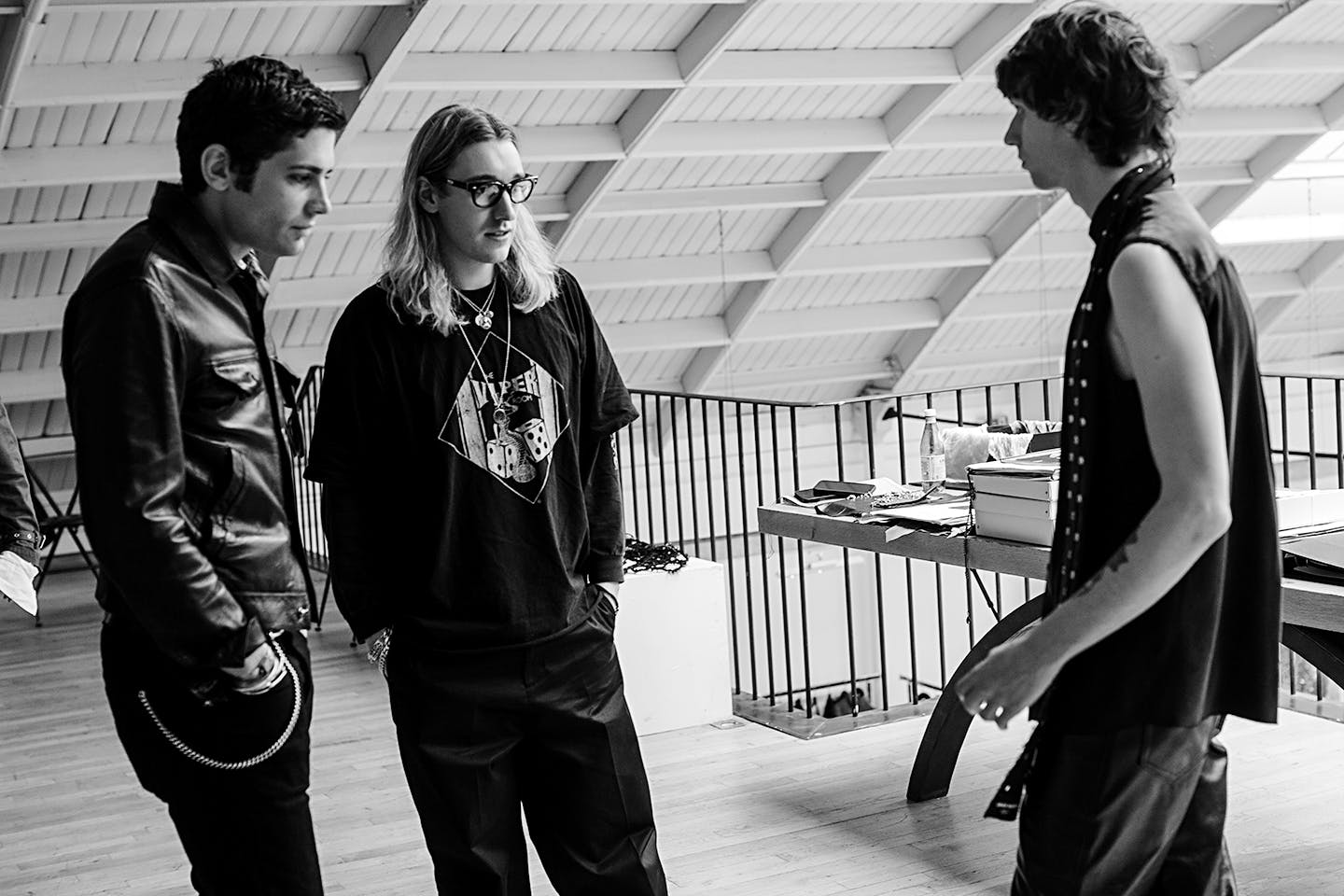
“Ann’s work has always been about challenging norms, embracing complexity, and celebrating the beauty in imperfection,” says Gallici. “It’s a brand for dreamers—for those who dare to dream beyond what is immediately visible.” Rooted in Paris’ rich artistic landscape and Parsons’ legacy of pushing creative boundaries, the project offered students a rare opportunity to engage with a house that champions individuality, emotional depth, and cultural dialogue, making it an ideal and inspiring partnership for the next generation of fashion visionaries.
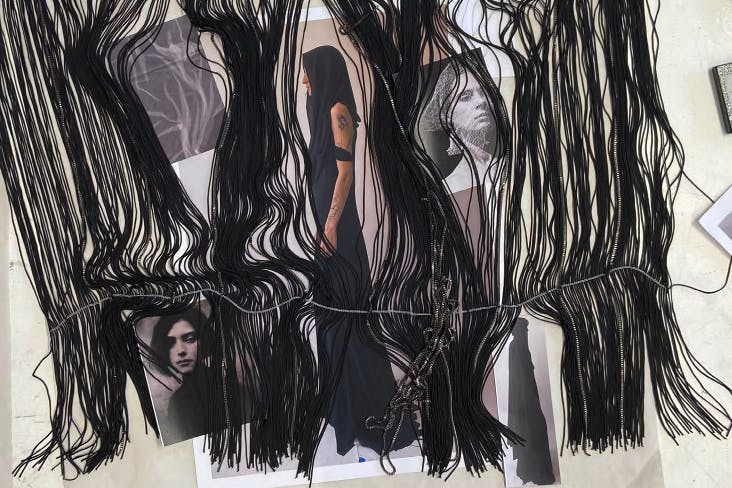
“This project helped me think more deeply about combining the emotional and functional layers of clothing,” says student You Wu. “I started by exploring archetypal garments like trench coats and raincoats—echoing Ann’s use of archetypes. From there, I developed my own textiles to add emotionality and reflect the organic movement of nature, translating protection into something poetic and personal.”