Noah Labinaz
qPAS: Designing Adaptive Strategies for Inevitable Futures
Design solves problems, but what if a problem’s scope is too complex to have a solution? This dilemma has limited design’s ability to create effective interventions for disasters and wicked problems, especially as they increase in frequency and become more widespread. Specifically, given today’s cultural trends and conclusions reached by scientific and social data, it appears that disasters and wicked problems will not have comprehensive solutions.
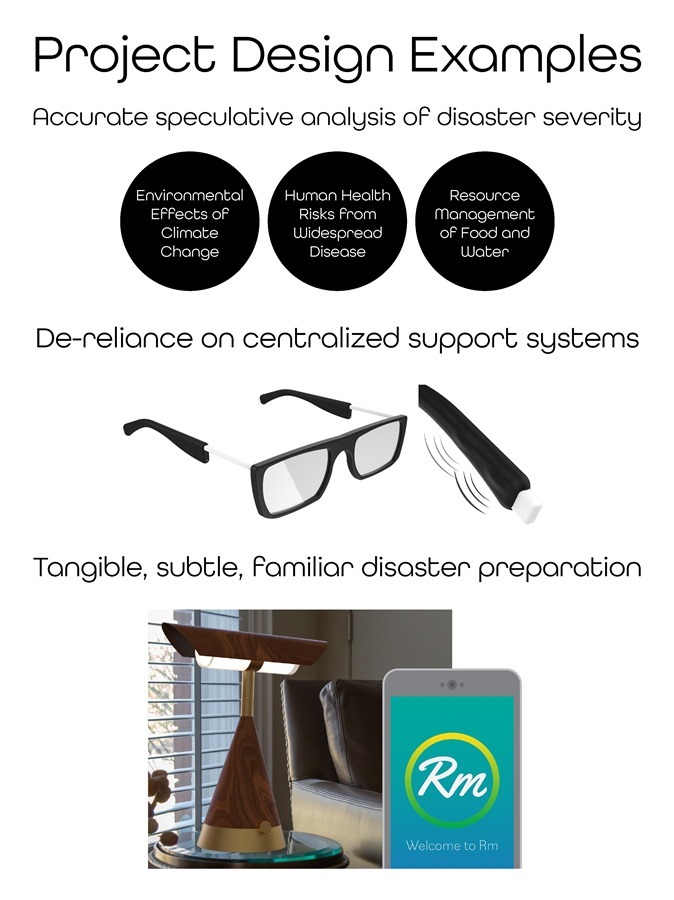
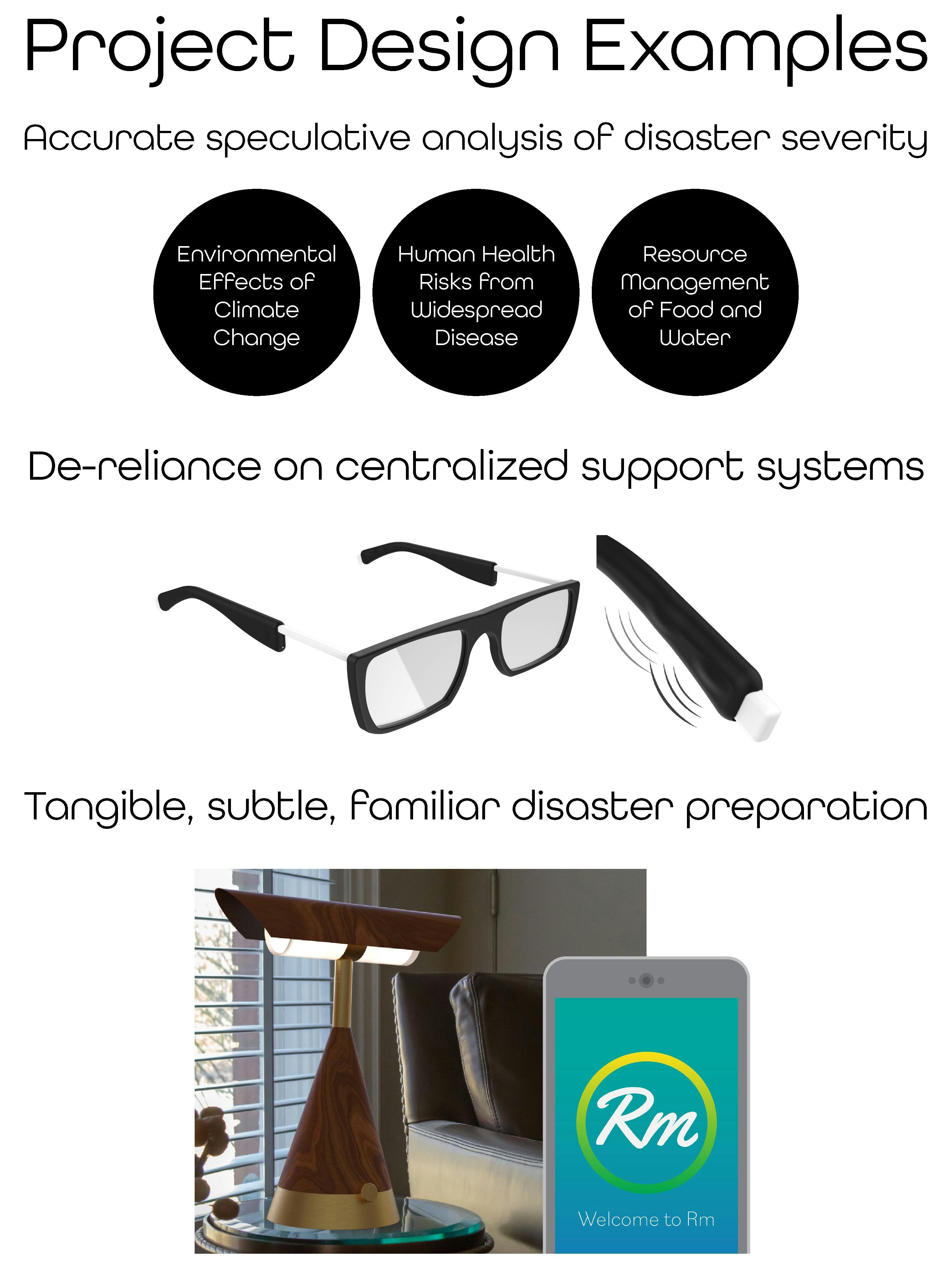
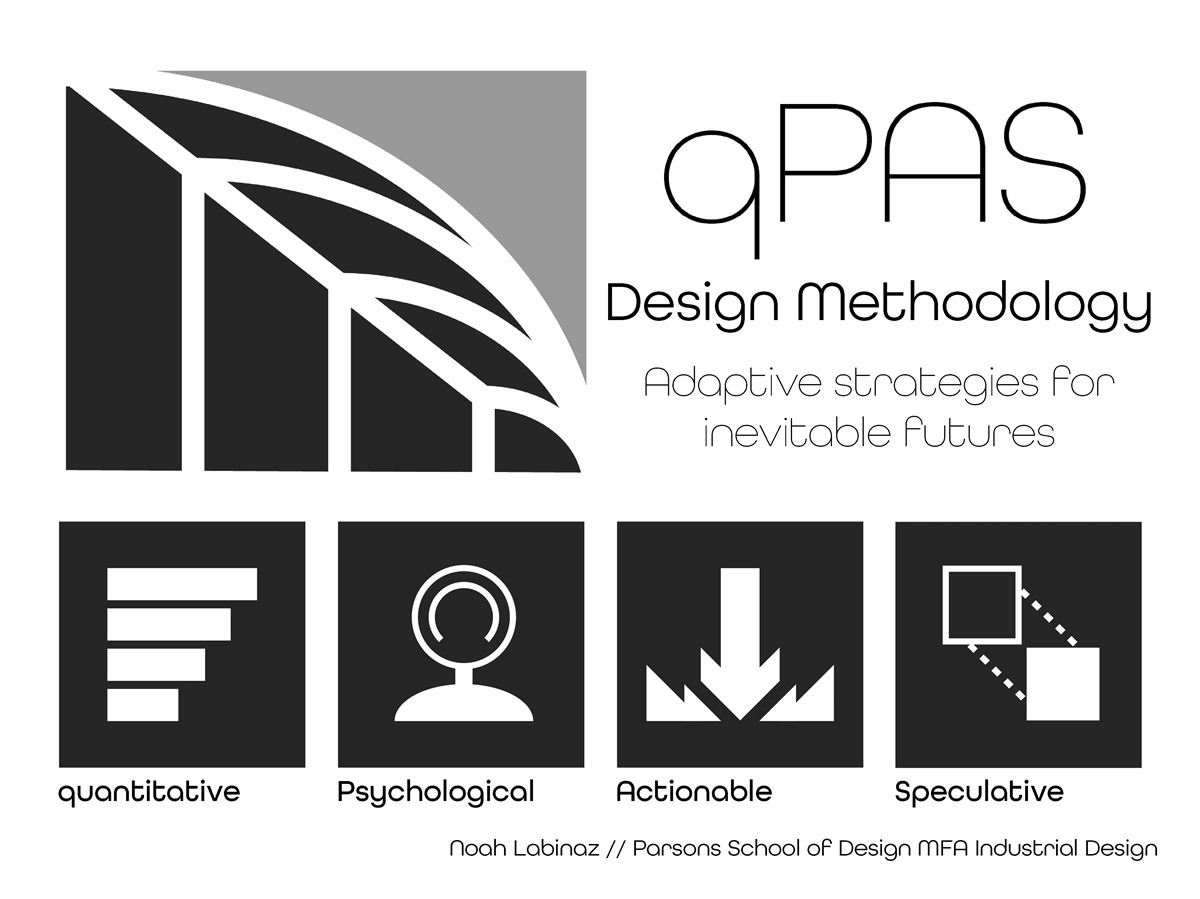
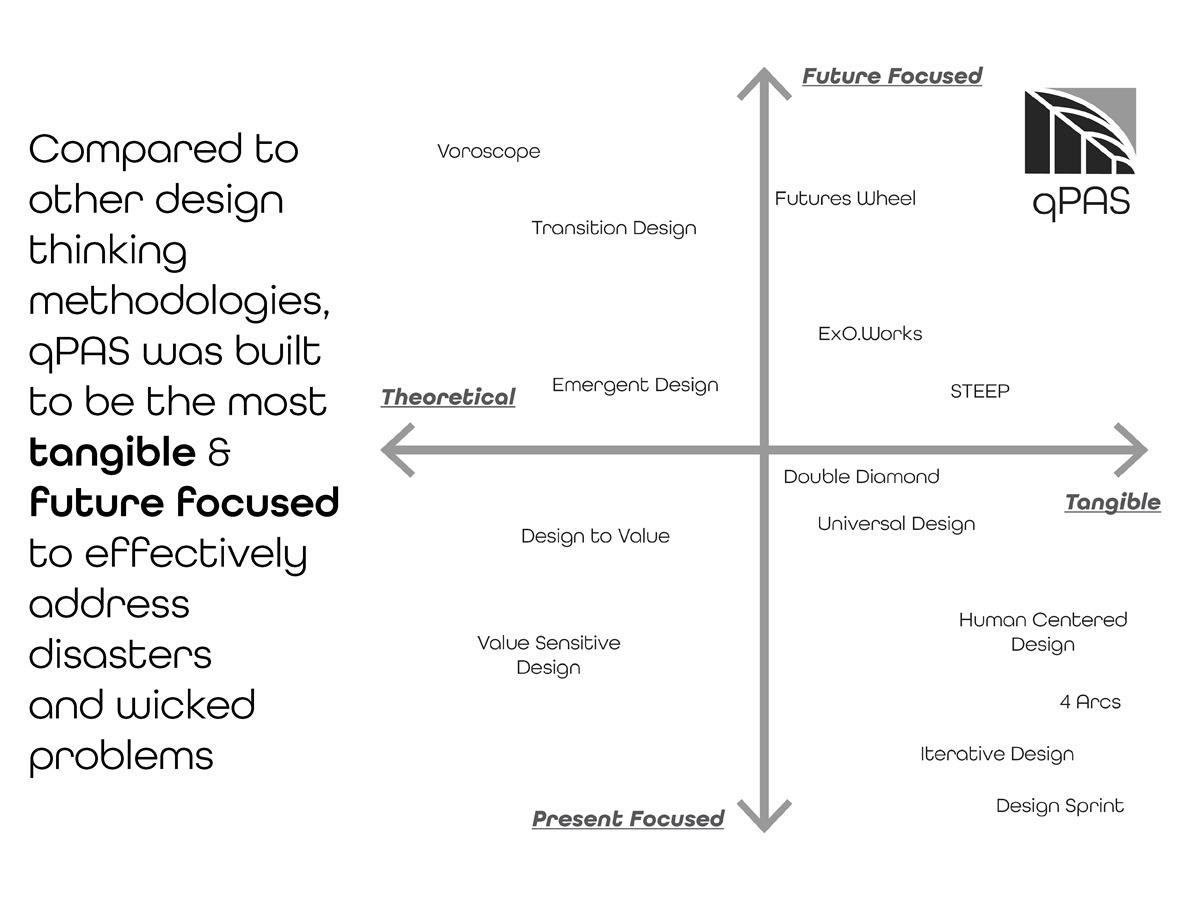
In response, I have developed qPAS, a novel design methodology to increase design’s effectiveness in addressing future outcomes of major global events. This design methodology focuses on creating quantitative, psychological, adaptive, and speculative strategies that accommodate for, rather than solve, the future problems of disasters and wicked problems. I developed examples of research and product designs to illustrate this new design methodology and demonstrate its effectiveness in developing strategies before, during, and after the effects of disasters and wicked problems.
Noah Labinaz
Noah Labinaz