Lily Qian
Pareidolia
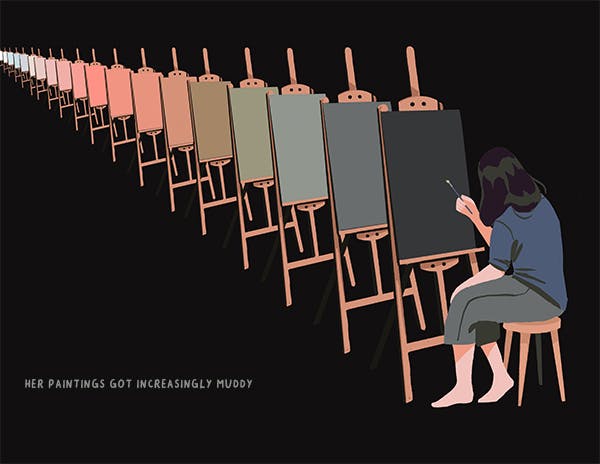
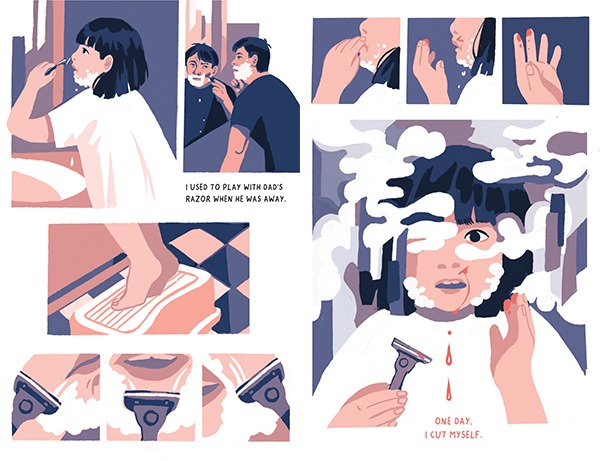
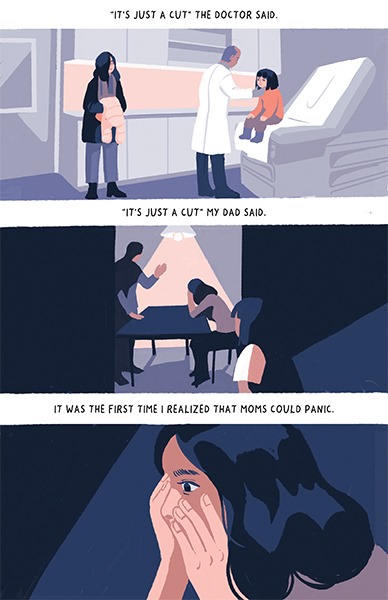
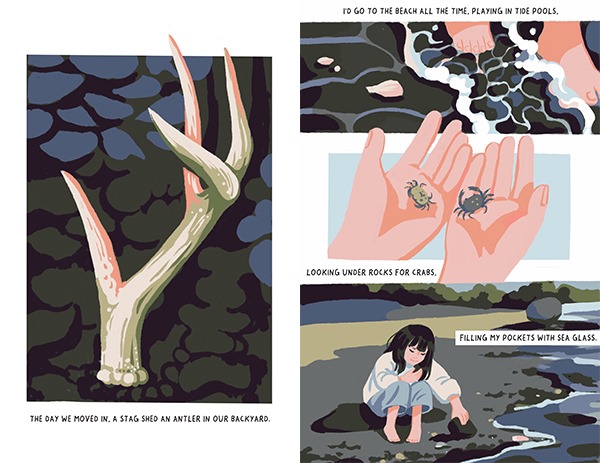
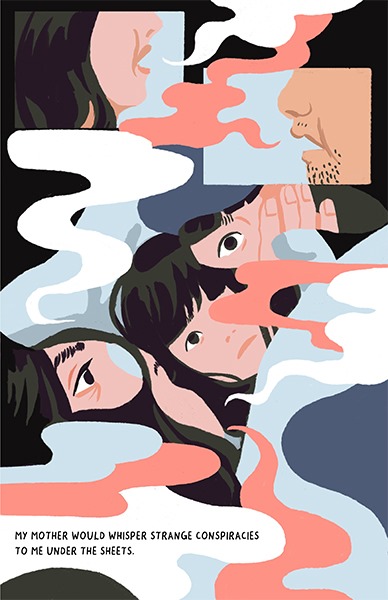
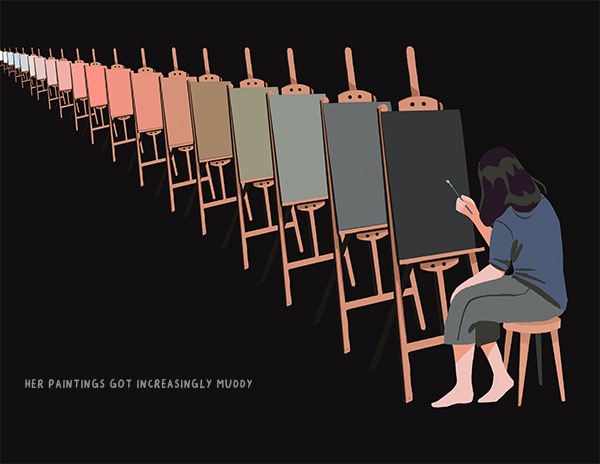
Pareidolia is a graphic memoir that chronicles a girl’s childhood and journey into adulthood. Moving between cities in Canada and China, she wonders about the meaning of belonging as her life continues to shift. Pareidolia highlights my mother’s struggle with mental illness, my parents' divorce, and my father’s struggle as a single parent. The narrative explores themes of cultural displacement, family conflict and mental health issues, and memory. It was important for me to share themes that are relevant to my life with a larger audience. I want to portray a look into family conflict and mental health issues that can be seen as both unique to my family, or universal to all. Quarantine made me realize the importance of family and mental health in a world where we feel increasingly detached from each other. Furthermore, with the rise of anti-Asian hate crimes, I feel it was important to push the narratives that humanize minorities more than ever. The memoir is going to be 150 pages in length, with nine parts total. The target audience is YA and adults. Overall, the memoir will take me roughly two years to complete. The narrative is fairly chronological, with occasional flashbacks where I reflect on certain incidents with the benefit of hindsight. Stylistically, the memoir is illustrated with bold, graphic illustrations with selective palettes that differentiate places and times. Many emotional moments are portrayed symbolically to emphasize the ambiguity of memory and perception. This is a callback to the title “Pareidolia,” which refers to the phenomenon where things are perceived as different from what they actually are.
Lily Qian
Pareidolia
Lily Qian
Pareidolia
Lily Qian
Pareidolia
Lily Qian
Pareidolia
Lily Qian
Pareidolia