Yann Kerblat
Ripe for Disruption - Climate Change and the Future of the Wine Industry
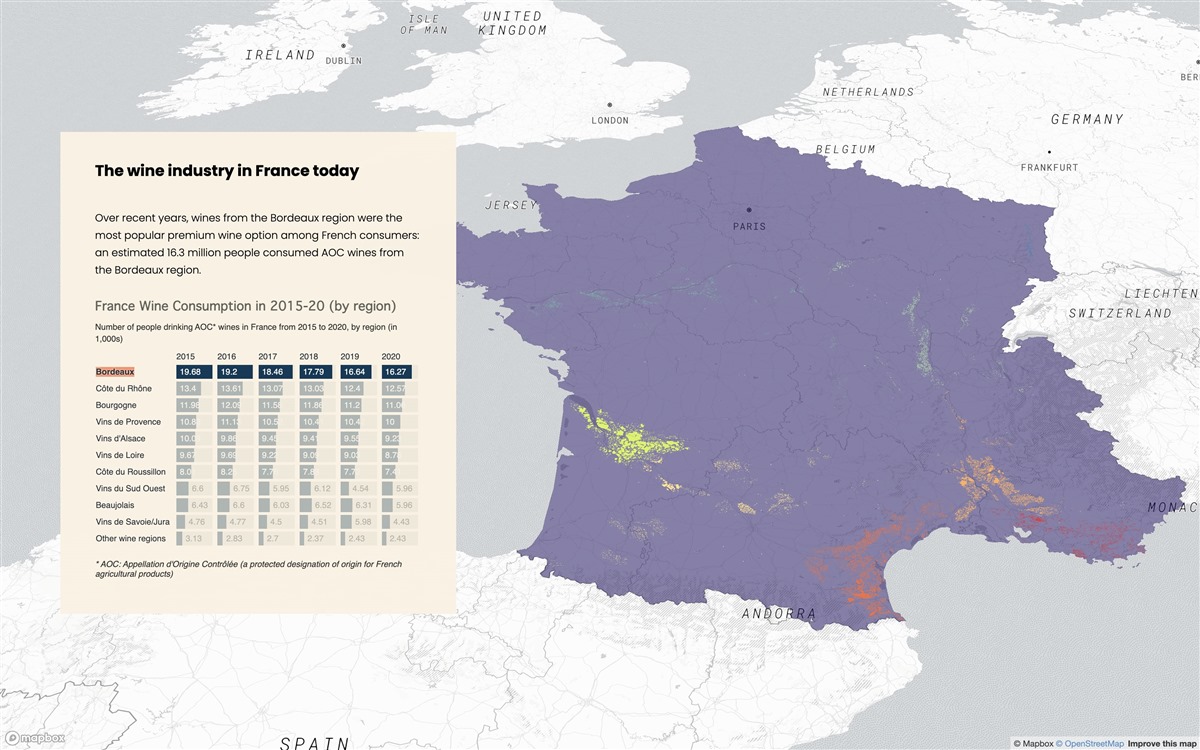
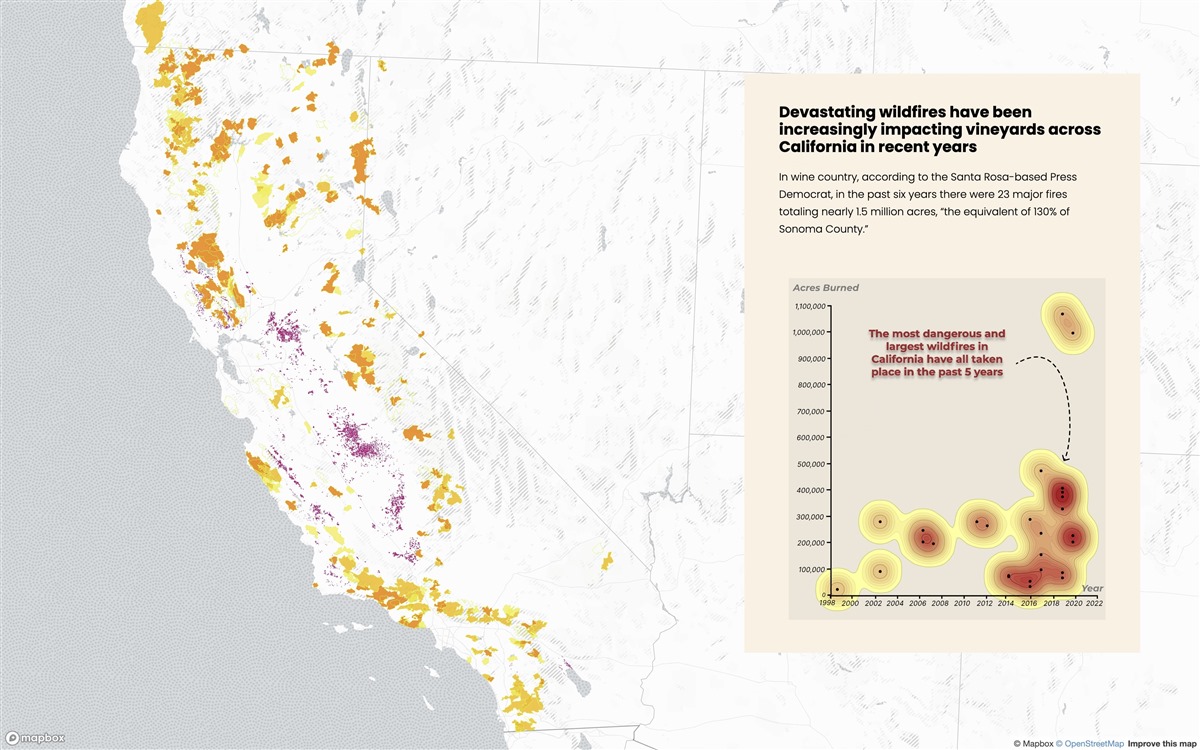
Winemakers are among the most seasoned climate scientists in the world. Agricultural techniques required for harvesting grapes that were developed over decades or centuries, coupled with precise knowledge of environmental patterns surrounding their vineyards, provide winemakers with unrivaled expertise and techniques for optimizing wine production. However, recent extreme weather events also confirm that grapes are extremely sensitive to sudden changes in temperature and other climatic fluctuations. These shifts raise difficult questions for the wine industry and could potentially disrupt centuries of cultural practices and agricultural norms in winemaking and require new methods of adapting to climate change, something that will require innovation and flexibility. The Ripe for Disruption Project provides a glimpse of the future of the wine industry, using geo-visualization tools to identify wine regions (and wineries) that are likely to be on the frontlines of global warming in the future. It also examines two recent “freak” weather events that affected California and the Bordeaux region in France and explores the opportunities facing the wine industry and the adaptive changes it is employing in response to climate change.
Yann Kerblat
Ripe for Disruption - Climate Change and the Future of the Wine Industry
Yann Kerblat
Ripe for Disruption - Climate Change and the Future of the Wine Industry
Yann Kerblat
Ripe for Disruption - Climate Change and the Future of the Wine Industry
Yann Kerblat
Ripe for Disruption - Climate Change and the Future of the Wine Industry
Yann Kerblat
Ripe for Disruption - Climate Change and the Future of the Wine Industry