Wei Hung Chen: Sustaining a Future Through Fashion
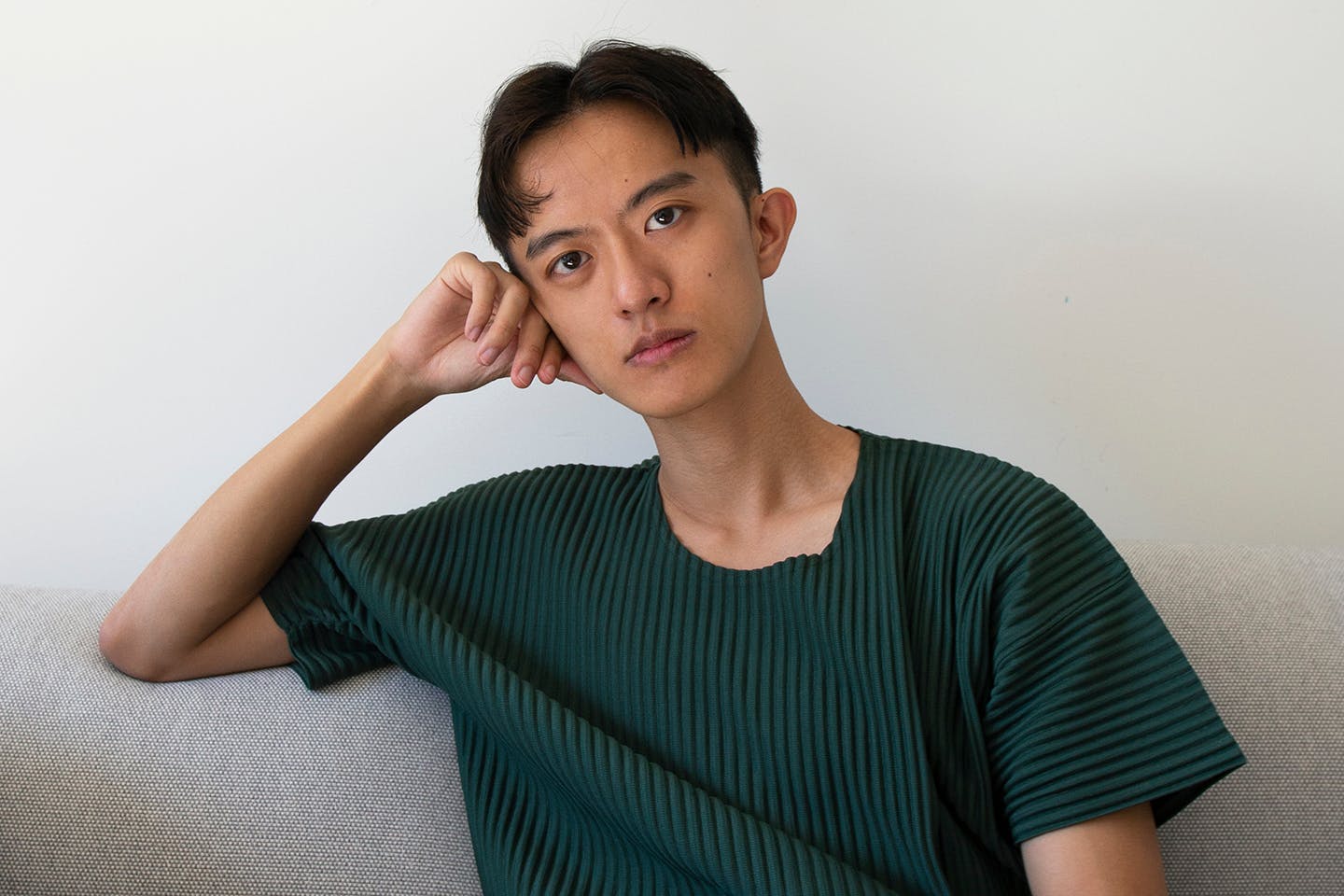
This question led Chen to create a modular clothing system, with interchangeable pieces that maximize versatility. He took inspiration from furniture and product design. “I started to look into how things could be put together and taken apart,” Chen explains.
“For example, you could have a shirt with detachable sleeves. If the trend becomes oversized sleeves, you could replace the sleeves rather than the entire shirt.”
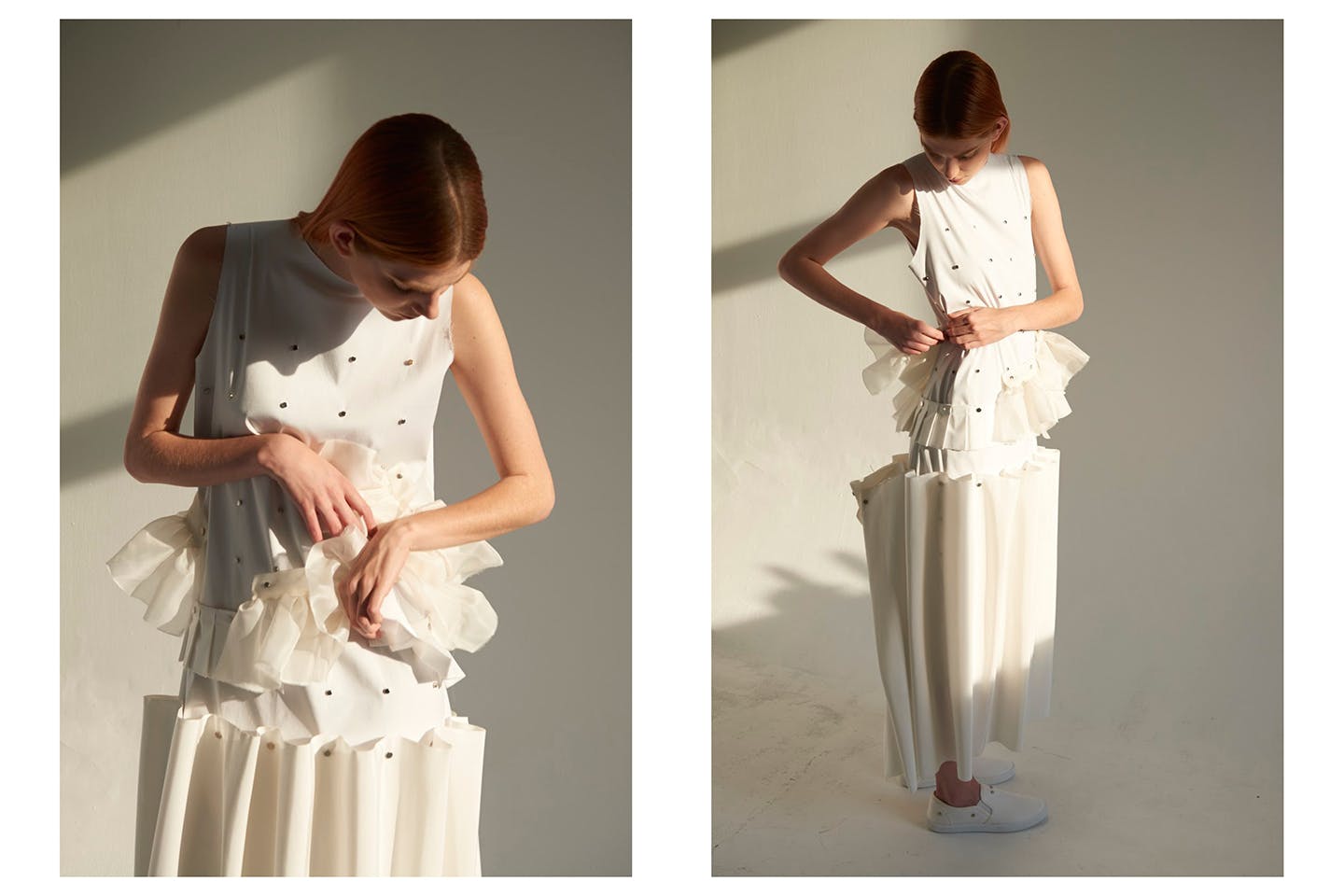
Chen expanded on this concept with his modular dress 2.0, which was prominently
featured in both the Museum of Modern Art’s second-ever fashion exhibition, Items: Is Fashion Modern?, and the New York Times’ review of the show. The dress represents a new type of maternity wear, with a series of fasteners that
enable the user to expand the dress as pregnancy progresses and take it in after giving birth. It also unfastens at the bust to allow for breastfeeding. These features enhance the garment’s usefulness and extend its lifespan—offering a practical alternative
to today’s fast fashion.
Chen’s awareness of fashion’s environmental and social impact extends to his label, Khaore. Khaore was launched in 2017 with the aim of offering a different perspective on everyday and mundane accessories. Chen creates a line of handbags with artisans around the world—particularly in Southeast and East Asia.
Chen cites the acquisition of creative problem-solving skills as one of the main benefits of a Parsons education. “Design thinking is one of the biggest assets of the program,” says Chen, who credits his professors with encouraging him to pursue innovative and imaginative approaches.
Chen’s ideas for eliminating fashion waste earned him a spot on Forbes’ 30 Under 30 list. He has also been featured in Vogue, Milk, and METAL magazines and was a finalist in the Parsons ✕ Kering Empowering Imagination competition.