Vanessa Shimon
LOVE, LUCK, GACHA
Where do we draw the line between harmless fun and a damaging addiction?
As an adolescent, I was introduced to gacha, a monetization mechanic in which money or a token is exchanged for a randomly chosen prize. Consumed by the arcade game, I amassed hundreds of its collectible cards. Over time, my love of gacha evolved into a love of its various incarnations: gacha machines (gachapon), blind boxes, trading cards, and video games.
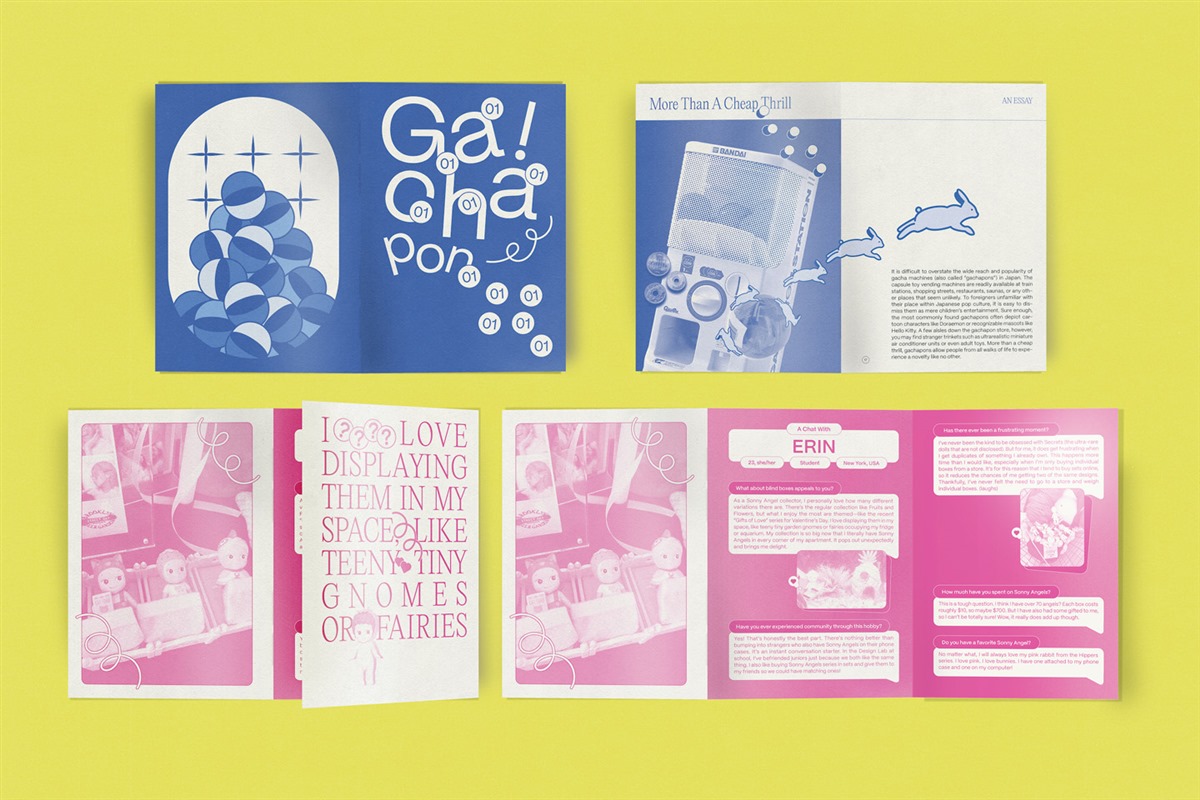
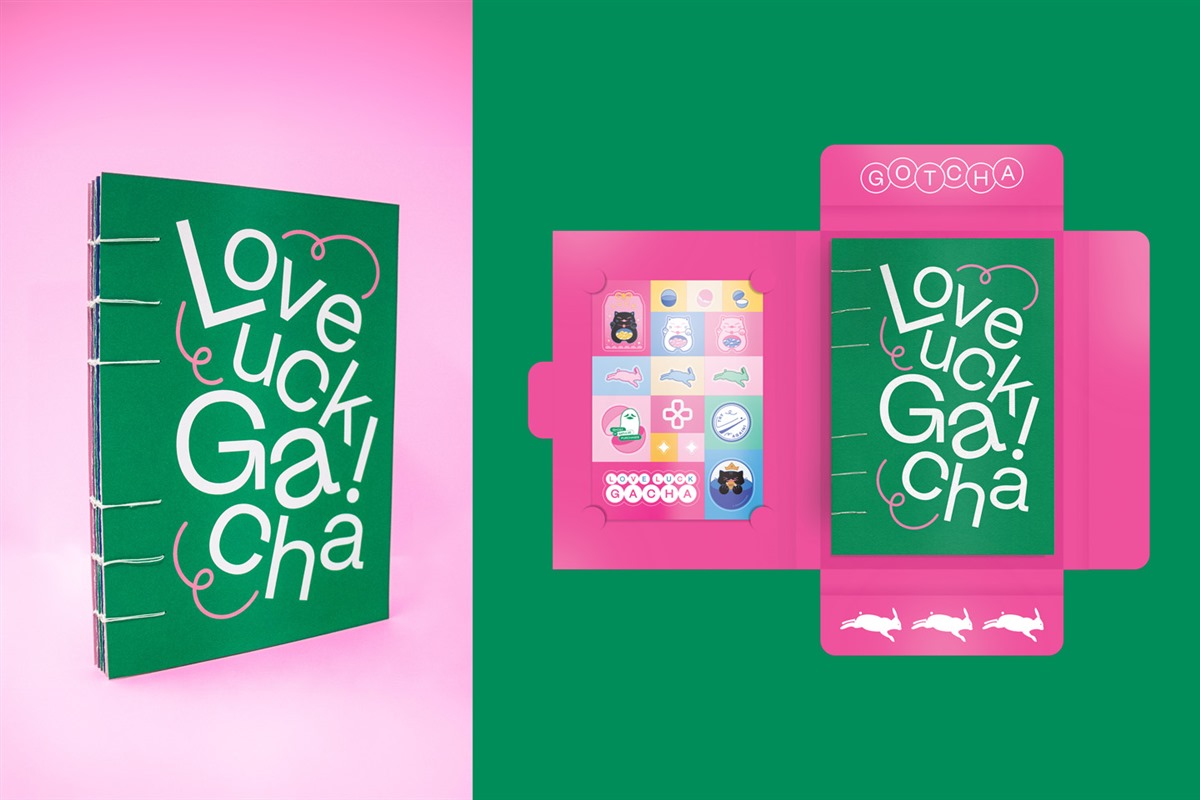
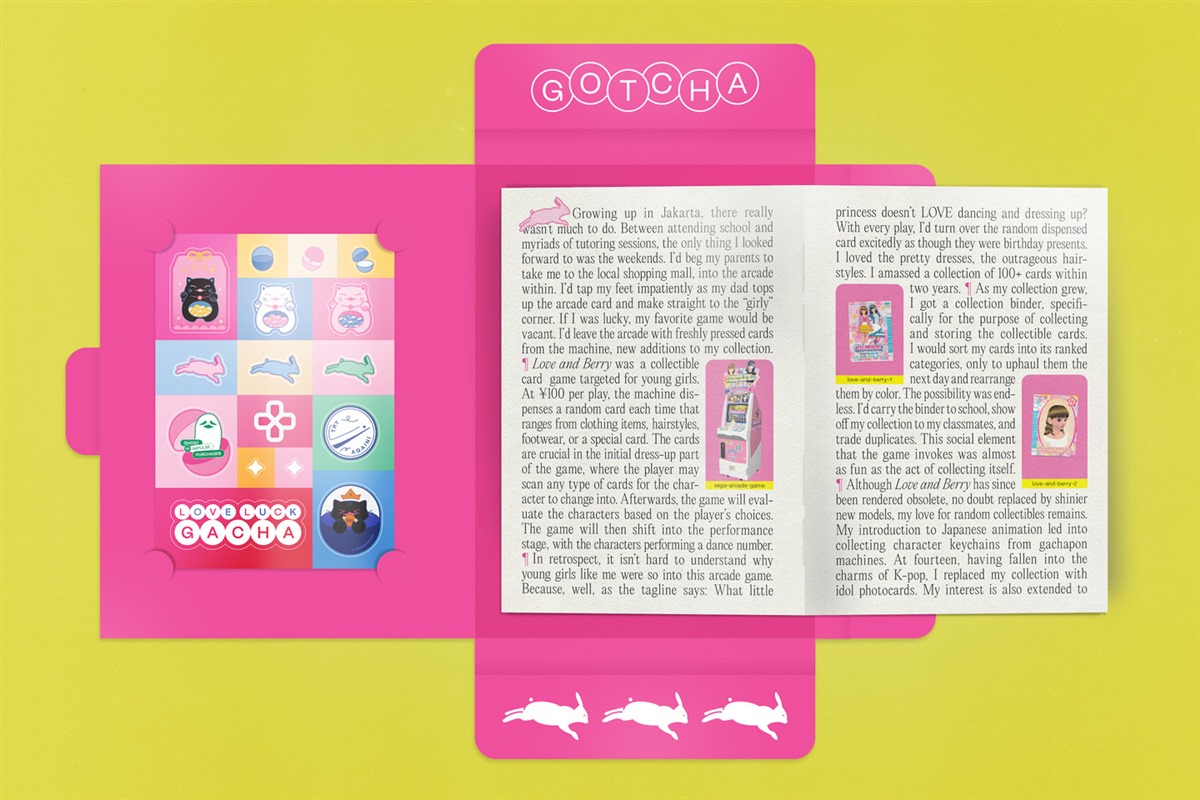
Drawing on personal experiences, LOVE, LUCK, GACHA is an informative, critical, and empathetic exploration of the world of gacha. It is designed to be accessible to those unfamiliar with the game while resonating with fans. Its style is modeled on gacha's "cute" aesthetic, which contrasts sharply with the ostentatious style of the visuals used in conventional gambling and reveals the role of design in transforming gambling into a more palatable activity.
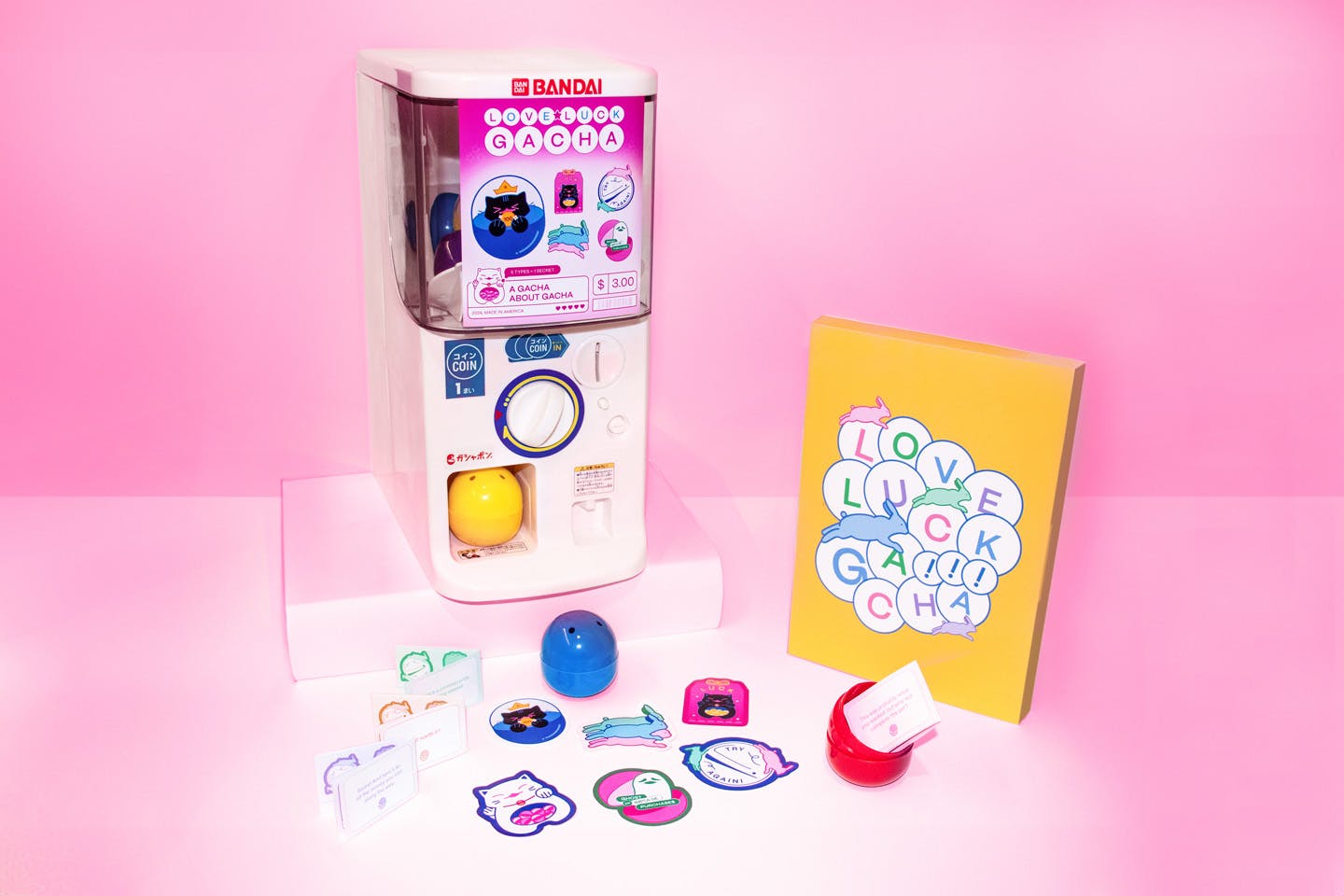
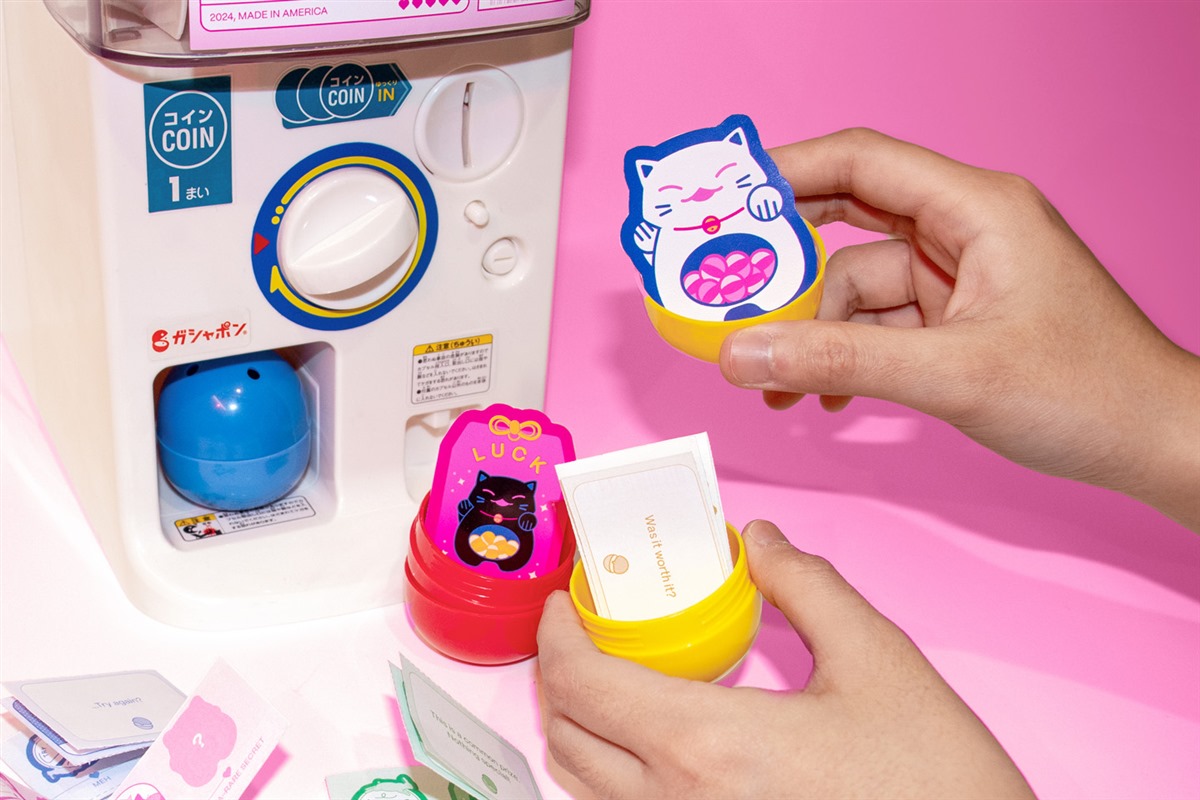
The book is split into four main sections, each of which focuses on a gacha form, exploring its history, evolution, and appeal. Meanwhile, the gachapon randomly dispenses capsules containing stickers and labels. The stickers, inspired by common symbols of luck (cats) and trickery (rabbits), suggest that the game of luck is inherently rigged and mock users for their participation. Designed to both frustrate and thrill, the gachapon is a critique of gacha through the medium itself.
LOVE, LUCK, GACHA weaves together anecdotes and critical perspectives to encourage audiences to ponder the complexities of gacha and by extension, the human drive to accumulate to no satisfying end.
Vanessa Shimon
Vanessa Shimon
Vanessa Shimon