Preeti Gopinath and Anette Millington: Weaving Migration Data into Textiles
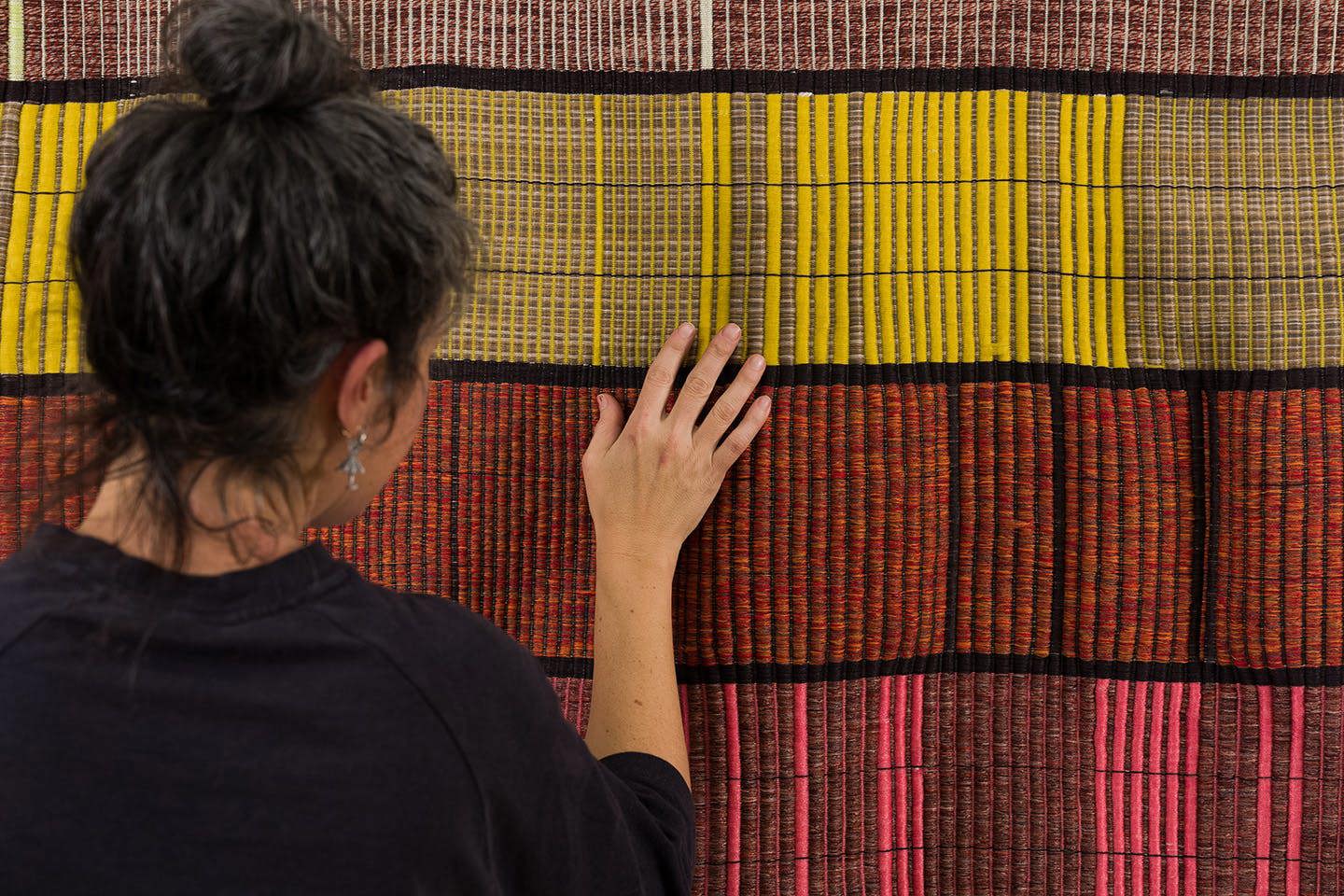
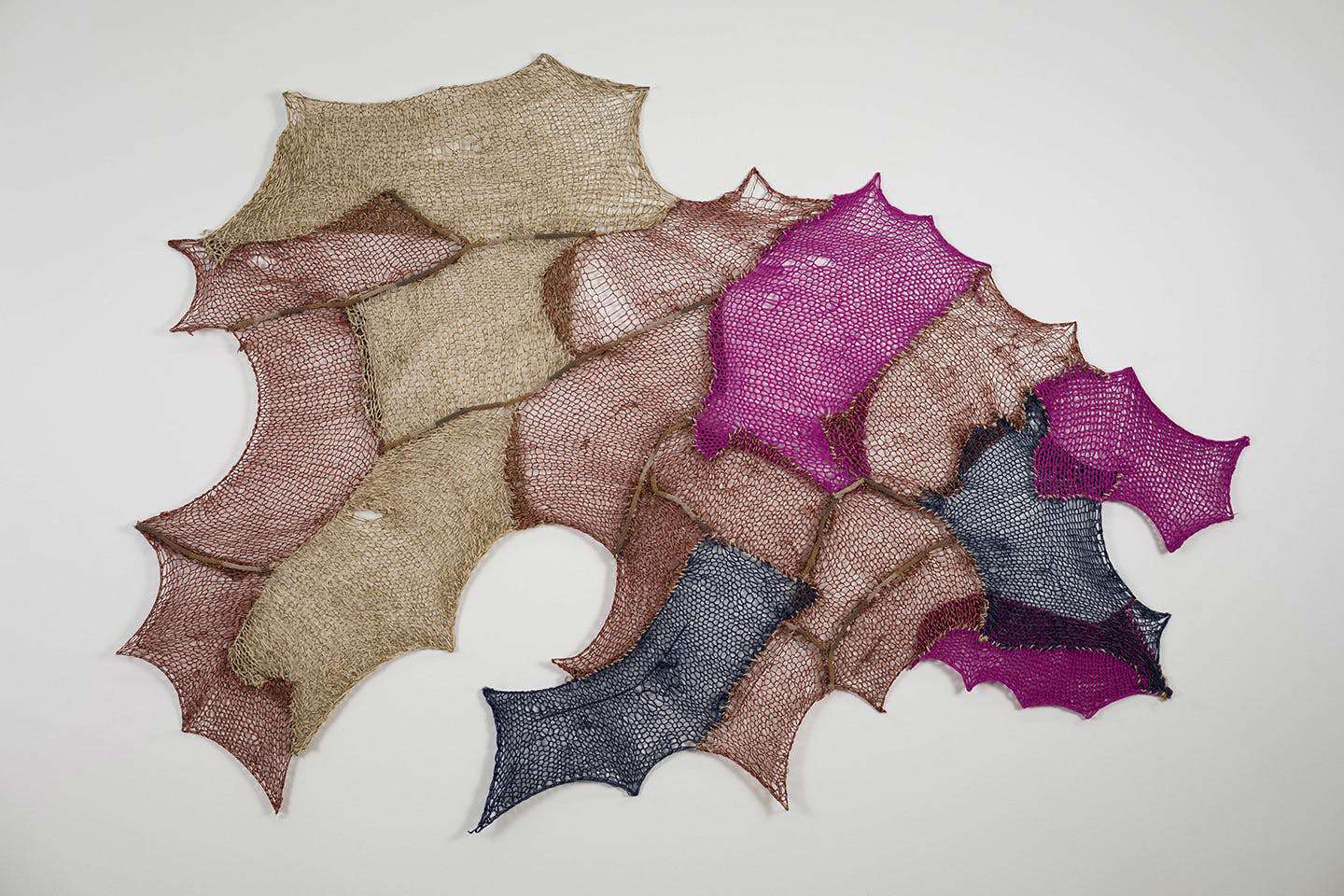
In a sea of richly colored yarns, Rachel Dana, an MFA Textiles student, kept returning to vivid pinks and deep reds for her weaving. Among them she added a small patch of green. Although the combination of colors seems like an aesthetic choice, it was actually based on environmental and geographical data. Dana’s palette visually represents environmental collapse in Iraq. Her reds evoke scorched landscapes—fire-engulfed land, burned vegetation, destroyed habitats—and the verdant hues stand for living vegetation. Her intricate weaving is a visual and tactile representation of data, in which storytelling emerges not through words and numbers but through color, pattern, and texture.
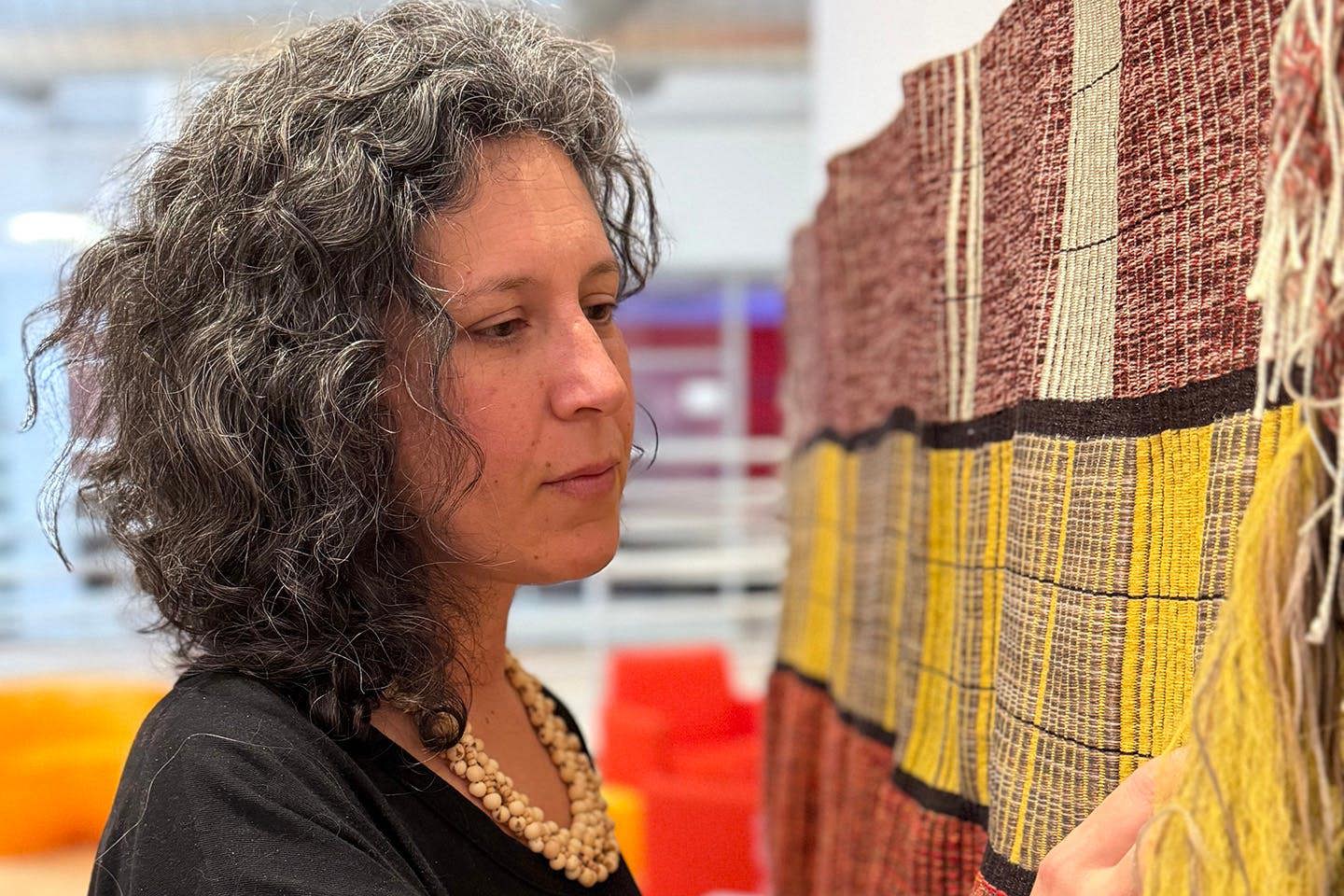
Dana’s piece was created for Textile Industry Partnership 2, a core course for second-year MFA Textiles students taught by program director and associate professor Preeti Gopinath. Dana and her classmates were responding to a challenge from Gopinath: to present urgent global issues in a compelling textile form. The course involved an innovative fusion of emotion, creative expression, data, and materials research—an educational approach characteristic of Parsons but uniquely arresting when taken up by textile practitioners. Data for the students’ projects came from the United Nations’ International Organization for Migration (IOM); the raw material was ECONYL®, a nylon yarn developed from ocean and landfill waste by Aquafil, a longtime MFA Textiles partner.
Dana’s objective was to map vegetation loss in five hotspots in Iraq’s Thi-Qar and Missan governorates and to depict the climate-induced migration it spurs. To convey these phenomena visually, she used a gridlike pattern in which the line weights and the size of the woven cells correspond to figures from the IOM data set. “I hope the accent color will spark viewers’ curiosity and deeper engagement with her story of fragility, resilience, and hope amid devastation,” she says.
“The humanity behind statistics is often lost when it’s expressed only in numbers,” Gopinath explains. “If I say, ‘2,000 immigrants’ or ‘2,000 migrants,’ you focus on the figures. But when I show you a textile and say, ‘Each thread represents a child,’ it helps you better grasp the gravity of the situation.”
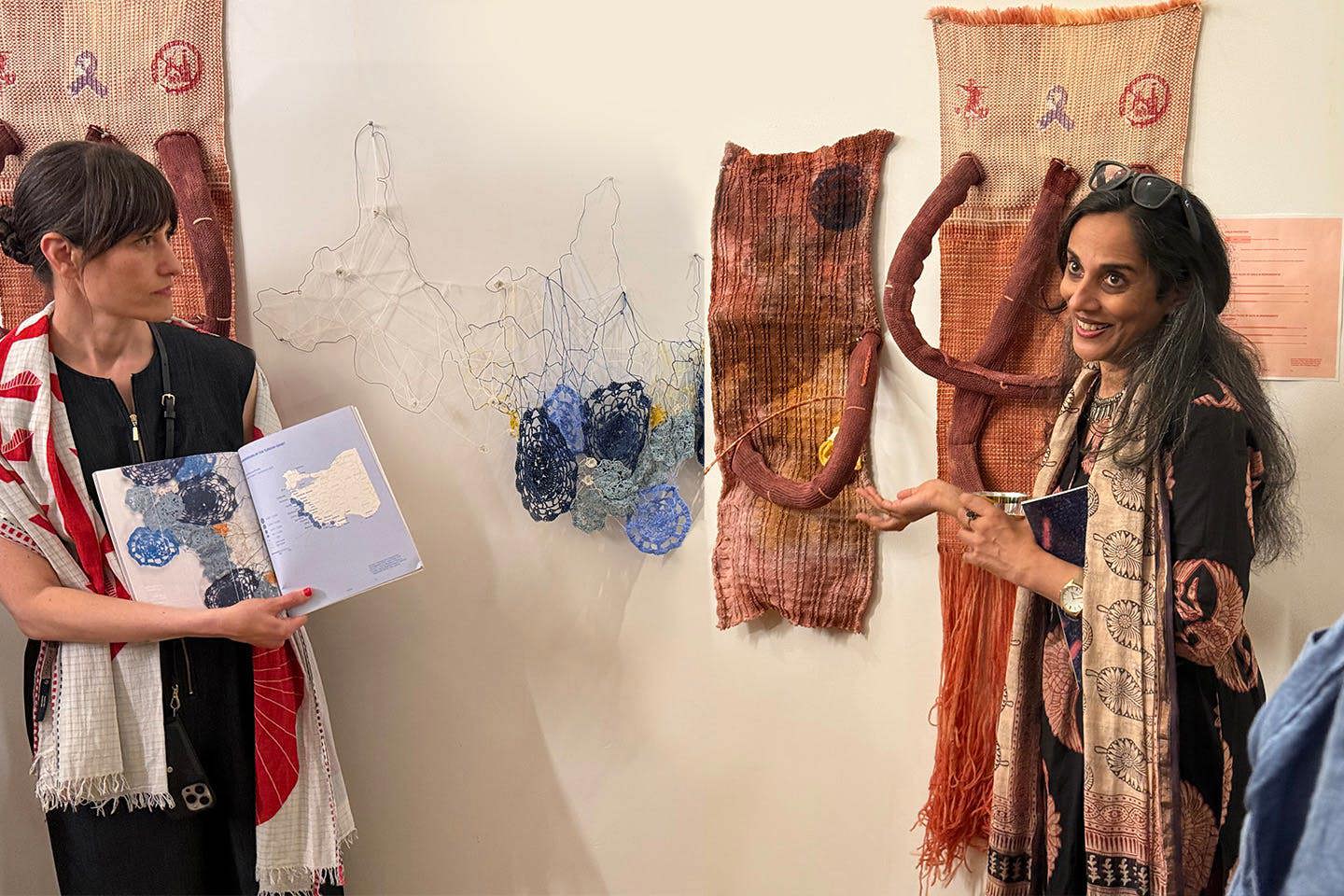
MFA Textiles student Hattie Batstone, who transformed a text-based data map of conflict-displaced Ukrainians into a vibrant landscape, agrees. “I was aiming to humanize the statistics,” she says. “I want people experiencing the work to consider the struggles in Ukraine and the region.” Batstone’s textile employs four colors to represent people forced to flee their homes but remaining within Ukraine’s borders, designated “internally displaced persons,” or IDPs, by the UN. Her map’s deeper hues mark higher concentrations.
The IOM has collaborated with universities on initiatives designed to help students understand migration through data. Past projects have focused on educating youth about migration, teaching them to interpret migration data and think critically about displacement in an era characterized by widespread misinformation. Most of the UN’s collaborations have involved conducting social science research with UK partners. “I thought it would be interesting to work with a new kind of partner, one beyond our borders,” says Isabella Salom, a data analyst for the IOM. “My twin brother is pursuing an MS in Strategic Design and Management at Parsons, which got me thinking: Here at the IOM, we have all this data; but what if we approached it in a new way?” she says. She wondered if complex data sets—bar charts, graphs, and migration statistics—could be translated into visual forms a wider audience could connect with. “Our mission with the IOM’s Displacement Tracking Matrix [DTM] is to inform a larger audience about nuances related to migration and displacement data. I thought, ‘Why don’t we do something with visual art?’”
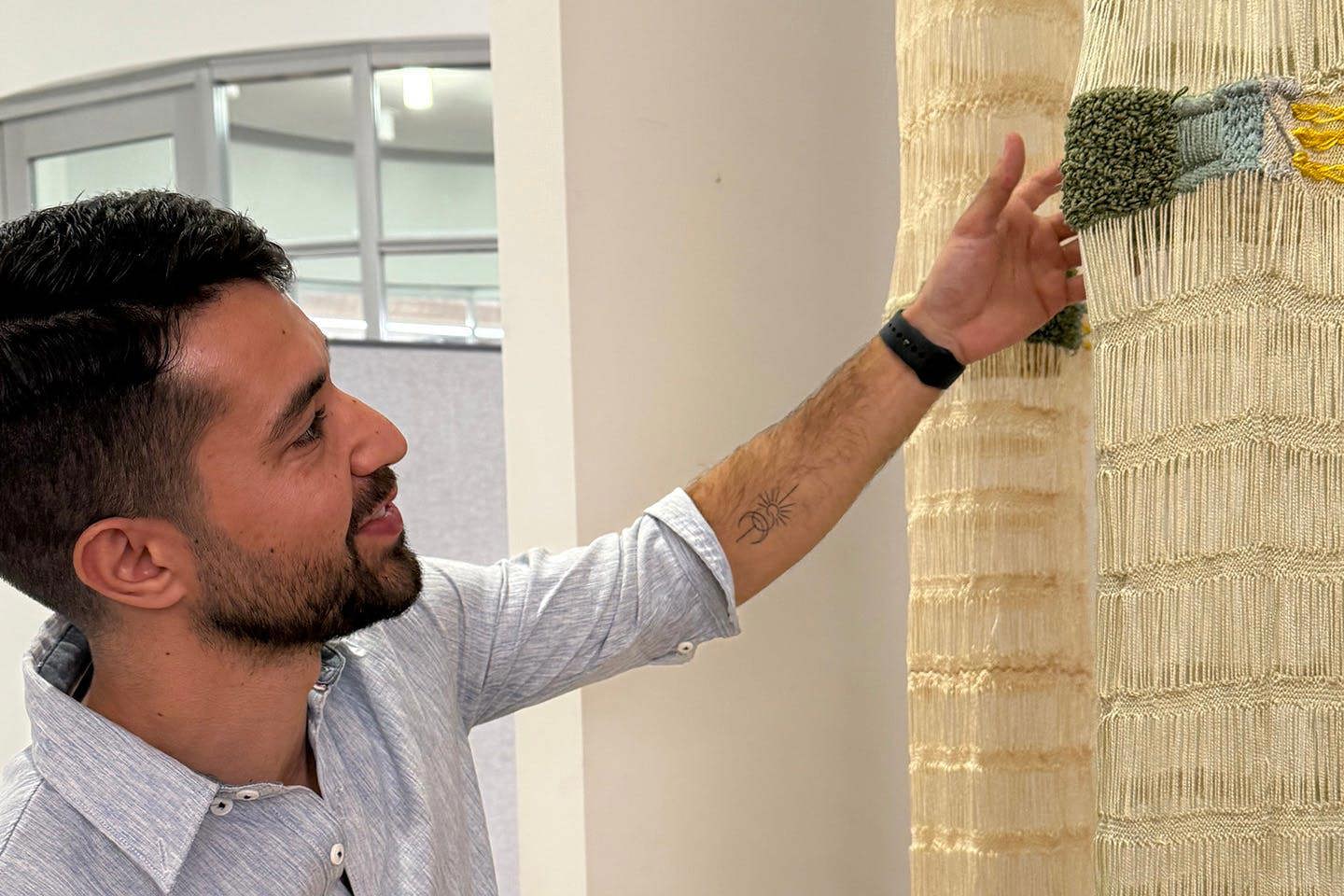
Salom’s inspiration came in part from the Tempestry Project, a community-led fiber arts initiative founded by artists in Anacortes, Washington, that turned climate data into hand-knitted and crocheted tapestries in which colors chart rising global temperatures. Salom contacted Ben Barry, Parsons’ dean of Fashion, and then Gopinath, whose enthusiasm brought the idea to life. She saw the project as offering a powerful way to make abstract data feel immediate and tactile, a process she describes as “turning numbers into narrative”—a way to draw people in and heighten their awareness of the human stories behind the data.
“People don’t often see textiles as a tool for storytelling or data visualization,” says Gopinath, who designed the course to mirror realworld industry practice through hands-on partnerships and professional mentorship. “I thought: Let’s combine Aquafil’s sustainable ECONYL® material with the UN’s call for a new way to interpret migration data. What if students created work in which every thread, stitch, loop, and color represented migration patterns caused by climate change, conflict, trafficking, or other complex global forces? That could draw people in to learn.”
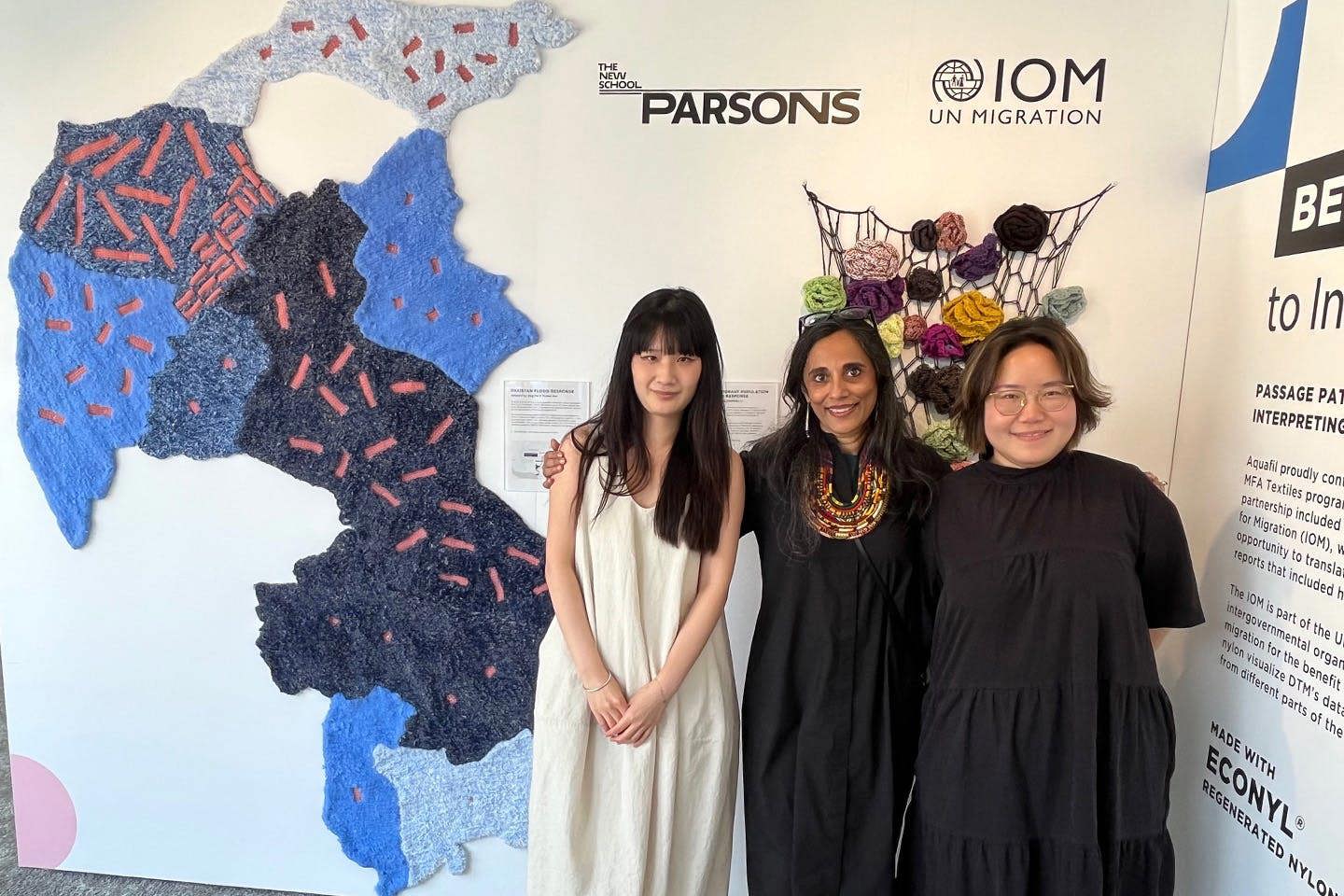
Having collaborated with Aquafil since 2021, Gopinath knew that the company’s sustainability mission aligns closely with that of Parsons. As Gaëlle Merlin, a design manager for the Aquafil Group, puts it, “At Aquafil, it’s in our DNA to be bold and experiment. We believe we can’t build a better future or a circular economy alone. We need others, like Parsons MFA students, to become informed and feel empowered to make circular decisions.”
Gopinath agrees. “Forward-thinking innovation is what happens at Parsons,” she says. “You get to work with students and faculty who think conceptually and aren’t afraid to try something different—even if it might go wrong in the first few attempts.”
At first, the initiative met with hesitation from several quarters. “When we first heard about this project brief from the UN—I won’t lie—we were a little nervous,” Merlin admits. “But we trust Preeti’s vision after working with her for years. She’s really reshaped the way we approach these projects and collaborate with students. We’ve realized we can’t go into a project with a fixed outcome in mind. It’s about letting the students guide the process.” Salom, too, had reservations, as it was unusual for the IOM to give students an open-ended brief with no clear final product. But Gopinath’s passion and faith in her students’ abilities won Salom over.
To start, the IOM gave students a number of detailed migration reports. An organization that operates in more than 100 countries, the IOM compiles large amounts of complex migration data. Each report contained a wealth of demographic data, including migrants’ sex, age, needs, places of origin and destinations, and reasons for migration (and related challenges), offering students an intricate web of human displacement data to analyze and interpret.
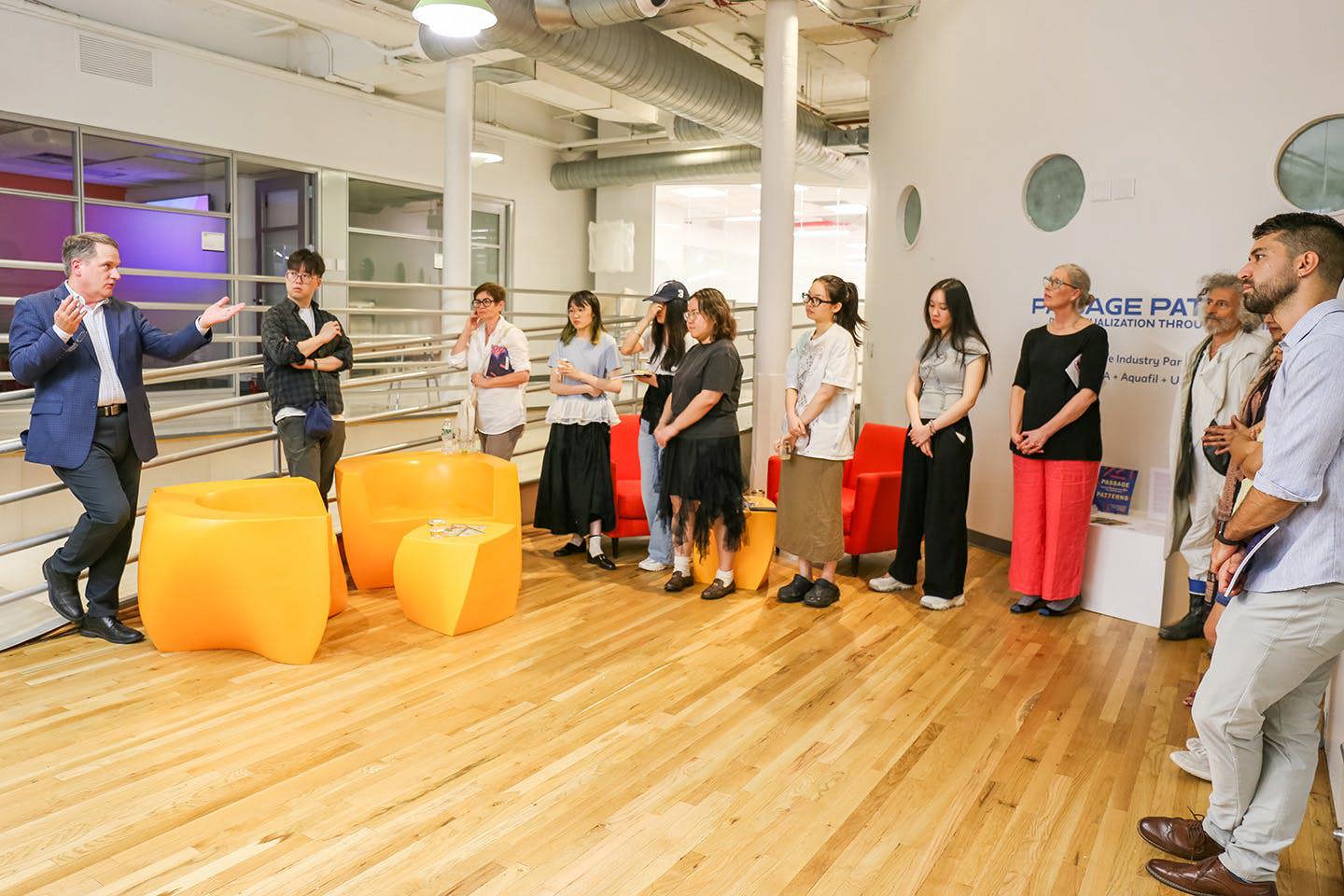
Acknowledging that the data reports were complex, Salom helped students understand the DTM, a key tool the IOM uses to gather and analyze data on the mobility, vulnerabilities, and needs of displaced and mobile populations. She then took a deliberately hands-off approach with the students, allowing them space for experimentation and individual expression. Meanwhile, Aquafil led students on a virtual visit to its production factory, including a tutorial on using ECONYL® fibers.
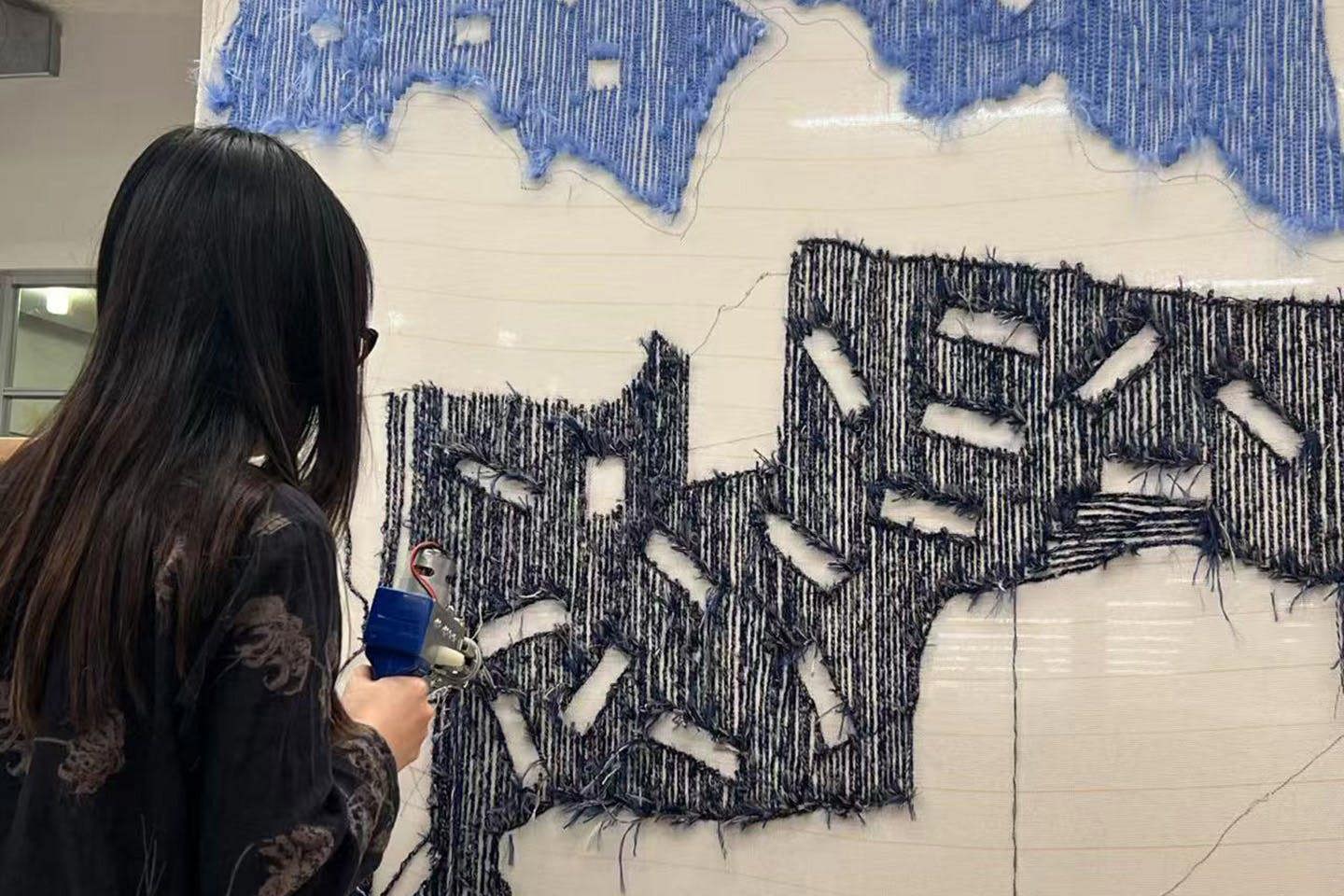
Students then chose the reports and corresponding regions that particularly interested them. Dana was drawn to the case of Iraq by her interest in the environment and natural materials; in addition, as an American, she felt compelled to focus on a country that had experienced upheaval and destruction as a result of U.S. intervention. Batstone, who has been following the conflict in Ukraine closely for years, also felt a personal connection to her chosen region. “I wanted to translate my ideas and emotions about it into a textile that speaks to the destruction and disruption of lives,” she says. “I chose knitting as a medium to convey those serious matters in a way that still felt beautiful.” Yichen Pan and Jing Pei chose the same report and collaborated on a project dealing with the recent devastating storm- and monsoon-driven floods and landslides in Pakistan, which have affected upwards of 33 million people. In their piece, they layered Pei’s weaving over Pan’s tufting, using contrasting textures to symbolize the ruptures caused by displacement.
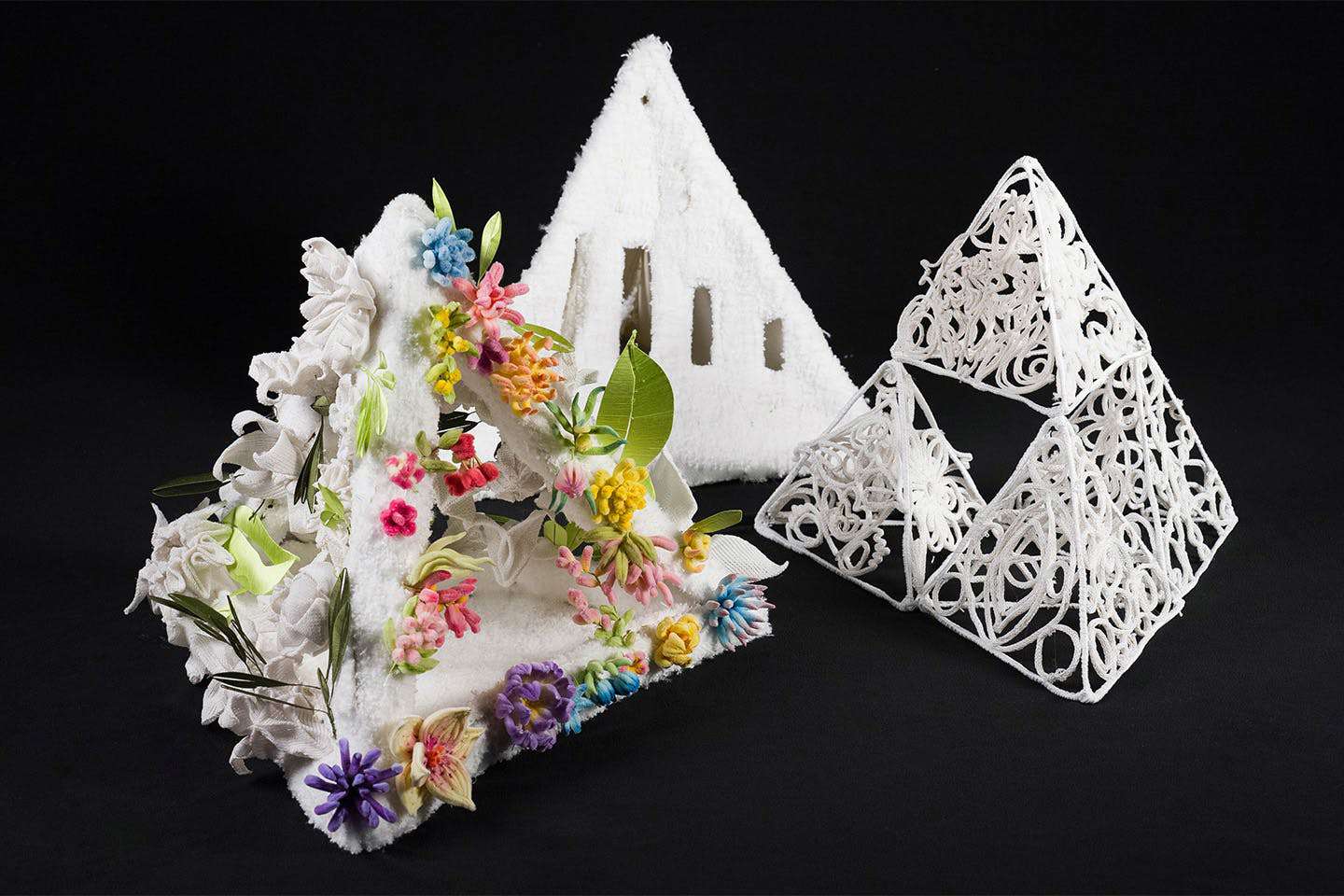
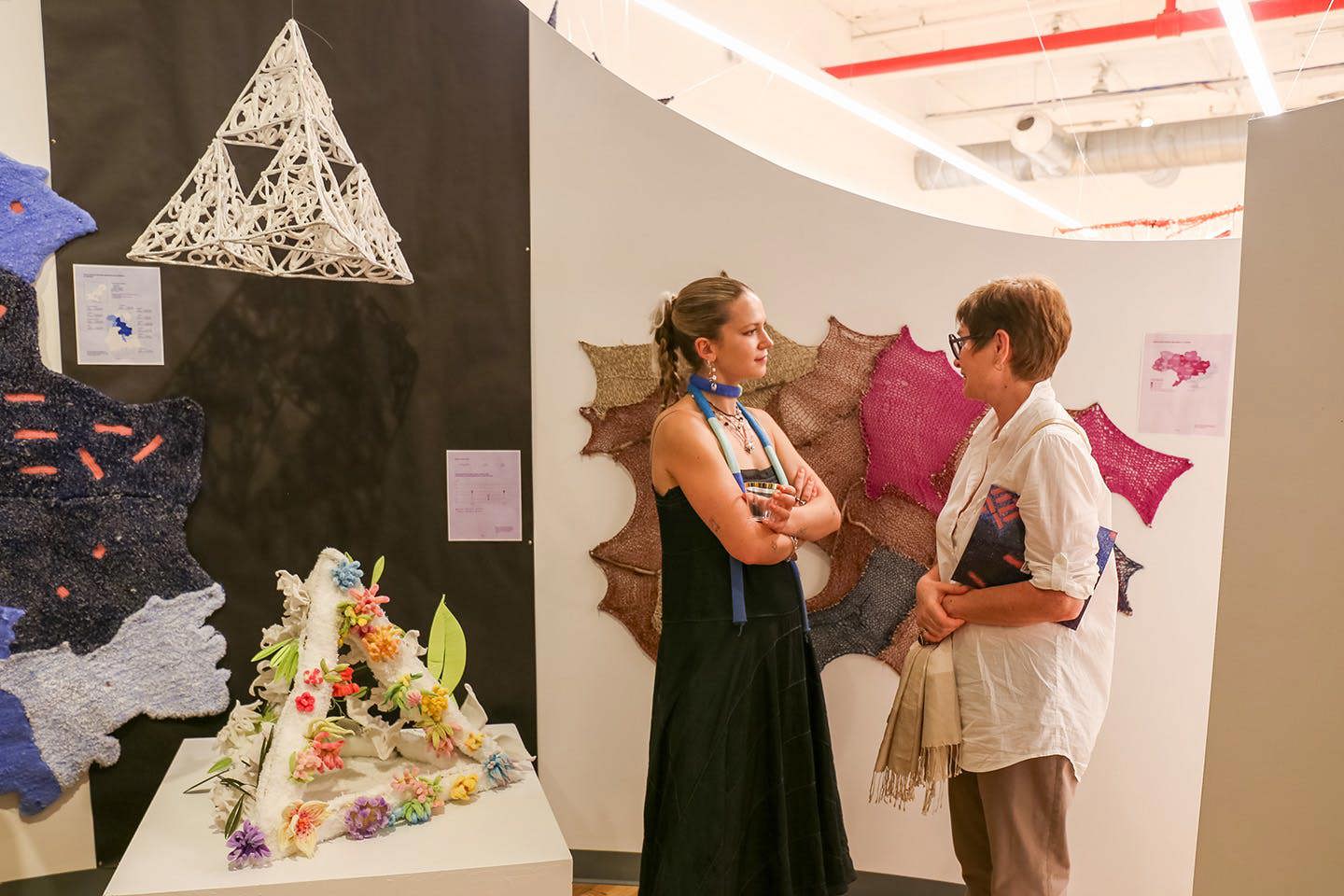
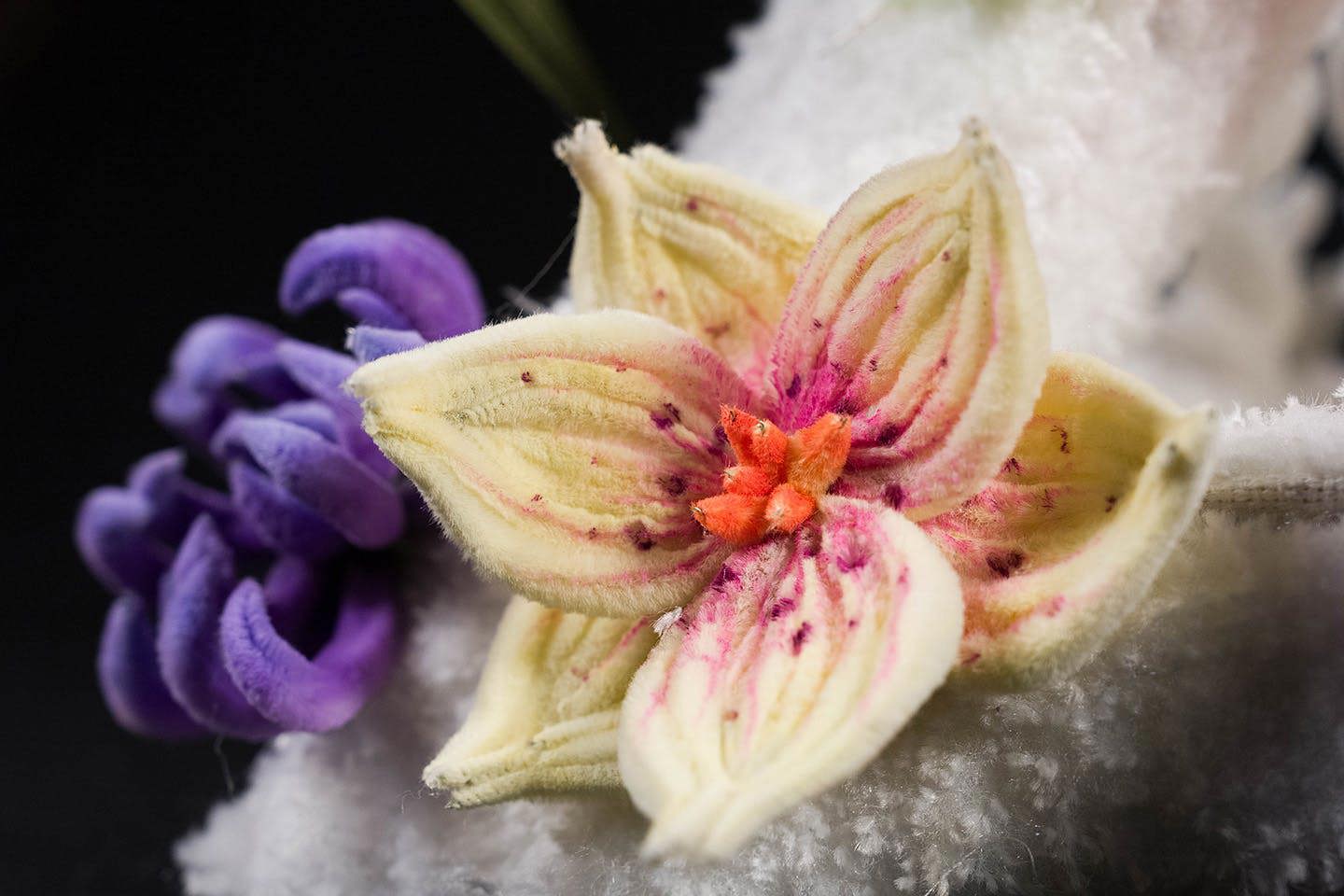
Others students chose a more abstract approach. Eva Ziqi Chen created three pyramidal structures, each representing a major entry point for migrants to Thailand. Her highly detailed, exquisitely crafted tentlike pieces convey facts on immigrant populations and their income, education, and expectations for well-paying employment. The structures combine to form a rich, multifaceted visualization of data related to the displaced population. The vibrant, multicolored flowers in her piece represent children, while the white knitted ones symbolize adults. Each colorful petal is meticulously woven as velvet on a small tapestry frame, then hand-painted and assembled into a delicate, data-laden bloom.
“I think being flexible worked in our favor, because it allowed the students to take the data and make it their own,” says Salom. “The project breathed life into the data.”
Gopinath and her students took Salom’s sentiment to heart. “The data represents actual humans,” says Pei. “So I needed to find a way to present it accurately in what can be an abstract format; I had to balance artistic expression and data expression.”
“I was working with a lot of graphs and numbers, so translating that into my own practice was challenging,” admits Batstone. Dana adds, “At one point, I had three pieces of data I needed to combine, including size and territory. It was making my head spin, but Preeti advised me to chart my ideas on paper.”
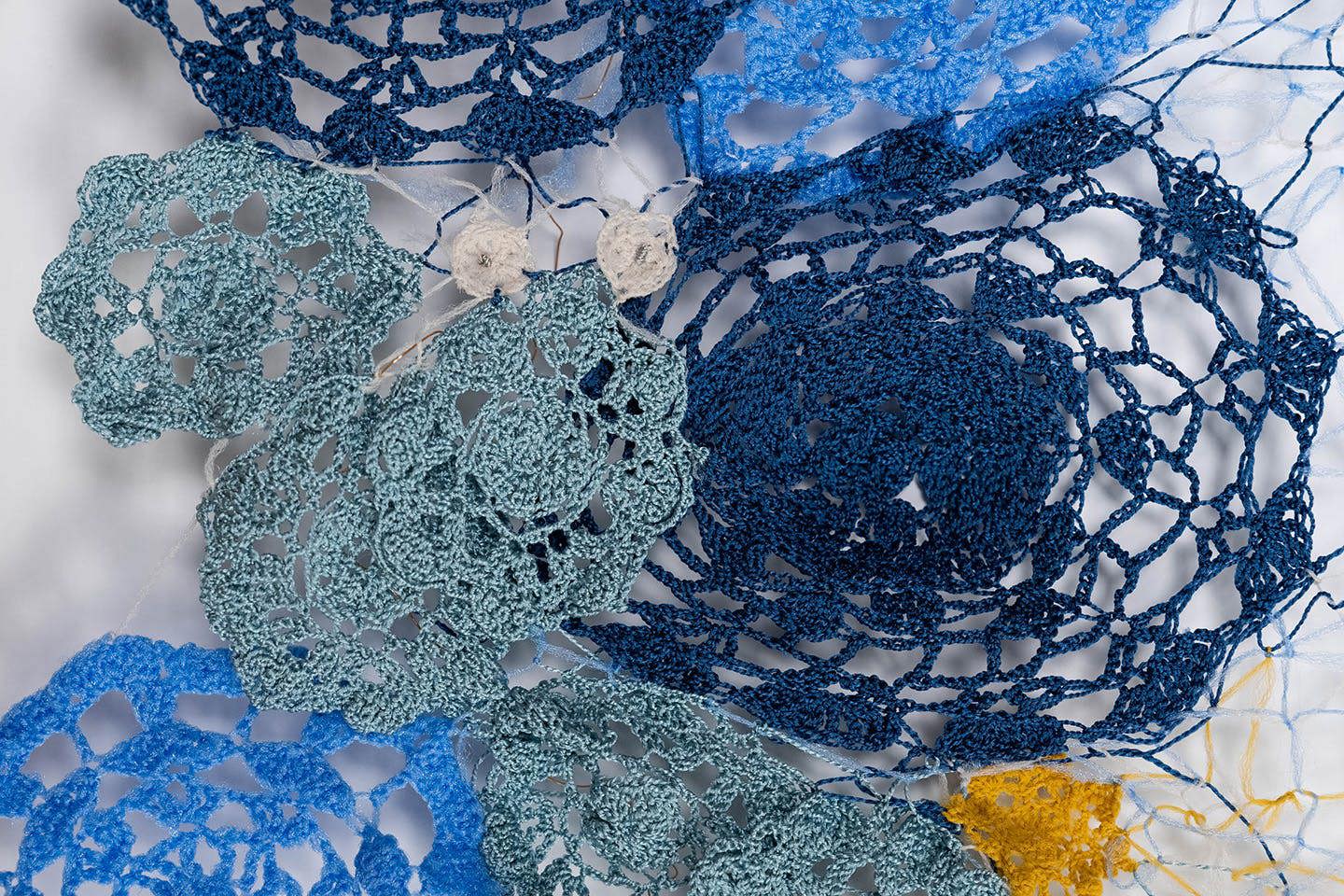
Batstone had a similar experience. “Preeti helped me see that the data wasn’t as overwhelming as it first seemed,” she says. “She reminded me that much of our creative work relies on numbers and that everything we do in our program has meaning and a story behind it. Textiles are all forms of data representation, even if they’re not graphs.”
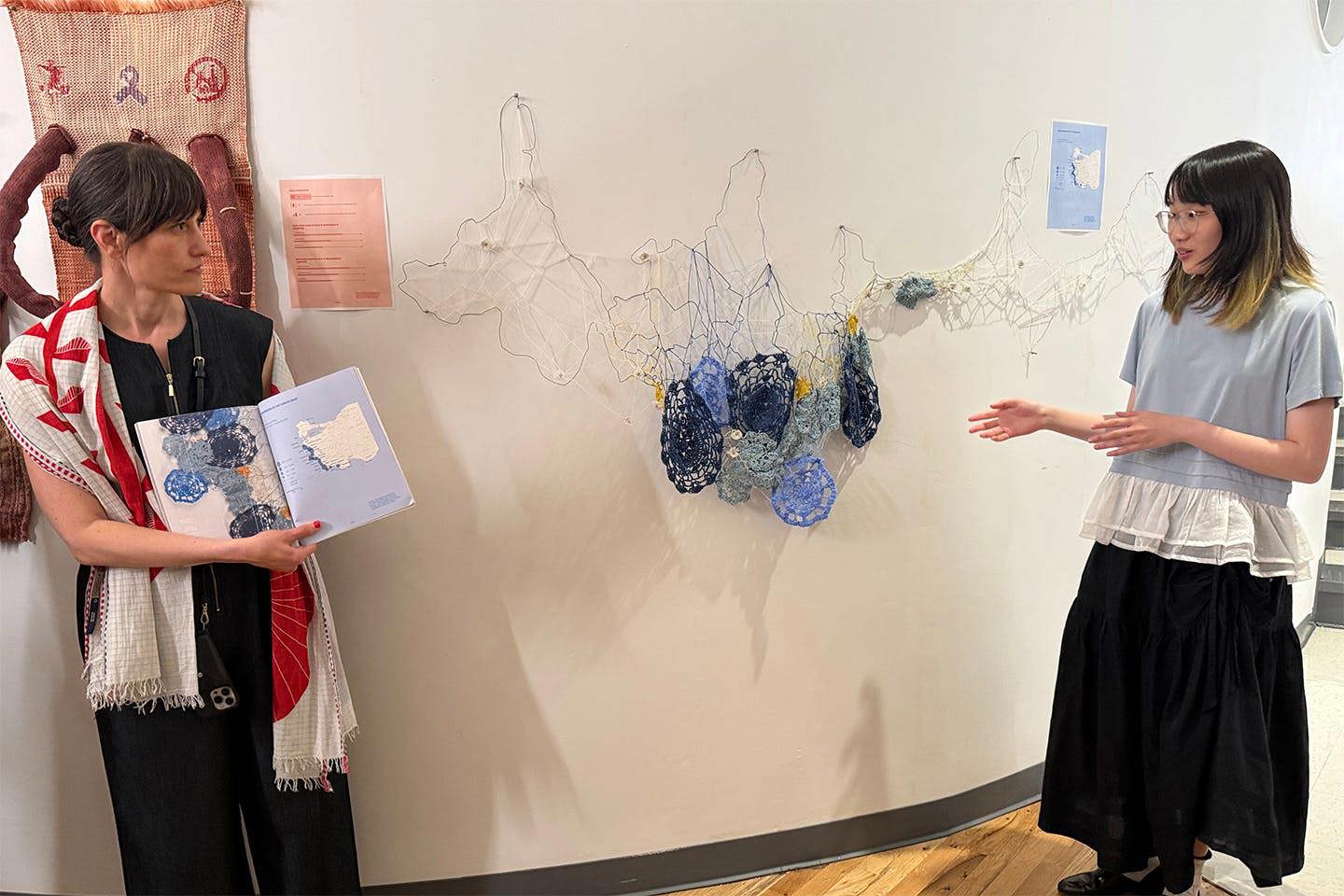
The course culminated in a virtual student presentation to the IOM and Aquafil in late 2024. Merlin, Salom, and their teams were impressed by the blend of information and emotional expression in and the beauty of the students’ textile projects. Merlin was also struck by the students’ embrace of sustainability in their work. “The MFA Textiles students are setting new standards for the industry,” says Merlin.
The students gained valuable experience by collaborating with an innovative industry leader like Aquafil and a global organization like the IOM. “The collaboration made me think more about the importance of knowing where your materials come from,” says Batstone. “I feel a responsibility to raise people’s awareness of forced migration through my work."
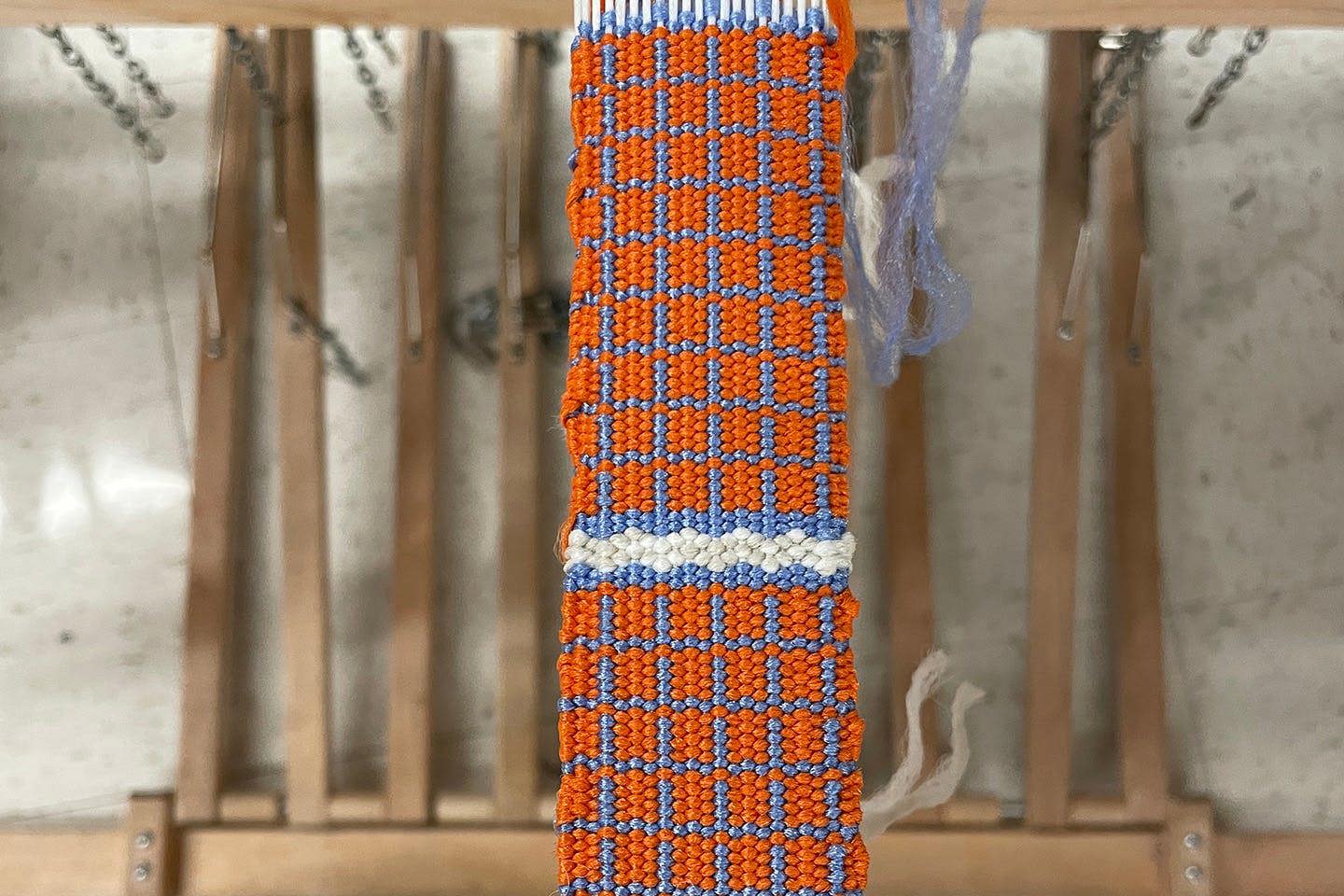
Gopinath and Merlin will be bringing students from the class to NeoCon, an annual furnishings trade show held in Chicago. Students’ work will be exhibited there, enabling them to reach a broader audience as they are exposed to other designers, architects, and industry professionals. The students made their exhibits more compelling by means such as interactive displays. “I want people to touch the work as a way of ‘touching’ the data set,” Pei explains. This tactile experience, she says, enables viewers to engage with the data at a deeper, sensory level, connecting them to the stories behind the statistics.
“Projects like these benefit students throughout their careers, not just as artists and designers but as human beings,” says Gopinath. “Now more than ever, initiatives like this are essential, because it’s easy to become desensitized when we’re inundated with data and statistics. Textiles encourage us to engage.”
Gopinath hopes to continue collaborating with Aquafil and organizations like the IOM, using similar data sets to inspire future projects. She envisions new iterations of this initiative, in which students engage with similar prompts, offering their own unique perspectives and creative responses. Through such collaborations Gopinath aims to foster a deeper understanding of global issues while expanding the boundaries of design and storytelling through textiles.
“It’s been a great opportunity not only to raise public awareness of global issues like these but to effectively demonstrate to people in the textile industry ways to create work with impact from these circular threads and yarns,” says Gopinath. “This project also helped those in the class realize they have power and agency in their work; whether through building professional networks or by weaving meaning directly into their textiles, students can help design a better future.”