Svavar Kristjansson and Burke Adams
Living Acre
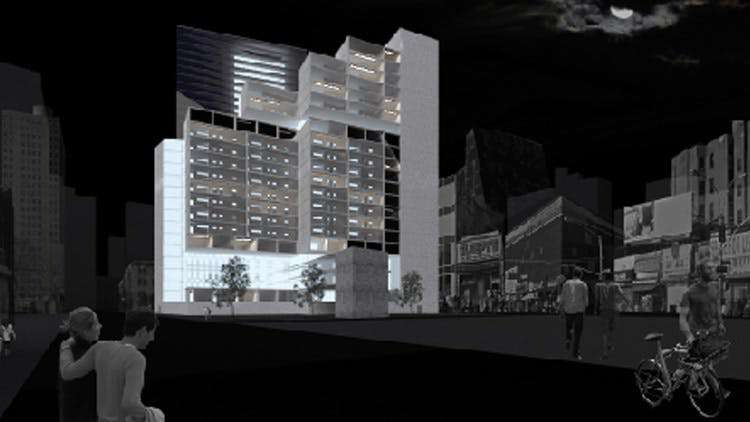
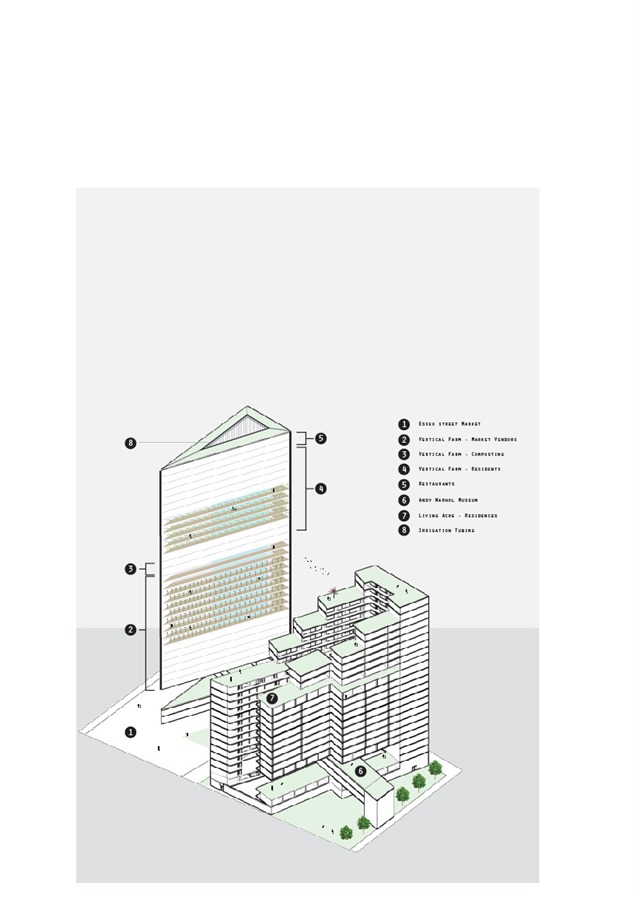
Living Acre challenges existing typologies of urban agriculture. Using sunlight, water, and food, the residential vertical farm is a defiant light among the shadows of the Lower East Side. The vertical site takes the form of a series of nodes, connected by a museum corridor across two lots. The circulation pattern produces a necessary dialogue between SoHo to the northwest and Seward Park to the southeast.
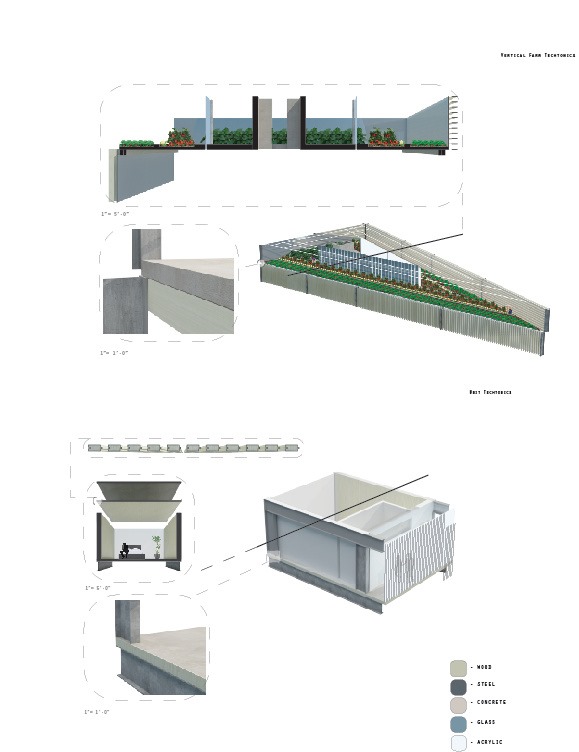
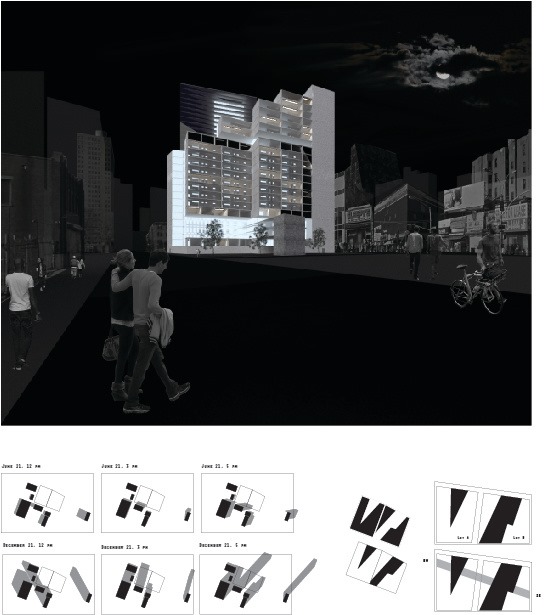
A study of sun patterns on Living Acre’s two lots during the winter and summer equinoxes determined the forms necessary to maximize sun exposure, which is required for both the residences and the farm. Rising over 300 feet, the farm collects and stores storm water through irrigation tubes that transport water to the vertical planter cells, extensive farm beds, and an aquaponic fish market. By refracting a light source through the acrylic water pipes, the irrigation structure circulates both water and light.
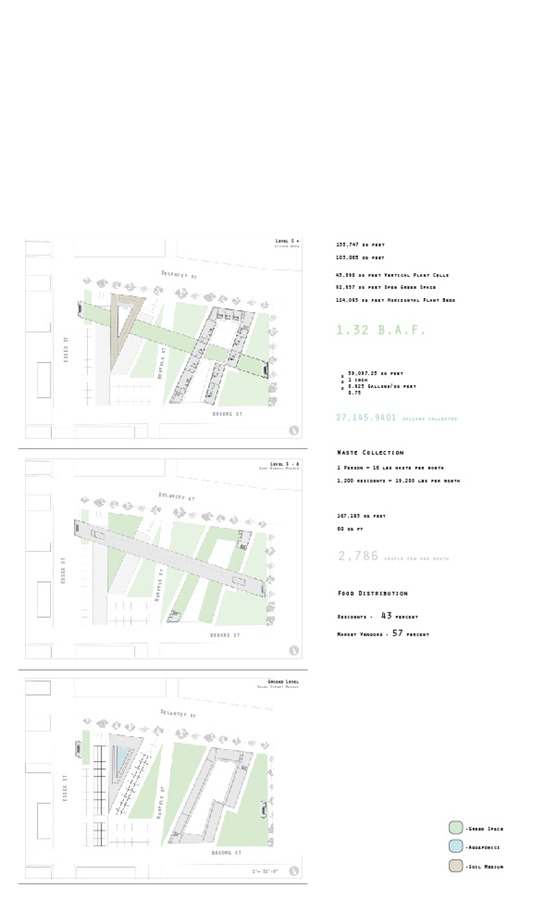
The vertical farm is an oasis in a struggling food desert. With only two small grocery stores within a five-minute walk, Living Acre will house and co-operate a food system that provides both food security and economic production for the community. By first feeding the 1,200 residents and then selling the surplus through the Essex Street Market, the farm will respond to the neighborhood’s social inequities. Those living in the residential tower will have the opportunity to operate plots within the tower, nourish, build sense of ownership, and successfully feed residents their own locally produced food.
Svavar Kristjansson
Svavar Kristjansson
Svavar Kristjansson
Svavar Kristjansson
Living Acre