Steven Hubbard
Patterns of Professional Identity in STEM Education
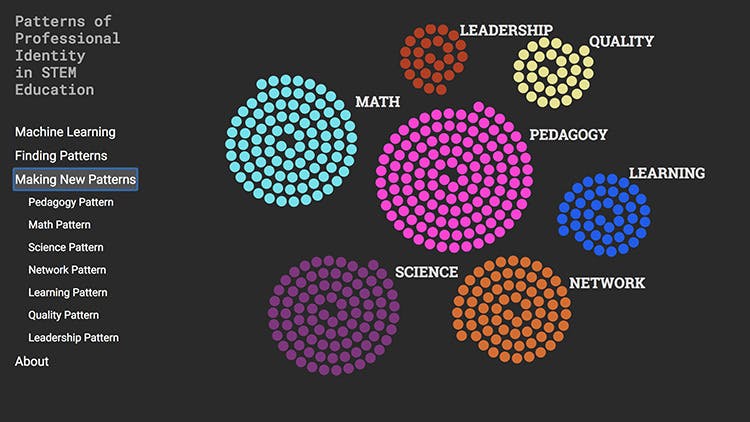
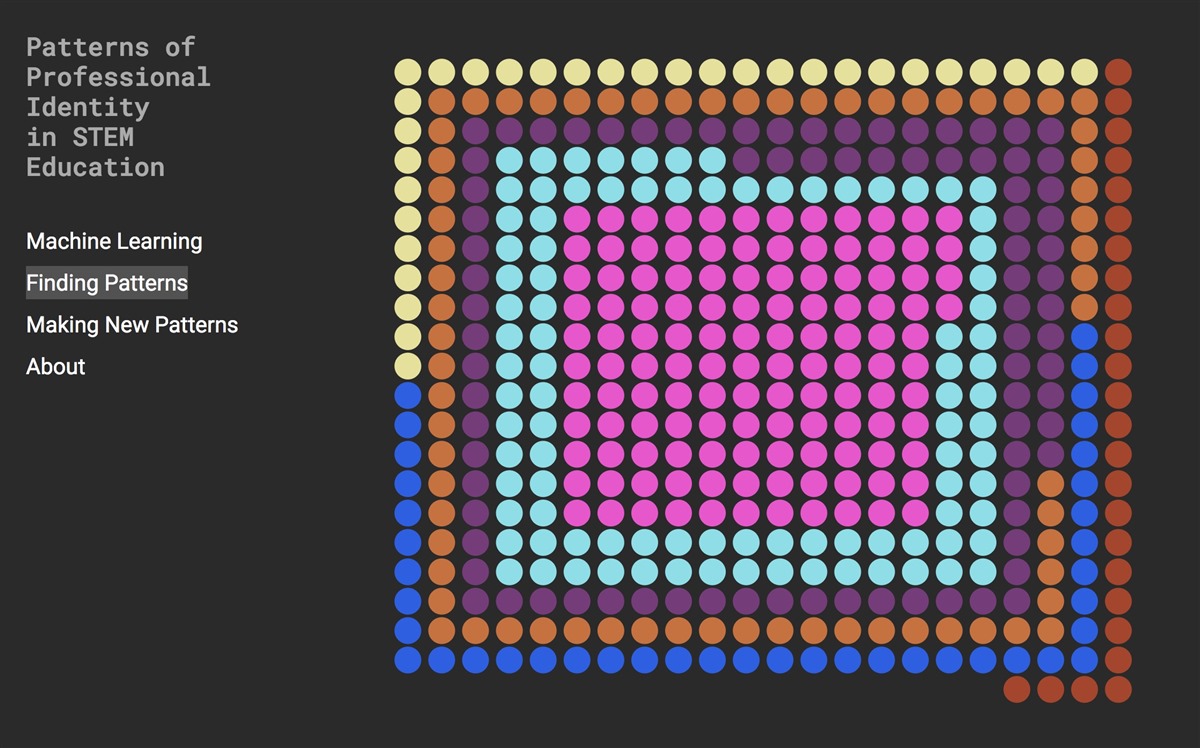
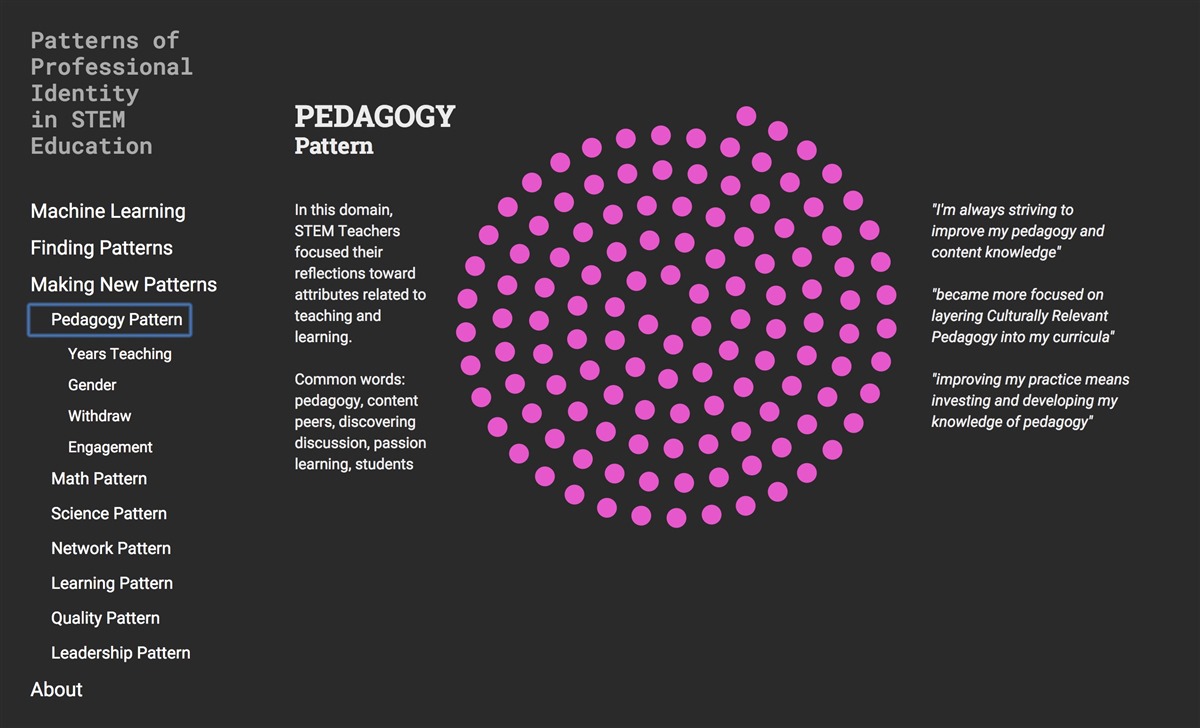
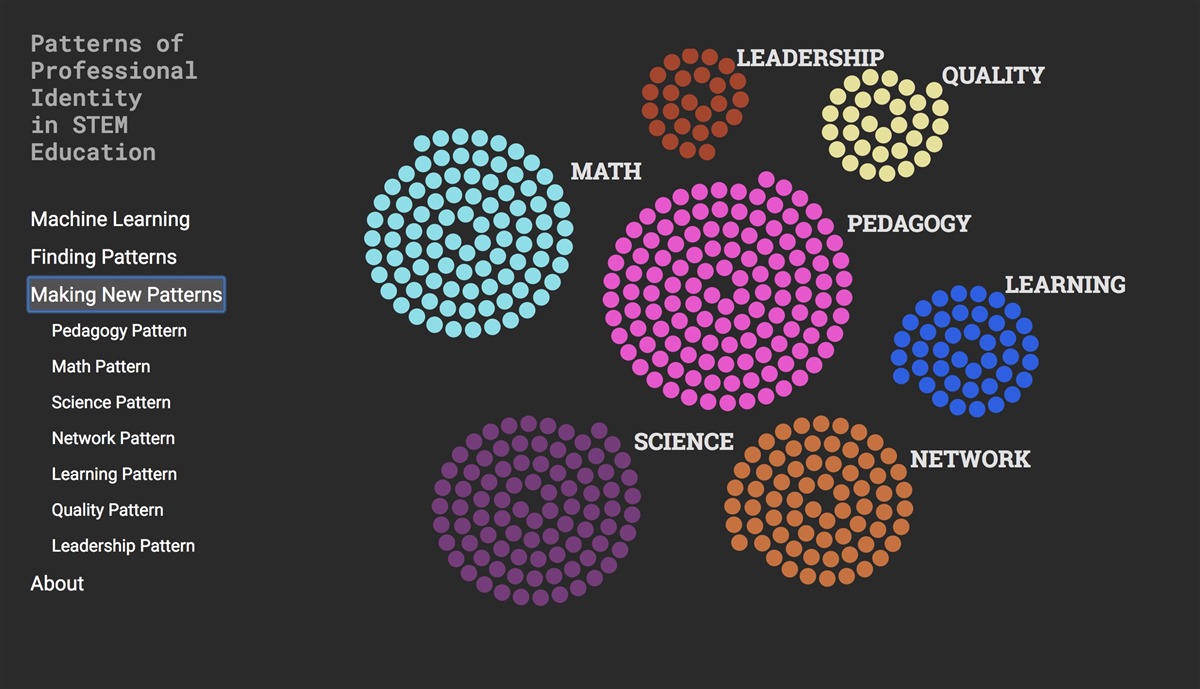
Students perform better in the classroom when their teachers are proficient in the subject they're teaching and demonstrate high levels of commitment to the profession. However, retaining K-12 educators has become a significant problem both nationally and locally. This is especially true for the math and science disciplines, which are in need of a diverse workforce for future economic development. This study explores and visualizes concepts of professional identity in math and science education to help educators, administrators, and policymakers create better solutions to retain educators. Using a data set from a science and math teaching fellowship program, this study analyzes and interprets professional identity by examining the written reflections of early and mid-career STEM educators and evaluates the effectiveness of using machine learning (K-means clustering) and data visualization tools as means to analyze teaching motivation.
Steven Hubbard
Patterns of Professional Identity in STEM Education
Steven Hubbard
Patterns of Professional Identity in STEM Education
Steven Hubbard
Patterns of Professional Identity in STEM Education
Steven Hubbard
Patterns of Professional Identity in STEM Education