Sheila Bridges
AAS Interior Design graduate and design industry changemaker Sheila Bridges confronts her field’s racial barriers while providing clients with the cutting-edge, tailored interiors for which her celebrated practice is known. Bridges cites persistence as a key to success and hopes her story will inspire young designers of color to courageously follow their dreams as well.
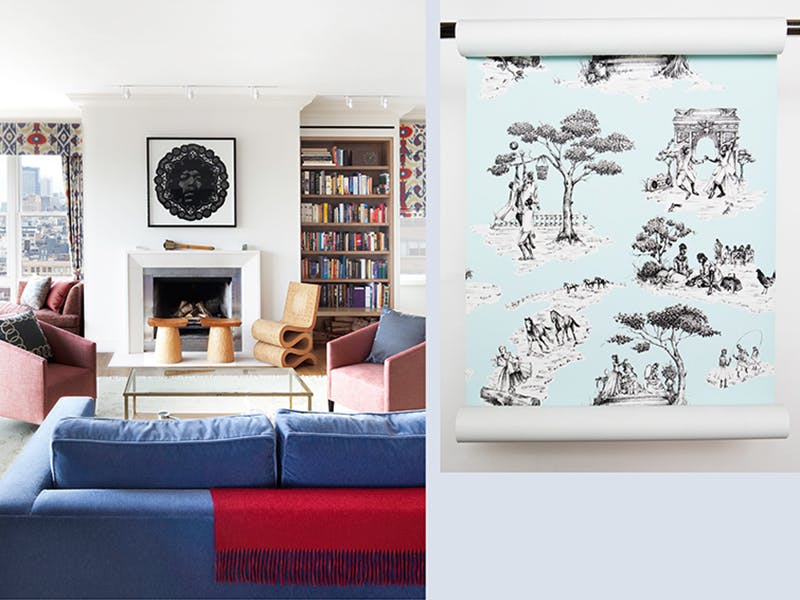
For Bridges, it’s partly a matter of visibility: “It’s no different from children seeing that our former President and First Lady were African-American. Suddenly, the possibility became real, and young African-Americans could aspire to great heights in any industry.”
With her provocative pattern Harlem Toile de Jouy, Bridges replaces the traditional pastoral motifs of French toile with scenes depicting African-American subjects at leisure, playing basketball, dancing, and fashioning hairstyles. Subverting dominant white cultural references with stereotypical Black ones, Bridges slyly challenges the design canon while underscoring the power of representation. The critically acclaimed design—which debuted in 2006 as wallpaper and has since been applied to upholstery fabric, bedding, dishware, umbrellas, and clothing—inserts a Black perspective into decorative arts history with a product that speaks to an often ignored audience. Today the affordable hand-screen-printed paper is part of the collection of Cooper Hewitt, Smithsonian Design Museum. Reflecting on the pattern, Bridges says, “As a designer, it’s necessary for me to be aware of what’s happening in the real world. I wanted to create something accessible to everyone, not just the elite.”