Sarah Mallory
Possessed: The Domestication of the Occult in the United States, 1850 – 1970
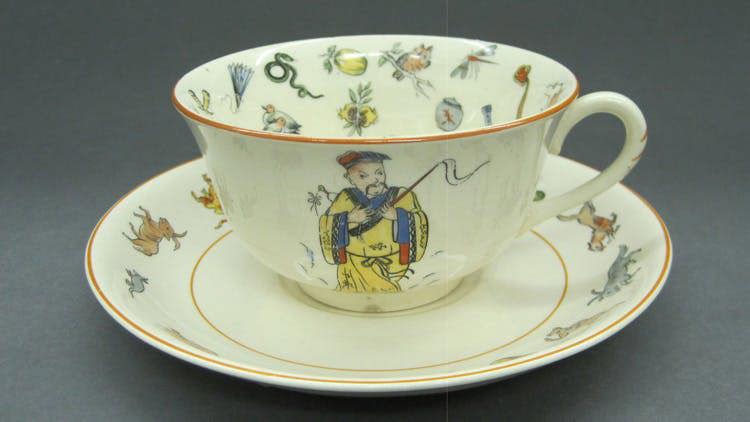
This thesis argues that occult-themed decorative objects created for the domestic sphere were key agents in domesticating the occult in the United States. While occultism has always had a presence in American history and culture, this thesis addresses decorative objects produced during three distinct periods when occultism was a mainstream novelty: the mid-nineteenth century, the years between the World Wars, and the late nineteen-sixties.
During these three spells of activity, an eager public rediscovered the hidden realm of occultism – defined in this instance as esoteric beliefs that run counter to contemporary scientific beliefs and Christian values – and fashioned them into amusing novelties. Americans linked commodification and consumption of occulted-themed decorative objects with the ability to domesticate – or reconcile, control, and understand – the occult.
Occultism became an index of the struggle between forces of subversion, diversity, and diversion. It grew from cultural norms that dictated certain esoteric practices and their practitioners as subversive; often, Americans perceived (or conflated) intellectual, moral, and racial diversity as subversive. Yet, the same public that feared occultism responded favorably to the phantasmagoria of esoteric decorative objects that appeared in the marketplace. They purchased items such as fortune-telling teacups, spirit photographs, astrological jewelry, and fortune-telling fans. These objects turned occultism into an amusing diversion rather than signs of subversion or diversity.
Current scholarship in the decorative arts rarely focuses on occultism in American design as valid form of discourse, or an indicator of sociocultural change; this lack of perspective should be mitigated to reveal a body of objects that have been overlooked. I hope to open up new avenues of discourse that further contextualize the importance of occult-themed objects in decorative arts scholarship.
During these three spells of activity, an eager public rediscovered the hidden realm of occultism – defined in this instance as esoteric beliefs that run counter to contemporary scientific beliefs and Christian values – and fashioned them into amusing novelties. Americans linked commodification and consumption of occulted-themed decorative objects with the ability to domesticate – or reconcile, control, and understand – the occult.
Occultism became an index of the struggle between forces of subversion, diversity, and diversion. It grew from cultural norms that dictated certain esoteric practices and their practitioners as subversive; often, Americans perceived (or conflated) intellectual, moral, and racial diversity as subversive. Yet, the same public that feared occultism responded favorably to the phantasmagoria of esoteric decorative objects that appeared in the marketplace. They purchased items such as fortune-telling teacups, spirit photographs, astrological jewelry, and fortune-telling fans. These objects turned occultism into an amusing diversion rather than signs of subversion or diversity.
Current scholarship in the decorative arts rarely focuses on occultism in American design as valid form of discourse, or an indicator of sociocultural change; this lack of perspective should be mitigated to reveal a body of objects that have been overlooked. I hope to open up new avenues of discourse that further contextualize the importance of occult-themed objects in decorative arts scholarship.