Sam Vickars
Visualizing Canada's Indian Residential Schools
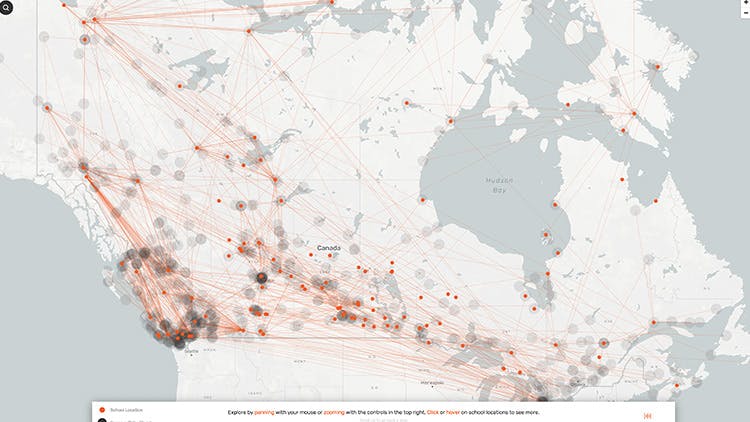
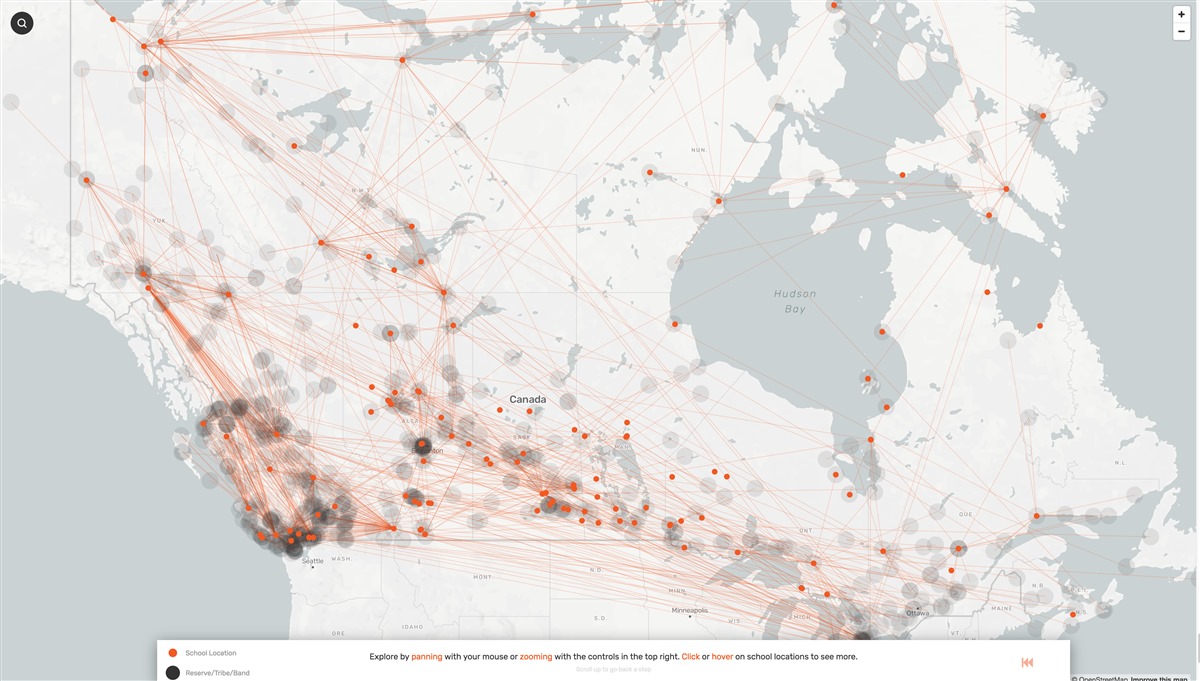
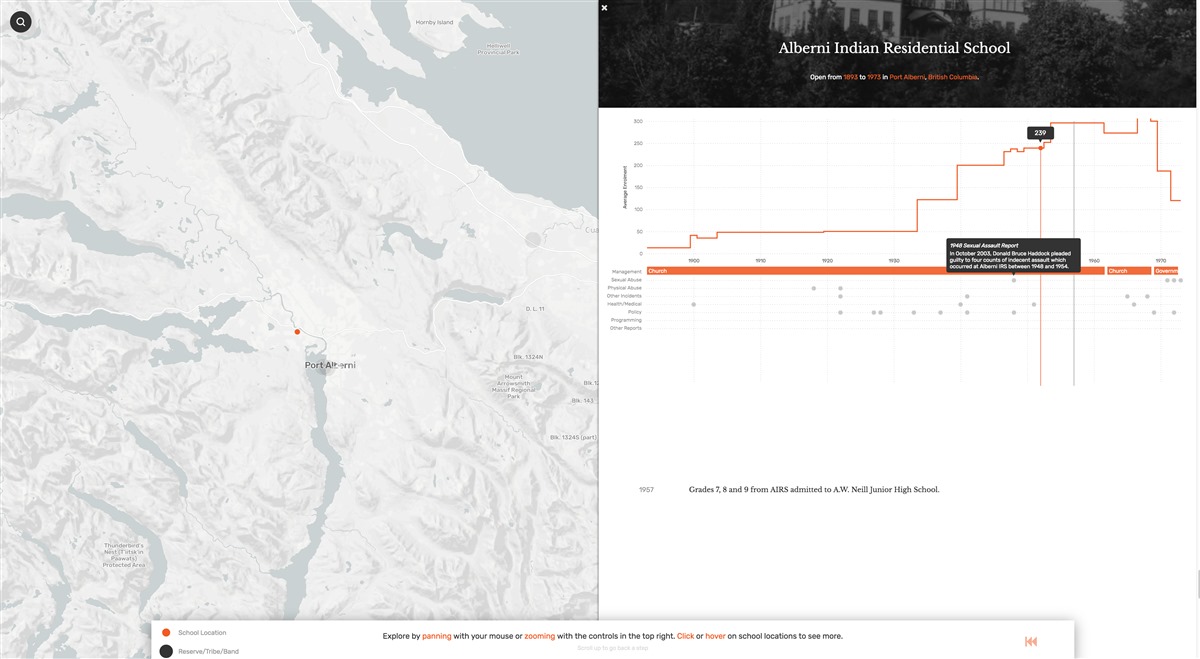
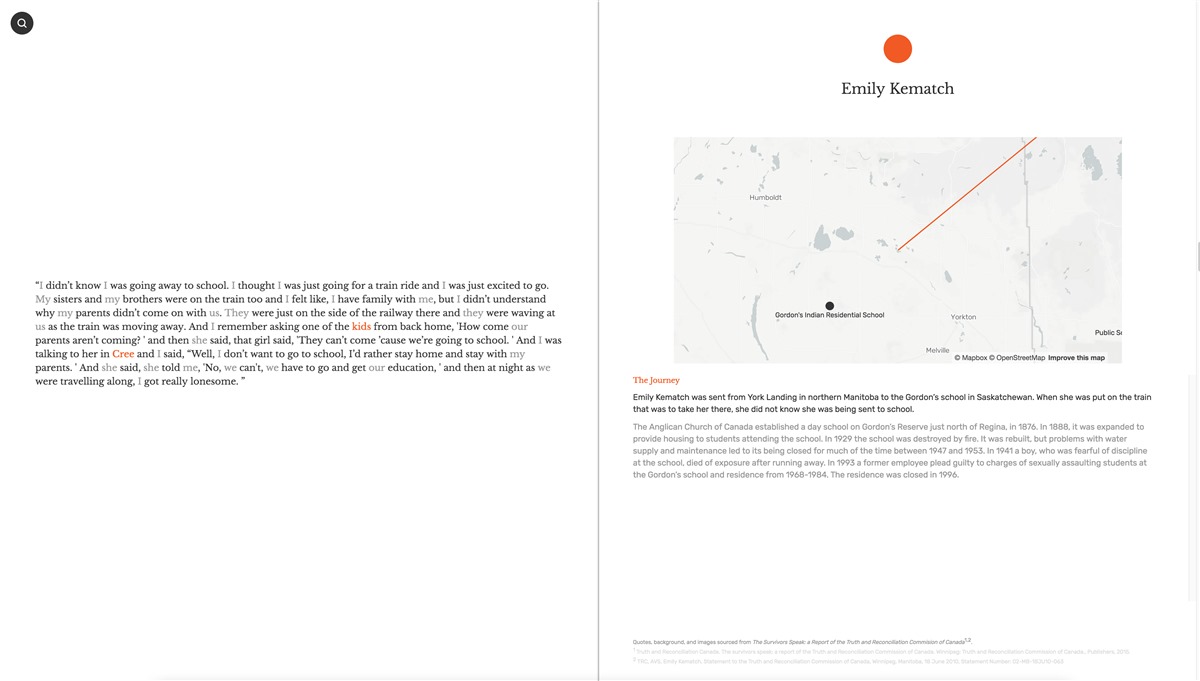
Canada's Indian Residential School System (IRS) was a network of boarding and industrial schools created to remove indigenous children from their homes and families. The system was active primarily following passage of Canada's Indian Act of 1876, a group of laws aiming to do away with the Indian tribal system. Canada's Truth and Reconciliation Commission found that 150,000 native children were placed in about 130 IRS schools. The last federally operated school closed in 1996. In recent years and in light of official apologies issued by local and federal governments, the Vatican, and various church groups, information about the schools and students' welfare has become public knowledge: physical and sexual abuse was common, both between students and involving administrators; malnourishment and poor living conditions were typical; and assimilation, repression of cultural traditions, and punishment were the standard. It is estimated that 6,000 children died while in attendance. This project aims to investigate the IRS system visually, beginning with the stories of survivors and transitioning into the narrative of each school and its student demographics, policies, everyday life, and management. What is presented here is a selection of survivor stories gathered by the Truth and Reconciliation Commission between 2008 and 2015. View the whole project here:
www.residentialschools.info
.
Sam Vickars
Visualizing Canada's Indian Residential Schools
Sam Vickars
Visualizing Canada's Indian Residential Schools
Sam Vickars
Visualizing Canada's Indian Residential Schools
Sam Vickars
Visualizing Canada's Indian Residential Schools
Sam Vickars
Visualizing Canada's Indian Residential Schools