Miranda Reinhart
Neuroaesthetics of the Therapeutic Environment
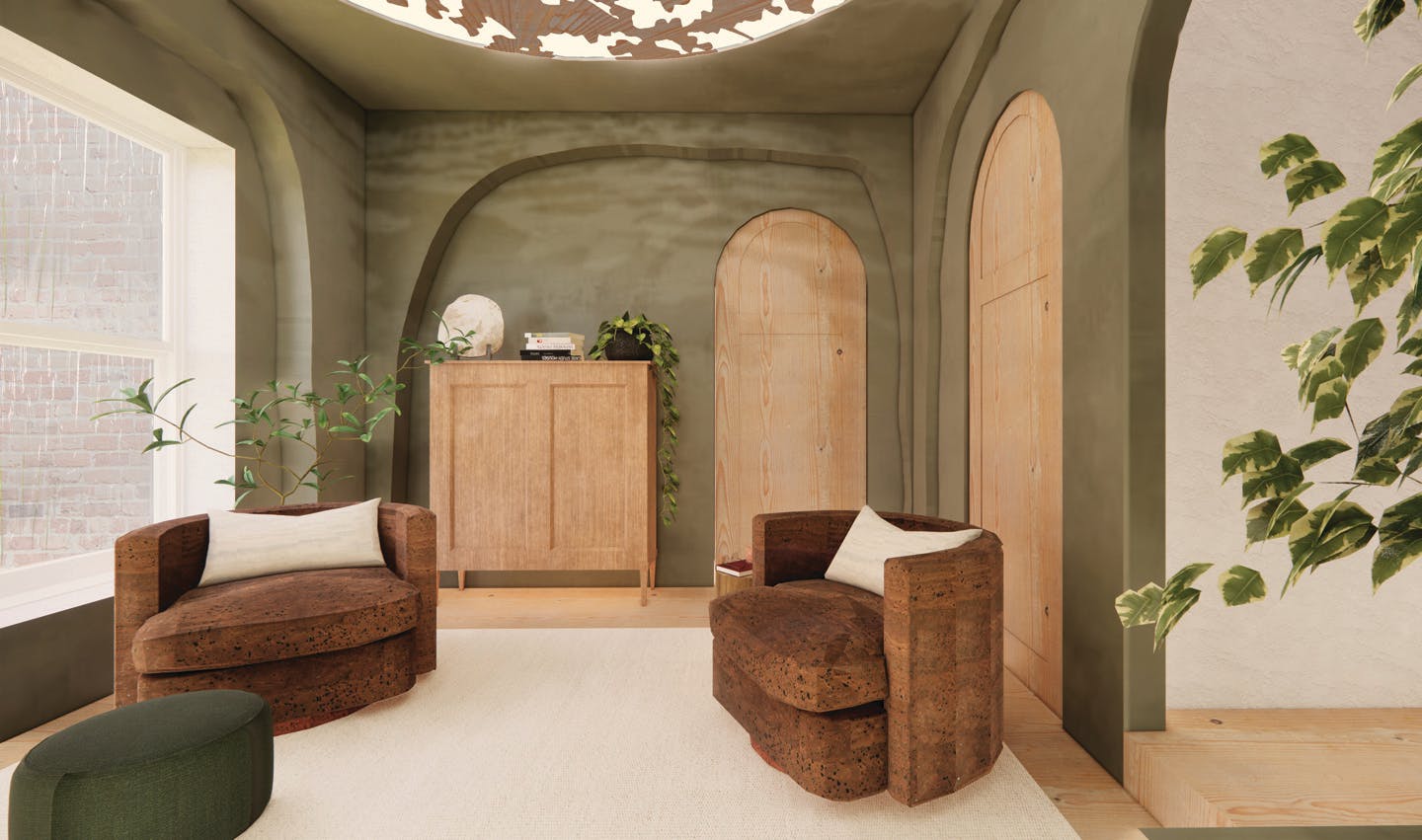
Mental health is a topic that is attracting growing attention in the design community. Interior designers have focused on designing for mental health in the workplace, hospitals, and homes, but the therapy office, one of the primary sites for provision of mental healthcare, has been neglected. My thesis asks how therapy offices can incorporate evidence-based neuroaesthetic design to promote healing of both the mind and the body, making the office interior an active participant in the treatment of patients.
The design concept is inspired by shinrin-yoku. The term, coined in 1982 and translating to “forest bathing,” refers to a Japanese technique involving standing in the middle of a forest. Used to improve mental and physical well-being, the technique has been shown to have beneficial effects, alleviating stress by reducing cortisol production, blood pressure, and heart rate.
The environment, in its natural form or a simulation, can have a significant effect on the body and health: Just looking at an image of nature can calm the viewer and improve well-being. Inspired by this concept, my thesis explores the redesign of a therapy office through the application of neuroaesthetic principles to create an environment with a calming and refreshing effect on patients.