Partnering with the Guggenheim to Make Museums More Inclusive
Kite City, a recent BFA Integrated Design course led by Marisa Morán Jahn and Neva Kocic, challenged students to design an installation and workshop to help make the Guggenheim Museum a more inclusive space.
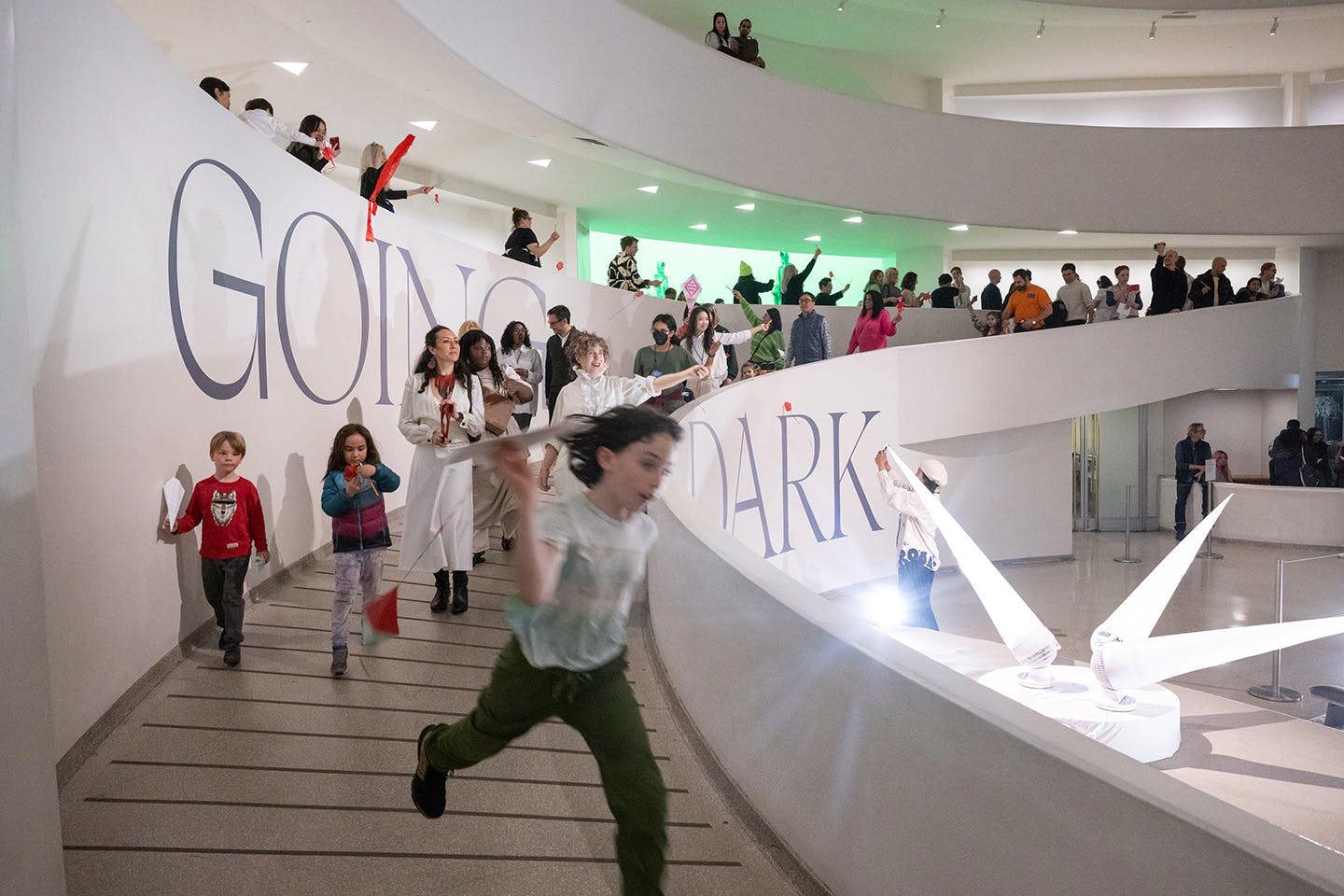
The course responded to an invitation from the Guggenheim’s director of Academic Engagement, Chitra Ramalingam, to partner with the museum through its Innovation Lab program, which creates collaborations with New York–based college students. Ramalingam’s goal? To draw on Parsons’ creative strategies to attract a broader audience and make the museum more accessible and immersive for children of all ages. Jahn and Kocic turned the invitation into an ambitious classroom assignment to take inspiration from the iconic Frank Lloyd Wright–designed building, with its spacious lobby and spiral ramp, and make the interior come alive with an event to guide families to create together and explore art. To engage with the course’s goal, students would research the space, with its soaring central atrium, explore ways to activate it, and investigate the science of flight. It was an expansive interdisciplinary immersion in creating with a social aim and for a legendary cultural partner.
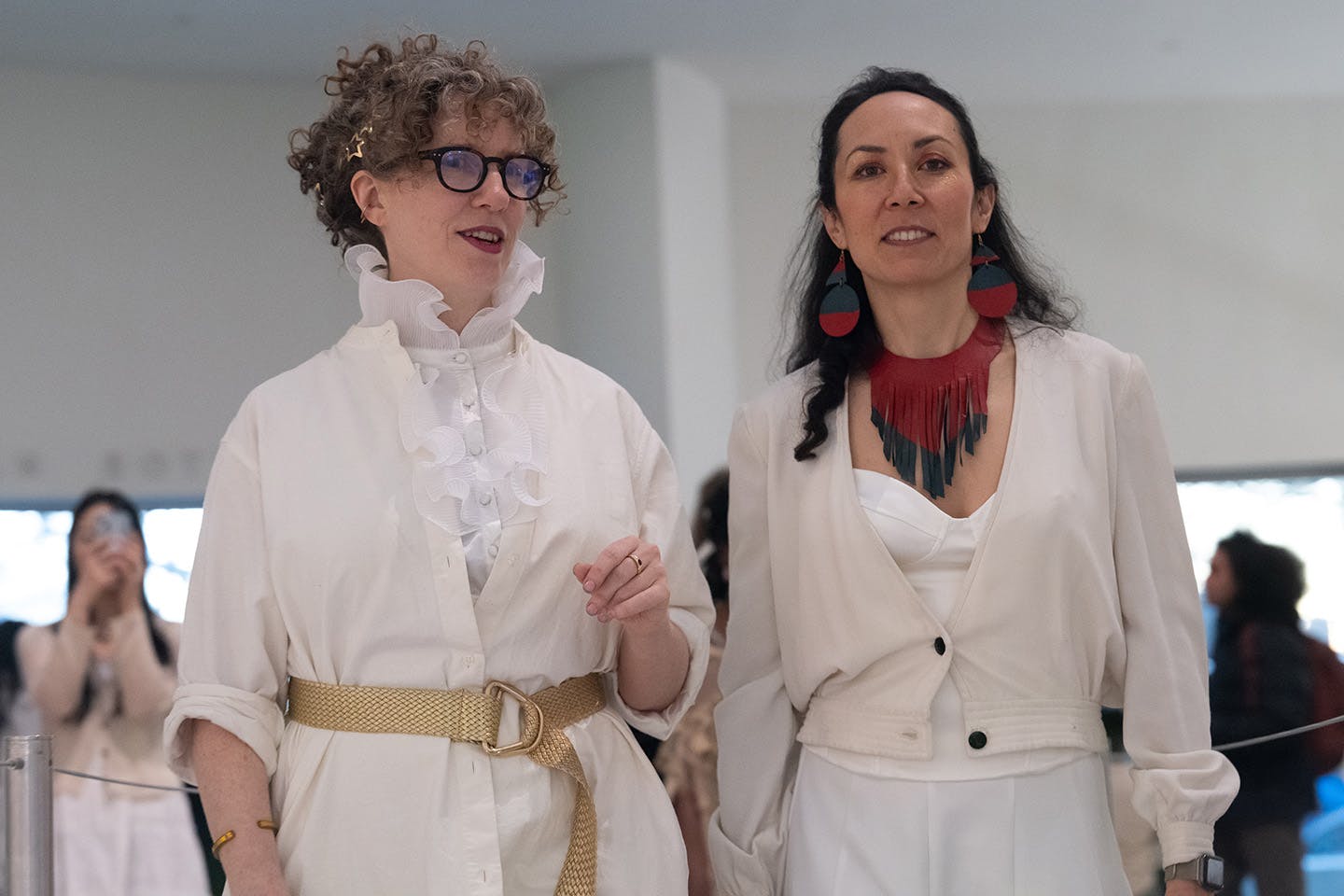
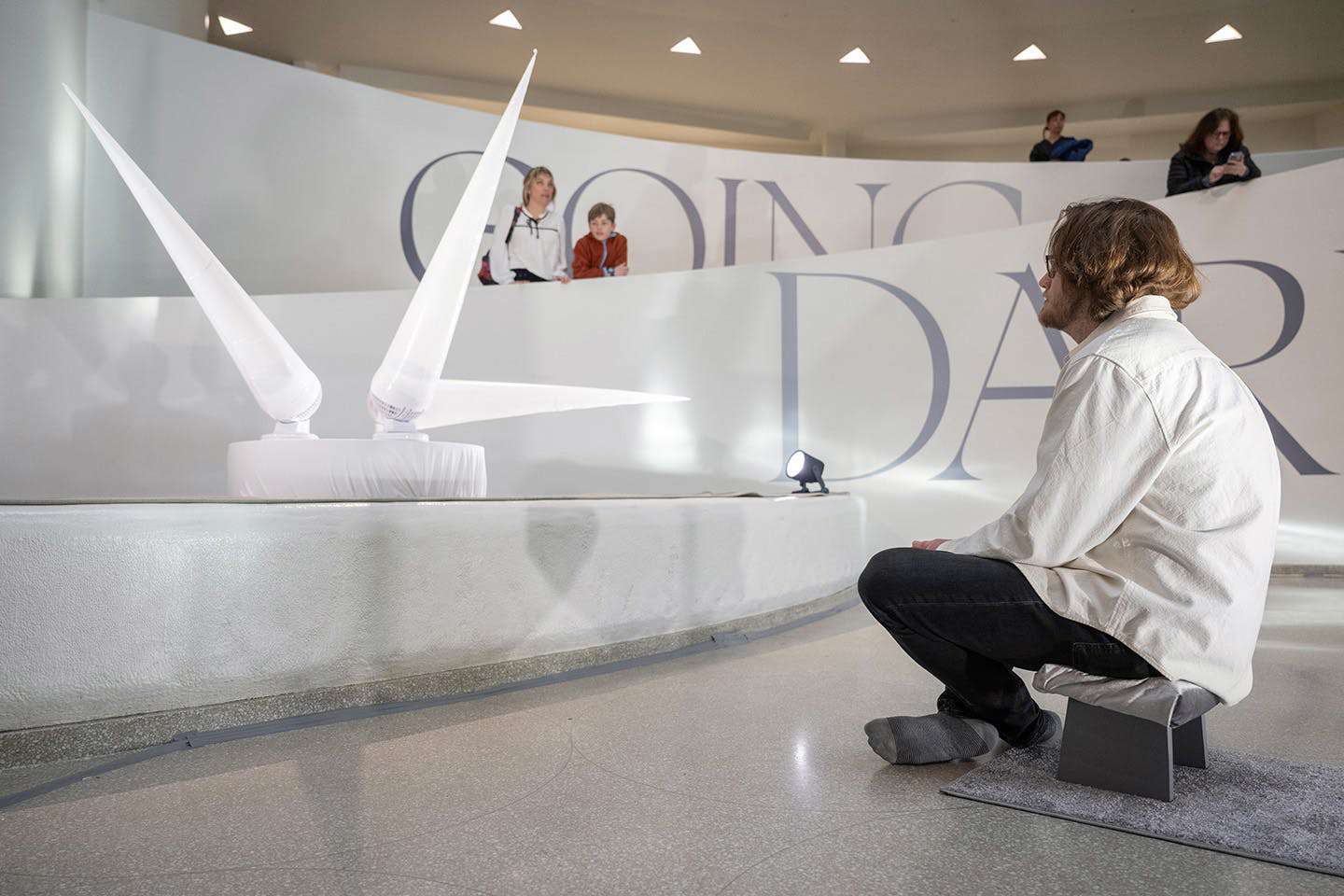
Over the course of the semester-long class, students settled on devising easily-assembled kites that could be flown inside the museum along with a workshop to guide young people and their families in making their own kites. Students’ research into aerodynamics also led them to conceive a series of inflated sculptures that could be installed in the Guggenheim’s lobby. Made from white trash bags and filled with air from oscillating table fans, the conical sculptures resembled beaked creatures. Excitement mounted as plans were tested and adapted (no, full-size kites could not be flown inside the museum but yes, kids could make mini-kites), workshop materials were designed and printed, and students mapped out where their animated inflatable sculptures would be placed in the lobby. “It was critical that students had design constraints and guidelines and audiences to work with,” says Jahn.
When the day arrived for the Guggenheim’s special event, which the Parsons team dubbed Float, students led adults and children in the creative workshop on the museum’s third floor. Together they sketched, prototyped, and built miniature kites that were later whisked down the rotunda’s spiraling ramp in a joyous performance art–like procession led by students along with Jahn and Kocic.
As the workshop participants made kites, attendees in the lobby interacted with the anthropomorphic sculptures. One pair seemed to be nuzzling each other; another did battle with their beaks. A third group tipped their beaks when museumgoers approached and seemed to kneel reverentially before them. The sculptures called to mind interactions typical of art-world settings, where cozy alliances, competition, and assertions of authority abound.
Ramalingam says that this was the first time her Guggenheim department worked with transdisciplinary designers. “The way Parsons’ Integrated Design program gives students cross-disciplinary experience—and Parsons’ emphasis on developing external partnerships and design processes with institutions—made the project an especially good fit.” She notes that Float “gave people the chance to do things that seem to go against the rules of the museum, like flying a kite,” saying the event will guide future programming at the Guggenheim.
Reflecting on the benefits of the class, student Riley Stark says it helped her “ability to think on my feet and prototype rapidly and adapt and iterate; I think that has been most beneficial for me and for the class, and it will help me also in the future.”