Kelsey Glein
The November Issue: The Role of Fashion and Politics in the 2012 Presidential Election
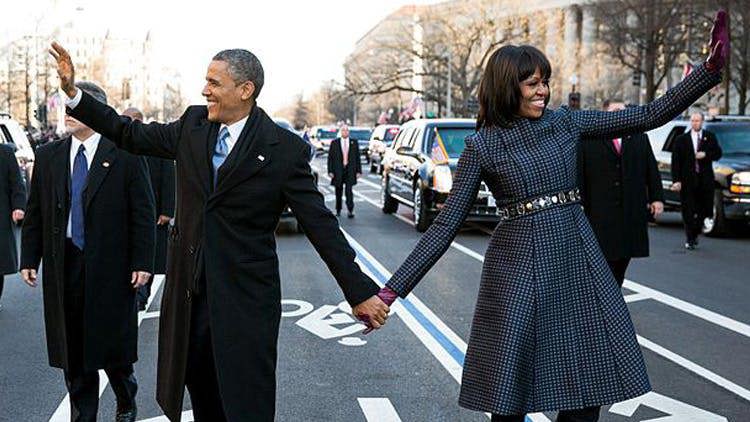
In today’s media-run culture, which is highly focused on the visual, the fashion system and the political system each exist as both substantive and superficial entities. Each of these systems exists independently of one another, yet overlap in several significant ways.
Both fashion and politics represent a merging of the public and private selves, and combine the artificial with the real. Both dictate our lives, and are simultaneously personal and impersonal. This research paper proposes that in the 2012 Presidential election, fashion inserted itself into the political system both aggressively and passively. The media played a significant role in this insertion, incessantly endorsing the link between fashion and politics and revealing the nature of systems as a means of conveying and identifying fashion. Fashion played a significant role in shaping the way we viewed the candidates and their wives.
Case studies used to illustrate this thesis include the fundraising efforts of Vogue Editor-in-Chief Anna Wintour for the reelection of President Barack Obama, and the focus of the media on the physical appearance and fashion choices of Ann Romney and First Lady Michelle Obama on the campaign trail as well as the deliberate fashion selections of these women. This work delves into the now inseparable relationship between First Lady Michelle Obama and fashion, and hints at the way this union comments on gender and race in both fashion and politics.
Overall, this thesis allows for a deeper knowledge of the way fashion and politics as social structures impact society and our identity.
Both fashion and politics represent a merging of the public and private selves, and combine the artificial with the real. Both dictate our lives, and are simultaneously personal and impersonal. This research paper proposes that in the 2012 Presidential election, fashion inserted itself into the political system both aggressively and passively. The media played a significant role in this insertion, incessantly endorsing the link between fashion and politics and revealing the nature of systems as a means of conveying and identifying fashion. Fashion played a significant role in shaping the way we viewed the candidates and their wives.
Case studies used to illustrate this thesis include the fundraising efforts of Vogue Editor-in-Chief Anna Wintour for the reelection of President Barack Obama, and the focus of the media on the physical appearance and fashion choices of Ann Romney and First Lady Michelle Obama on the campaign trail as well as the deliberate fashion selections of these women. This work delves into the now inseparable relationship between First Lady Michelle Obama and fashion, and hints at the way this union comments on gender and race in both fashion and politics.
Overall, this thesis allows for a deeper knowledge of the way fashion and politics as social structures impact society and our identity.