Jonathan Escalante and Ilana Duby
Body Crafts: Embracing the Public with Imaginative Interiors
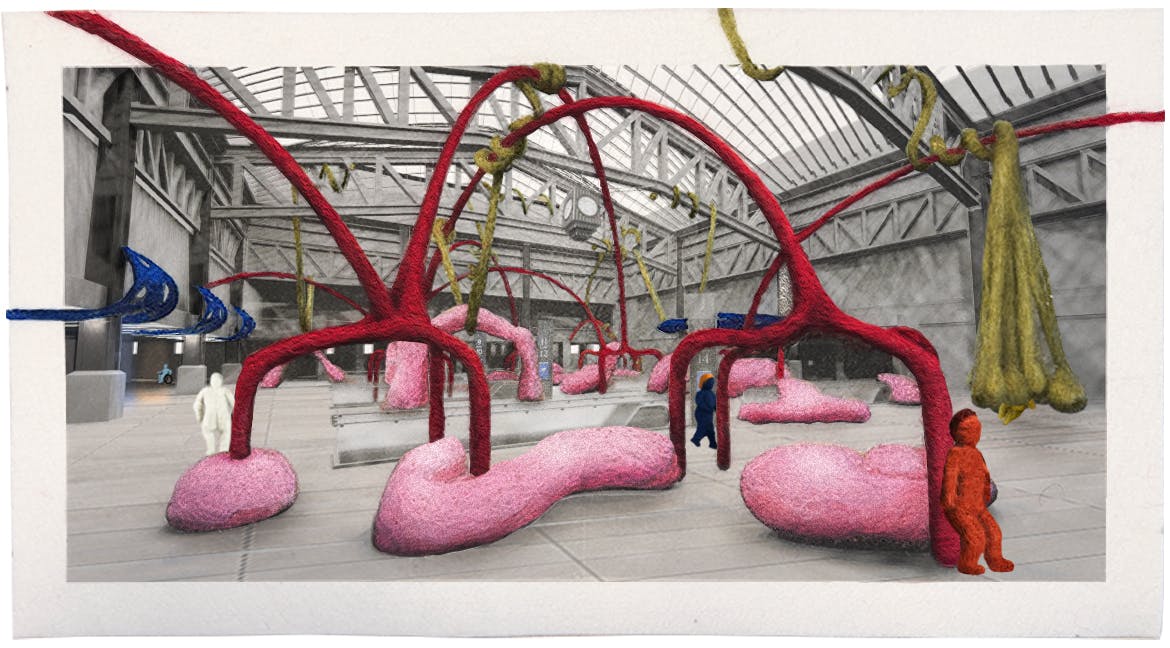
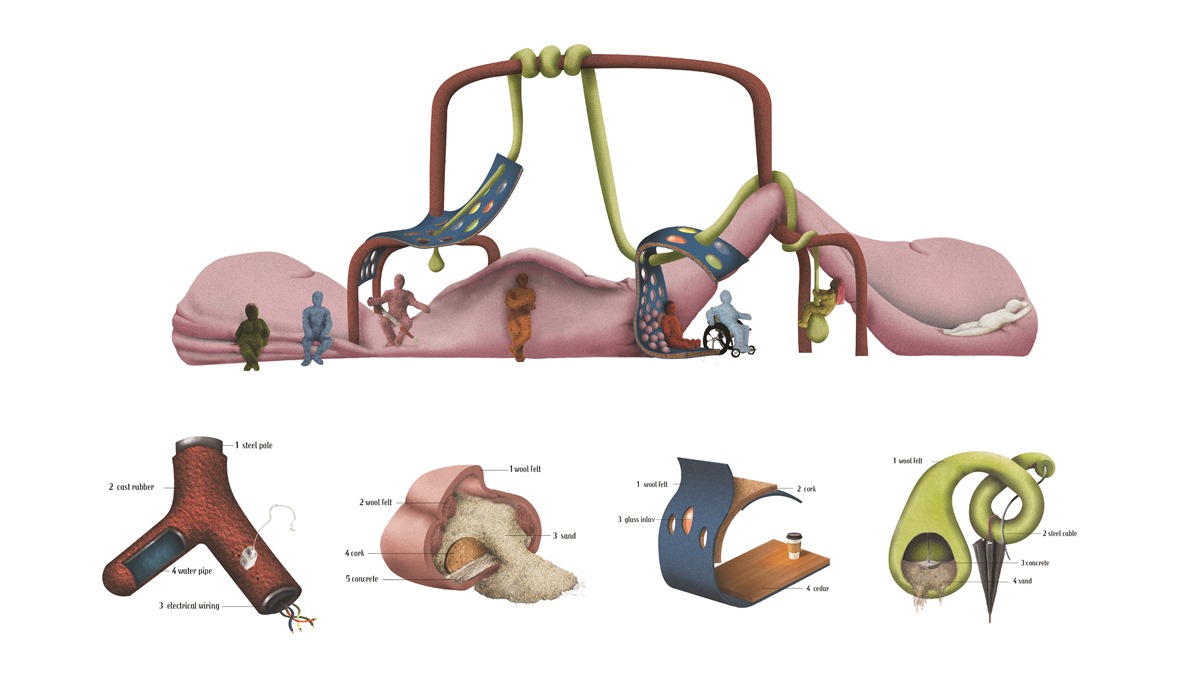
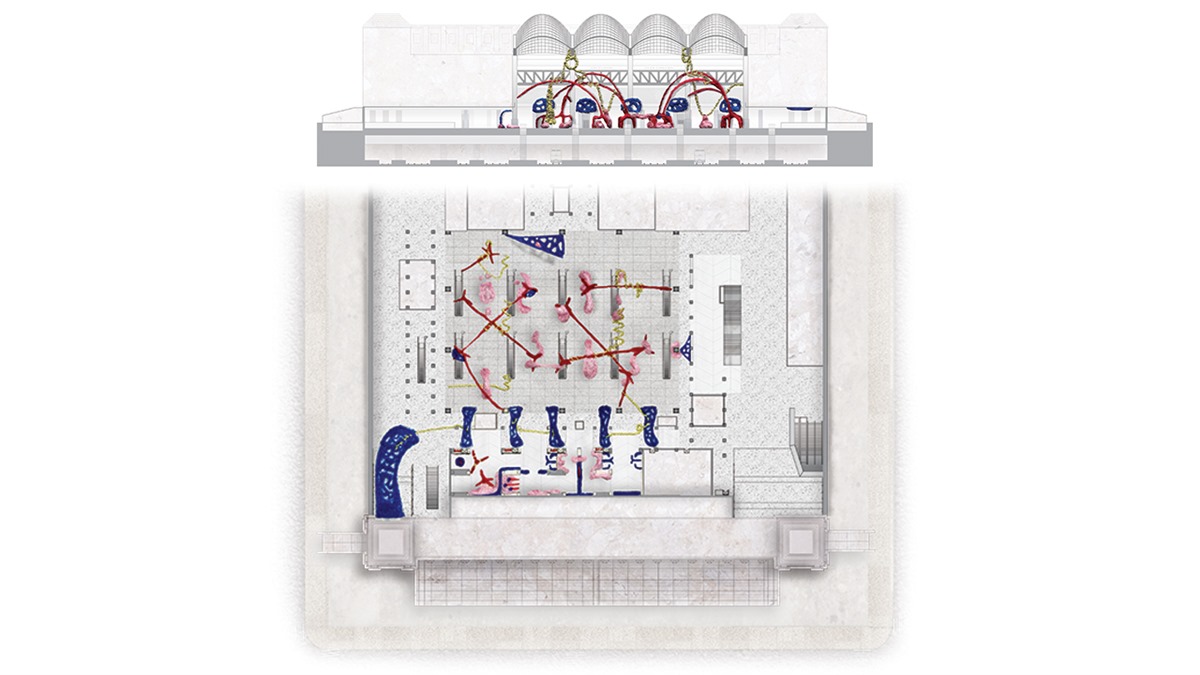
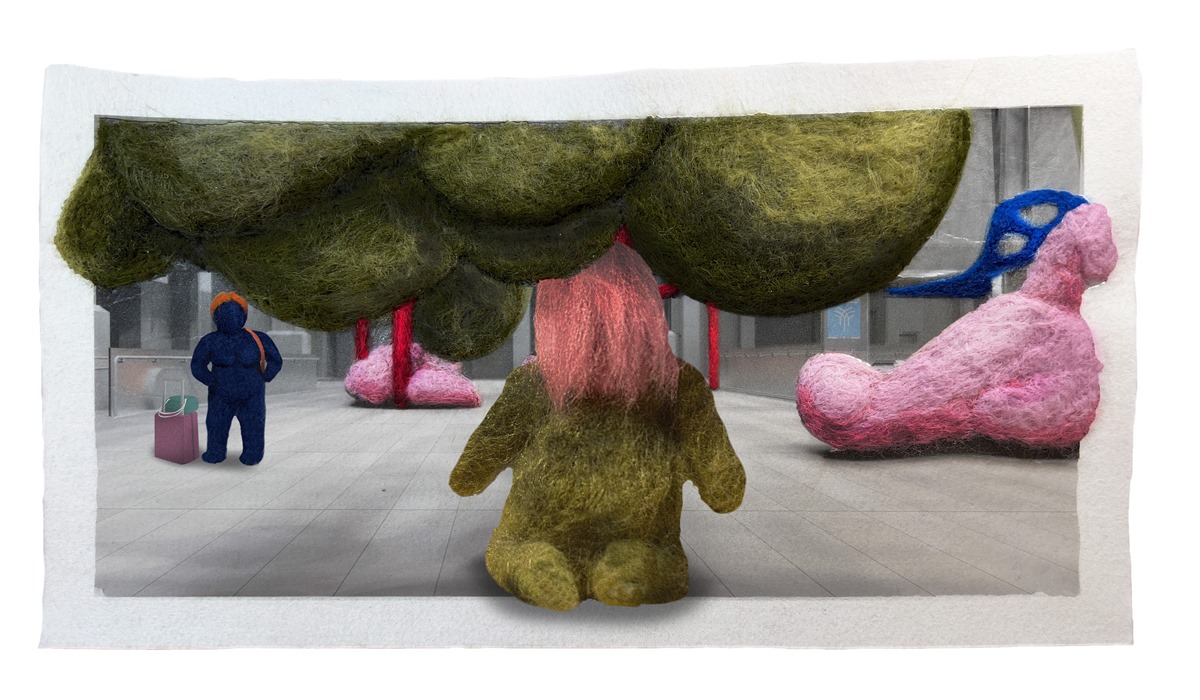
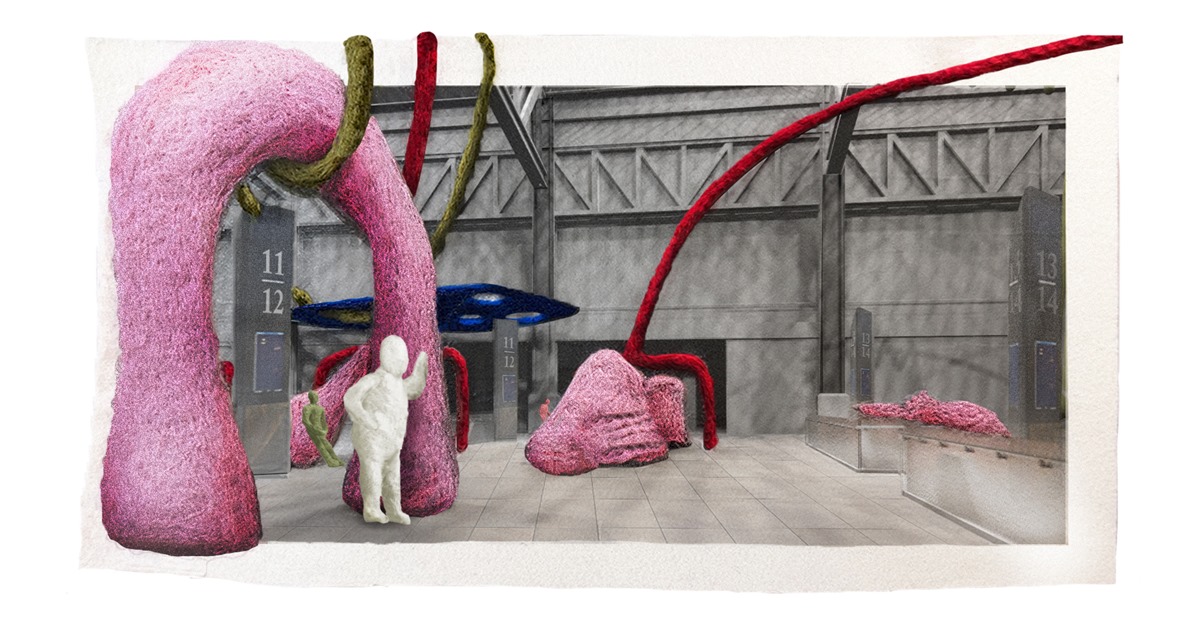
Strategies for designing public space seek to economize and to facilitate the process by using a fictitious body constructed of medians and averages. This practice limits possibilities and constructs a narrative of who can participate and who cannot. In this work, I question what happens when designers look beyond simple function for a particular type of body and instead create spaces and objects that encourage new forms of behavior and take into account all types of bodily experiences in the public sphere. I used the Moynihan Train Hall in midtown Manhattan to frame my critique of transit hubs as faceless, alienating, “in-between” spaces designed to direct, classify, and restrict the diverse people inhabiting them. I developed my own approach to the design of public space, employing craft methods to promote engagement with our own bodies and exploring alternative strategies of representation. I seek to enhance public space by providing opportunities for rest, refuge, play, and imaginative interaction. If we see our own strangeness reflected in our architecture, we become more comfortable expressing the strangeness embodied in ourselves and embracing the strangeness of others.
Jonathan Escalante
Body Crafts: Embracing the Public with Imaginative Interiors
Jonathan Escalante
Body Crafts: Embracing the Public with Imaginative Interiors
Jonathan Escalante
Body Crafts: Embracing the Public with Imaginative Interiors
Jonathan Escalante
Body Crafts: Embracing the Public with Imaginative Interiors
Jonathan Escalante
Body Crafts: Embracing the Public with Imaginative Interiors