Isabella Krebs: Incorporating Sustainability into Architecture

For Isabella Krebs, coming to The New School meant being able to pursue several academic interests simultaneously. “I wanted a truly interdisciplinary degree,” says Krebs, “along with the many opportunities that Parsons—and New York City—provides.” She chose the BA/BFA dual degree, pursuing a BFA in Architectural Design at Parsons and a BA in Urban Studies at Eugene Lang College of Liberal Arts.
The opportunities to delve into several fields together came early for Krebs. It was during her first year at Parsons that she learned how sustainability could be incorporated into her architecture and urban studies programs. “Courses such as Green Roof Ecology and Urban Resilience—taught by professors from the Urban Systems Lab—changed my trajectory,” says Krebs.
This led Krebs to the Healthy Materials Lab, where she became a researcher at the Donghia Healthier Materials Library, helping other students explore alternative and environmentally conscious building materials. She also participated in the Circular Economy & Co-Design summer program at Aalto University in Finland, where she explored ways in which cities can become more equitable and sustainable.
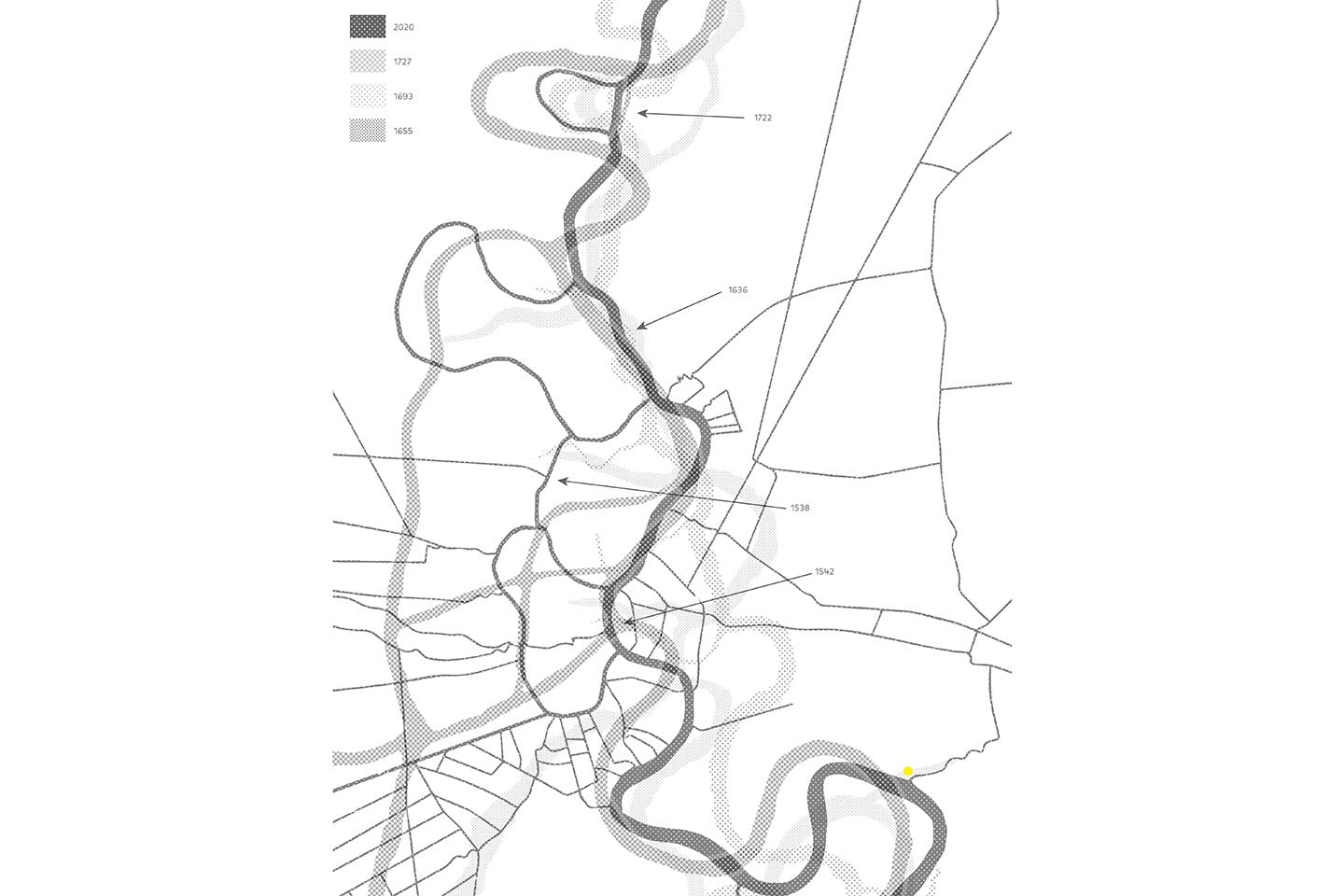
Krebs’ interests at the intersections of architecture, urban design, and sustainability have culminated in her two thesis projects. Her Urban Studies thesis examines urban flooding in Bangkok and the ways vernacular Thai stilt architecture could be adapted to a large, dense urban environment to create more resilient housing for vulnerable residents. “It’s really about the decolonization of architecture in Bangkok,” explains Krebs.
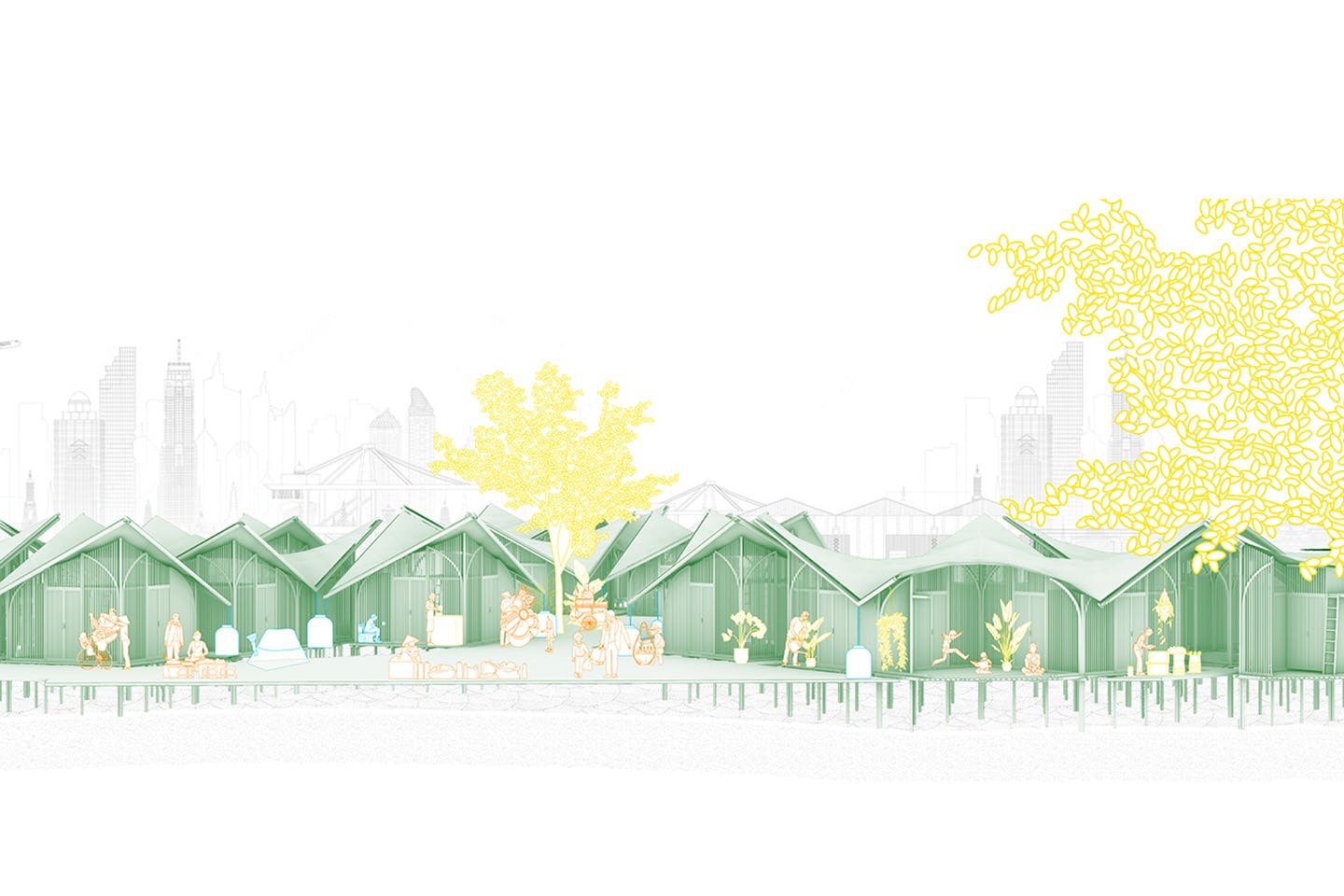
Building off that research, Krebs’ architecture thesis tackles social and climate justice by proposing modular, sustainably built housing for residents of the Khlong Toei settlement in Bangkok that is resilient to flooding but can also be dismantled and reassembled elsewhere as needed, recognizing the temporality of building in a river delta.
These are insights that Krebs hopes to take forward in her career. “Architecture is not just making and not just engineering,” she says. “It needs to take into consideration the well-being of the community and the environment.”