Hanadi Almarzouq: Documenting Design

“My art is conceptual and my role as a product designer is educational, to provide critique,” says Hanadi Almarzouq, MFA Industrial Design ’20.
Almarzouq’s upbringing in Kuwait provides much of the impetus for her conceptual approach. She saw how the oil industry brought immense wealth to her country but was also “a destructive force,” connected with catastrophic oil spills and pollution, the disappearance of traditional crafts, and the demolition of historic buildings.
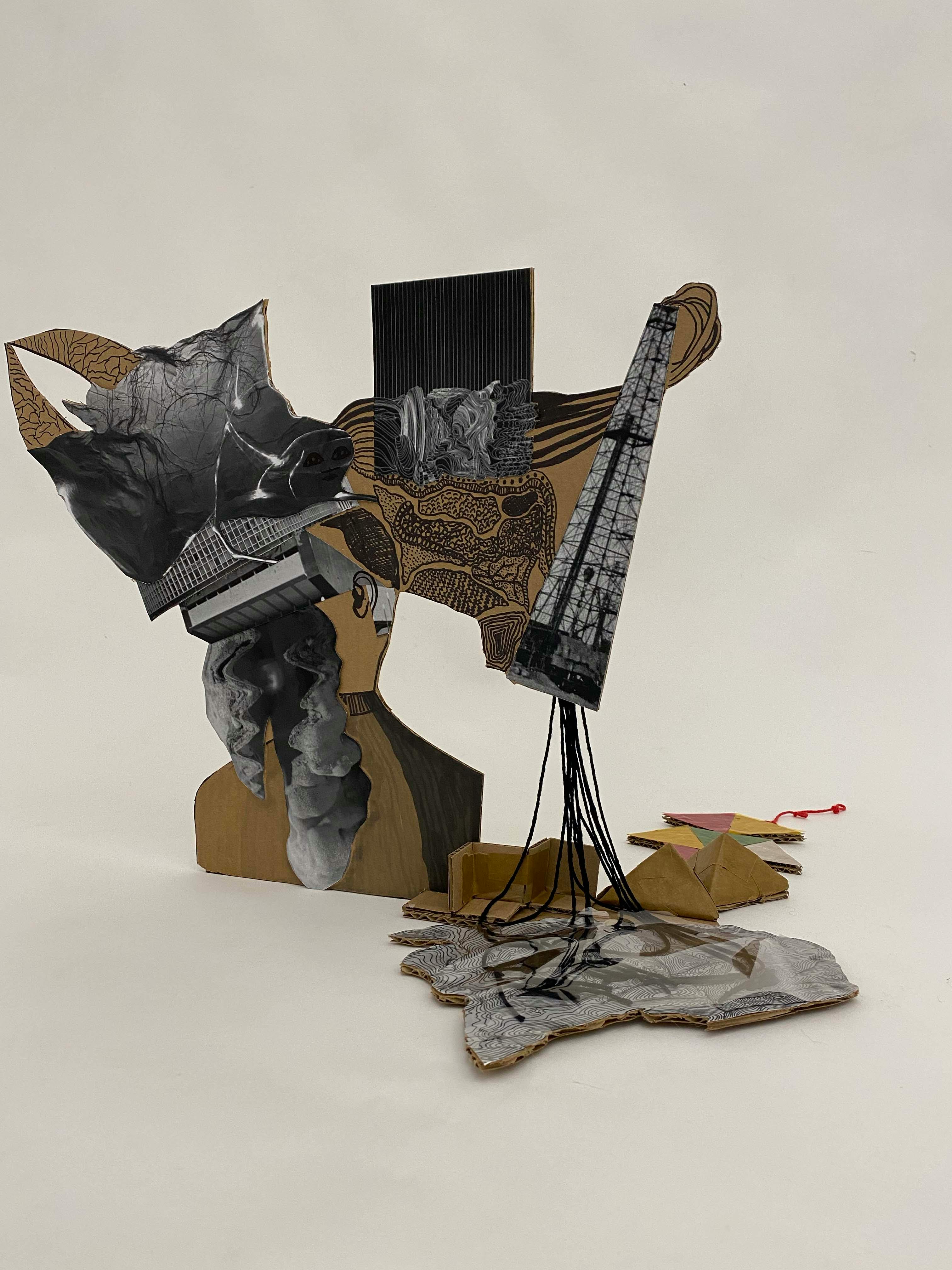
When Almarzouq began her master’s program at Parsons, she had been running her own retail shop in Kuwait, selling designer goods and gifts. “I felt like slow design was my destiny instead, but I didn’t know how to do it,” she says. She wanted to learn about more sustainable ways of designing and manufacturing. “At Parsons, I visited recycling facilities and learned about responsible processes,” says Almarzouq. “The MFA program opened my eyes to what it means for an industrial designer to have a moral compass.”
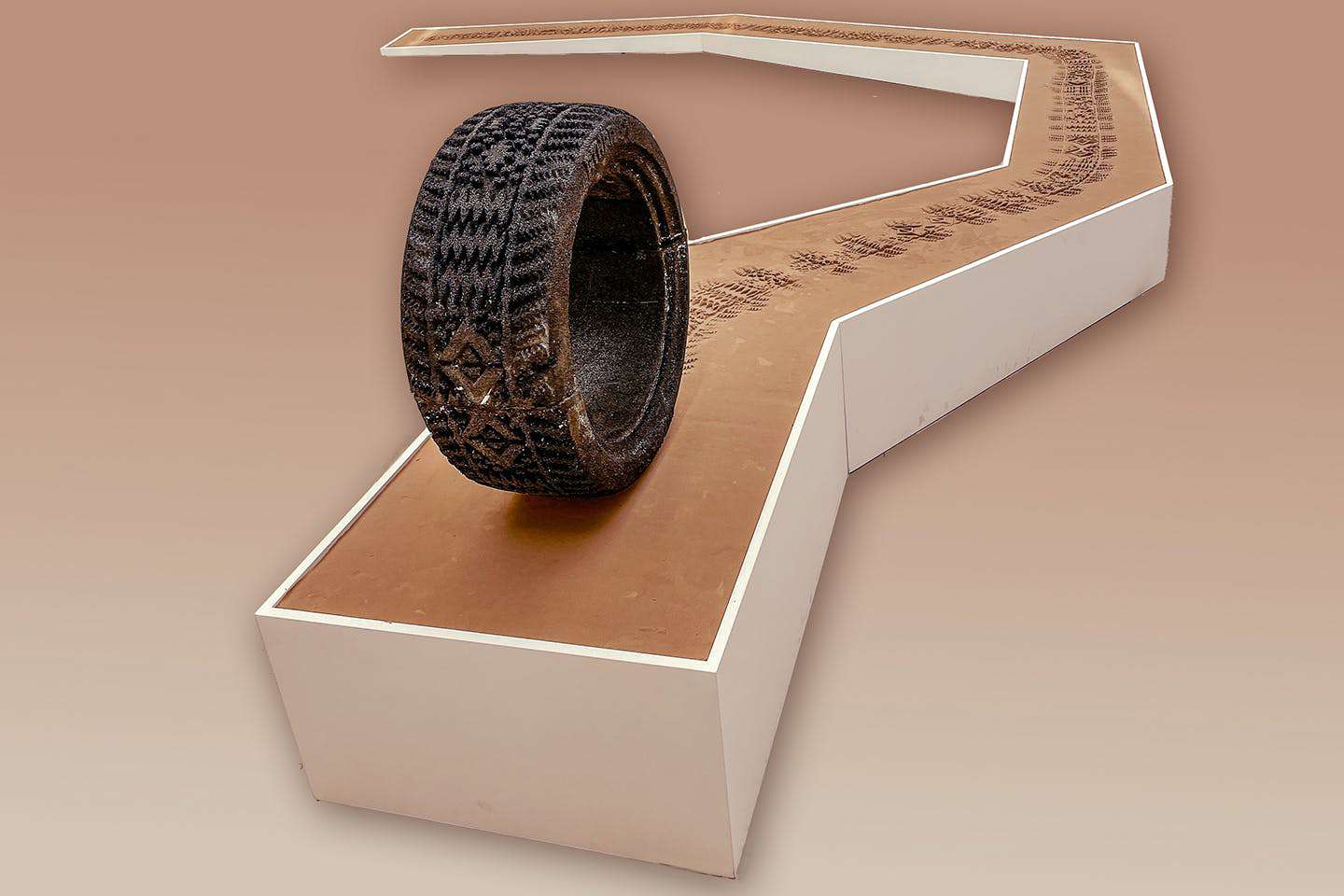
After graduation, Almarzouq was offered an artist’s residency with the Sadu House, a Kuwaiti cultural organization promoting textiles and other traditional artisanal work. She used the opportunity to create Traces of Nostalgia, a multimedia exhibition built on her master’s thesis at Parsons. Drawing on the fact that Kuwait has the largest “tire graveyard” in the world, Almarzouq used tires and their tracks as a powerful visual motif to symbolize the destruction caused by the oil and automobile industries. Tire imagery also figures in her short film Anthropocene, which focuses on a Bedouin girl who has lost her “weaving memory.”
“The exhibition functions like a story about place and environmental threats,” says Almarzouq. Her hope is for this and future stories to build awareness and promote change. “I think of everyone viewing the exhibition as a designer,” she says. “My message of change is activated through viewers.”
@hanadialmarzouq