Daniel Michalik: Developing New Industry Partnerships Through Regenerative Design
This past April, throngs of design manufacturers, retailers, and journalists shuttled around Milan’s winding streets in search of the next big thing among the exhibitions at Salone di Mobile, the world’s largest and most prestigious design fair. With each passing year, the demand for sustainably made furnishings is reflected more directly in the goods for sale, product orders, and stories filed by reporters.
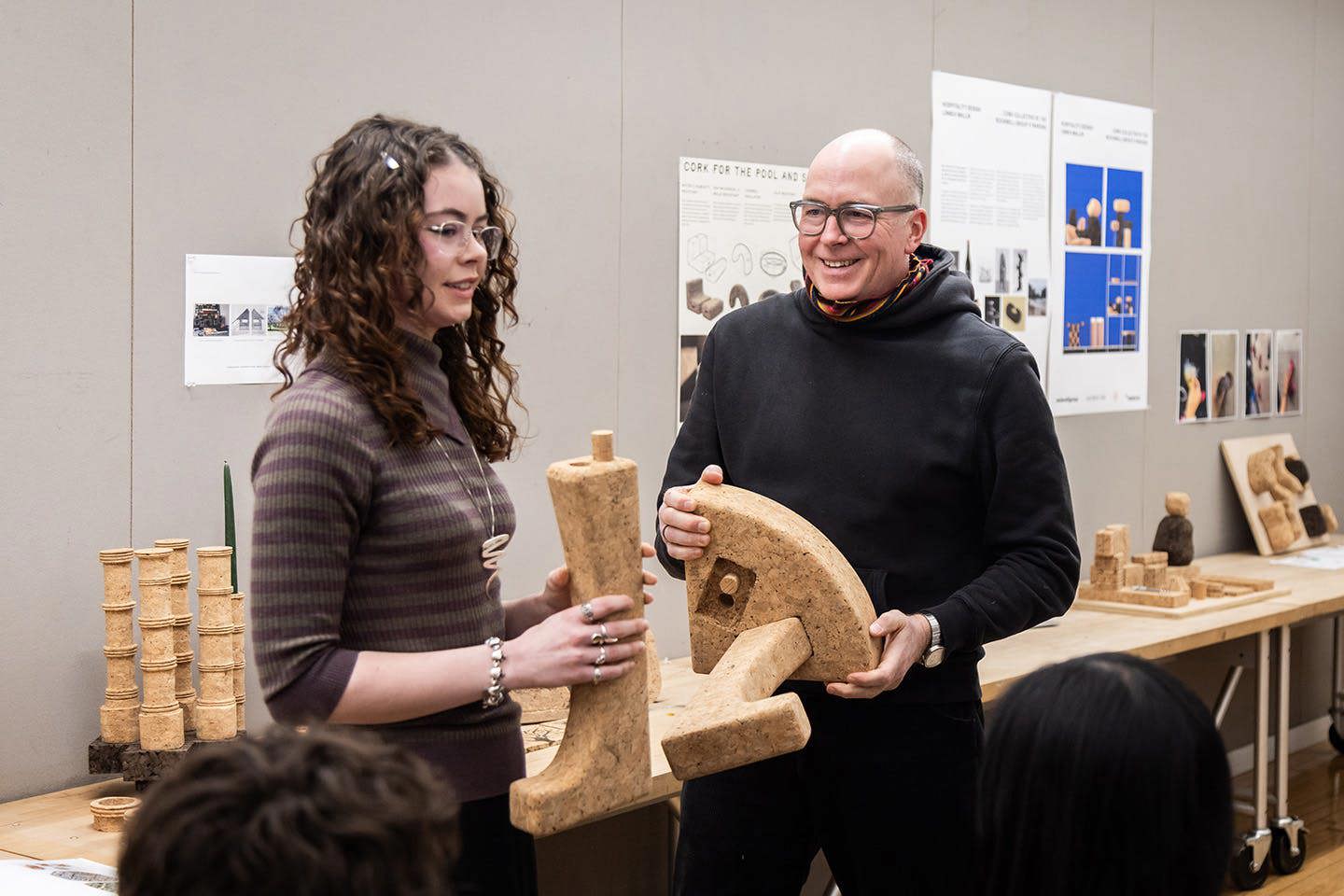
Answering that call this year was a striking installation called Casa Cork by David Rockwell. The installation invited visitors to rediscover cork, a highly adaptable and regenerative material typically encountered in unstoppering a fine vintage. The project was conceived by the globally renowned architecture and design firm Rockwell Group (think Nobu, W hotels, NYC’s Shed, and the Perelman Performing Arts Center) in partnership with Portugal’s Corticeira Amorim, the world’s leading supplier of cork, and its sustainability-focused nonprofit, Cork Collective. Connecting the partners was Parsons and the work of a class led by Daniel Michalik, the associate dean of and an associate professor in Parsons’ School of Constructed Environments (SCE) and a product designer who has worked with cork for 20 years.
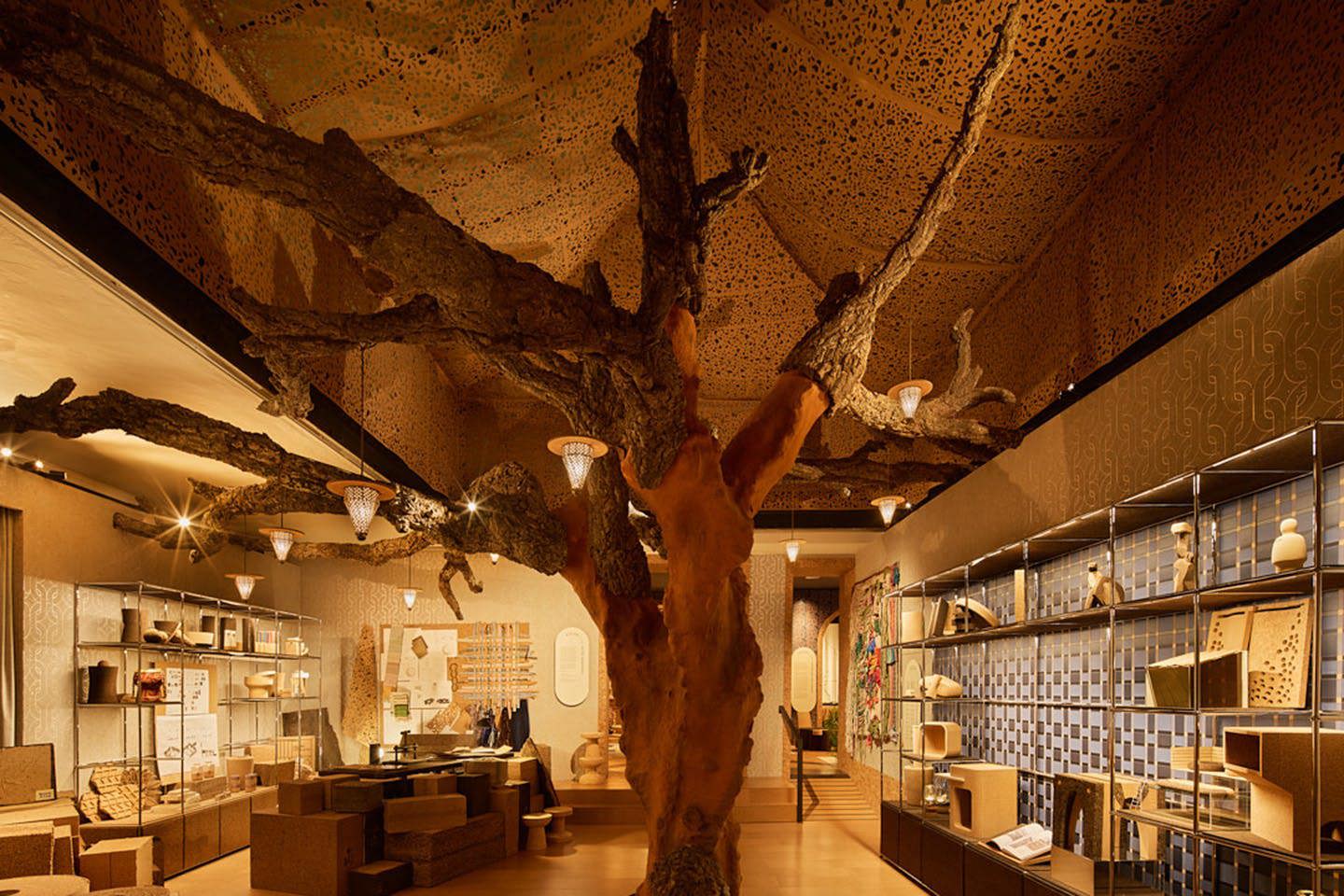
Casa Cork was located in the heart of Milan’s arts and design district. Entering visitors passed a six-foot 3D-printed replica of a cork tree by the Spanish workshop Factum Arte, and were then met with furnishings and objects by established manufacturers like the New York–based Chilewich textile company and emerging designers—including Michalik and his undergraduate students. The installation was the site of public programs such as educational workshops, design conversations, and other events.
The buzz from the fair, according to Michalik, was that cork “had arrived as a material of the future.” Parsons BFA students, who presented a workshop at Casa Cork on cork’s broad applications in addition to exhibiting their designs, had been an integral part of its arrival.
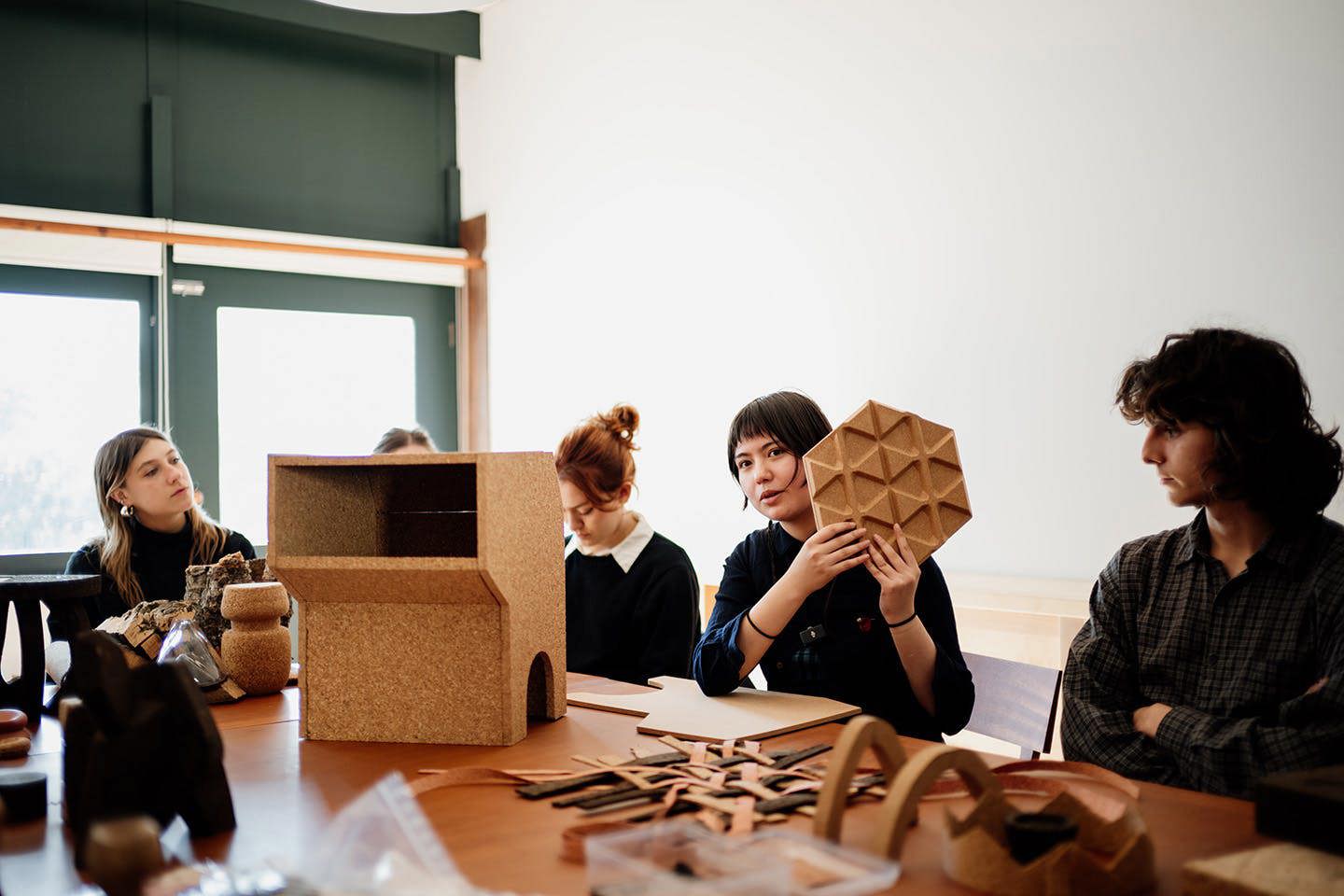
The journey to the unique learning opportunities of Milan Design Week began in Michalik’s spring 2025 SCE elective class, Cork in the Constructed Environment. Michalik conceived the course as a collaboration with a longtime SCE partner, Corticeira Amorim, and Rockwell Group, founding partners of Cork Collective. The 12 undergraduates in the course represented diverse study paths at Parsons—the BFA Architectural Design, Interior Design, Product Design, and Integrated Design programs—and brought their own perspectives and design solutions. All 12 benefited from the intensive hands-on industry partnership while getting a taste of the product design industry’s competitive side: The course included a design contest in which the students’ final projects were judged by a panel of industry leaders, who selected 6 to be shown at Casa Cork. It also offered students a glimpse of the field’s global reach. The class traveled together to Portugal for a week at Amorim’s iCork innovation lab, toured the region’s cork forests, and explored Milan’s Design Week and industry scene. Along the way, the students gained experience and facility with cork’s sustainability, malleability, and resiliency, properties that make the material endlessly recyclable and ideal for a range of design practices. Ultimately, the course delivered on Parsons’ and Cork Collective’s shared vision of connecting the materials and the designers of the future.
A course like this, with its industry support and the international travel it involves, was several years in the making, Michalik explains. “I have a long-standing relationship with Amorim, and I was able to set up the first iteration of this course as a Parsons–Amorim-partnered elective in spring 2023,” says the designer. Amorim donated a large stockpile of cork from recycled bottle stoppers to Parsons, and Michalik asked students to experiment with the material, making whatever they wanted based on their study interests. “Amorim brought the students to Portugal for a week to attend their innovation lab, where they test cork as a material and develop new applications for it,” Michalik explains. “When the students came back to New York, they used that knowledge to finalize their concepts and show them in a public exhibition during New York Design Week.” At the exhibition’s opening, a mutual friend put Michalik in contact with David Rockwell, the founder and president of Rockwell Group, who was working on the early stages of Cork Collective. Michalik began consulting with Rockwell on that project, and with the support of New School President Joel Towers, the three gathered resources for a spring 2025 class that could attend Milan Design Week.
For Rockwell, the focus of Cork Collective is to raise awareness about cork and its astonishingly varied uses. He knew Parsons would be an ideal partner to advance this aim. “Cork is an unbelievably robust, renewable material that’s out there unused in great amounts—of 13 billion corks, less than 1 percent are recycled,” Rockwell says. “Once we started to zero in on how to unlock the potential for unrecycled cork and invent ways it can be used and make people aware of it, of course we thought about Parsons as a partner on Casa Cork; Parsons has been such a leader in design education.”
Michalik notes that cork fits nicely into the mission of Parsons’ School of Constructed Environments. “What we teach students is that as the designers of things and spaces, we are complicit in 40 percent of the carbon emissions going into the atmosphere. We’re a school guided by material exploration for the purposes of reducing our carbon footprint,” Michalik says. “And cork can play a big part in that. It is one of the most powerfully carbon-negative materials that can be used for building. Cork can be worked using the same equipment and tools as wood, has tons of helpful properties—it’s waterproof, heat resistant, and sound and vibration-dampening, to name just a few.” It’s also easy and fun to work with, he says.
Rockwell and Cork Collective were keen on launching a high-profile student design competition as part of the spring 2025 course, Michalik says. Michalik developed a contest brief stipulating that student projects had to be made of recycled cork wine stoppers and ultimately recyclable themselves, meaning that designs couldn’t incorporate glue or other materials that can’t be reused. Projects could be prototypes or scale models but had to embody a high level of craft. Designs could be functional—and most were—or purely conceptual or artistic.
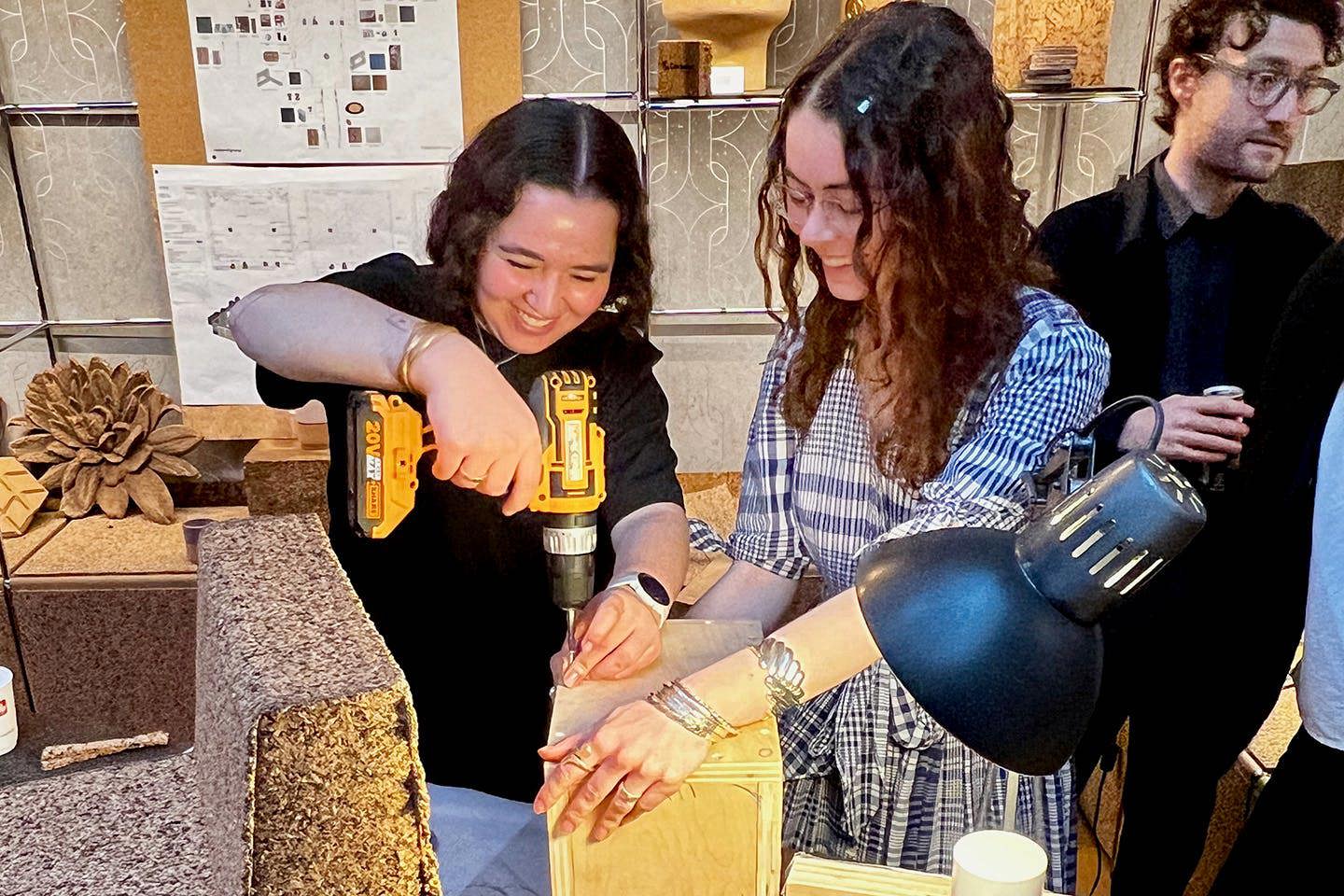
Working with a new material was a major draw for students. “It’s not often that a Parsons course focuses on just one material. This class gave us an opportunity that wouldn’t have otherwise been possible: to work with cork, which can be hard to get your hands on,” says Emily Quinn, a BFA Product Design junior whose modular design, Congregation, features anthropomorphic legs that are connected using wine stoppers to form side tables. Working solely with recycled cork gave students the opportunity to intensively explore the material’s unique features. “We were able to develop a deep relationship with cork and get to know its properties—how we could bend and layer it, for instance—and do so in the very fluid environment that Parsons provides,” says Carolina Miñana, a BFA Integrated Design senior. “I was interested in first playing with cork and seeing how that play could inform the creation of something useful.”
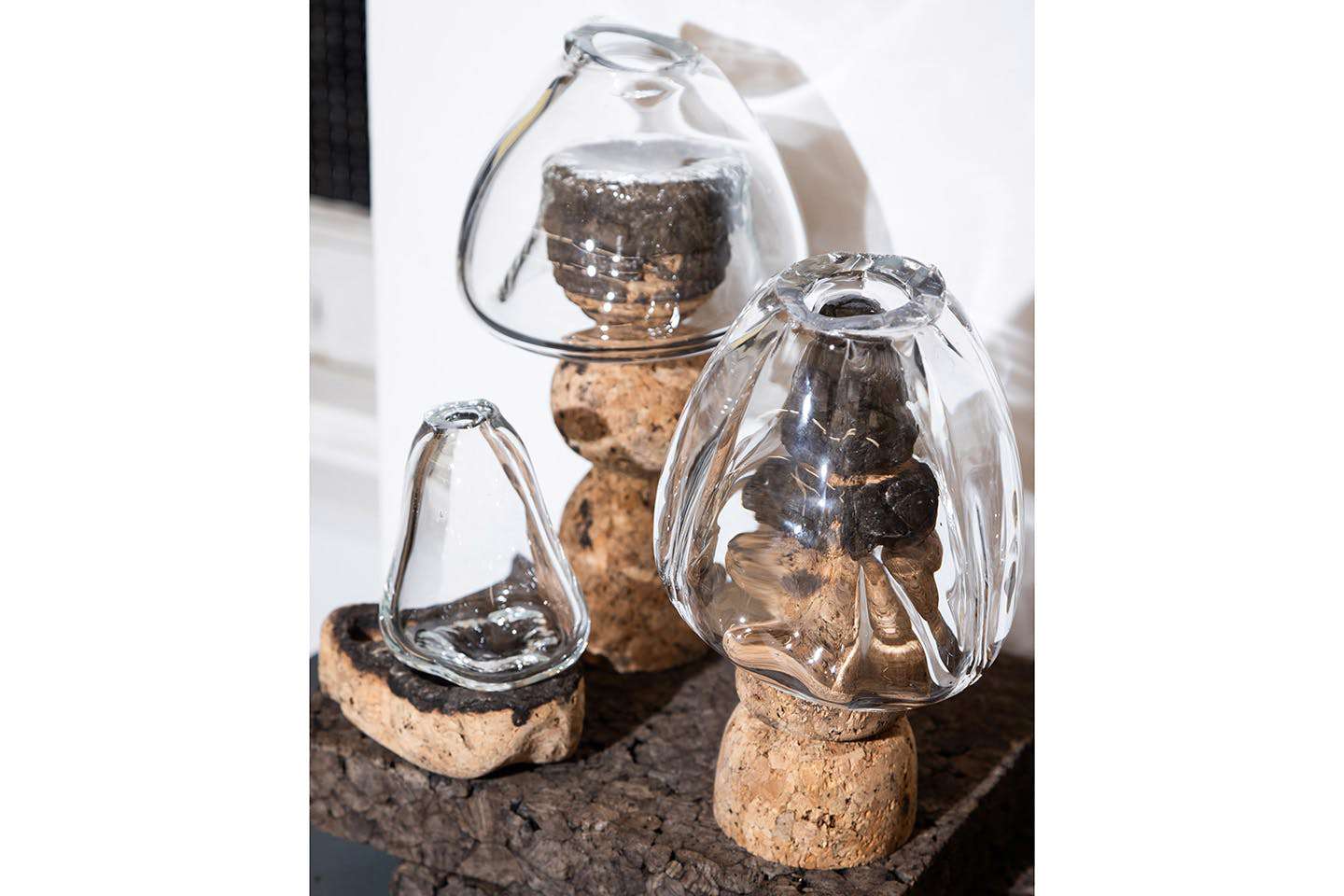
BFA Product Design student Katarzyna Kubrak explains that Michalik shared traditional Portuguese designs with the class and showed how cork could be used in a range of products. “Then, going from the history of the material, Dan demonstrated in his studio how he molds cork and showed us all of the machines and processes he uses,” Kubrak says, describing the distinct sheets, blocks, and granules of cork Michalik introduced to the class. “He provided us with a basic knowledge of the material in an approachable way. Then we had the space to explore the specific processes and properties of cork that spoke to us.”
Kubrak developed Krystyna Luminaire, a series of lamps made of cork and hand-blown glass. “I’d already experienced cork through glass blowing. There’s a cork paddle that glassblowers typically use—it’s used to shape molten glass or squish bubbles because it doesn’t burn,” Kubrak says. “I was drawn to cork’s fire resistance. I learned that in a forest fire, a cork oak tree can survive because its bark will burn but the interior remains protected. I thought that was poetic, and I wanted to use that idea in shaping glass.” Kubrak’s glass lampshades are shaped twice by cork—first by a cork glass mold that gives the glass its basic form and eventually becomes the base of the lamp and again by another virgin cork mold that gives the glass lampshades their organic texture.
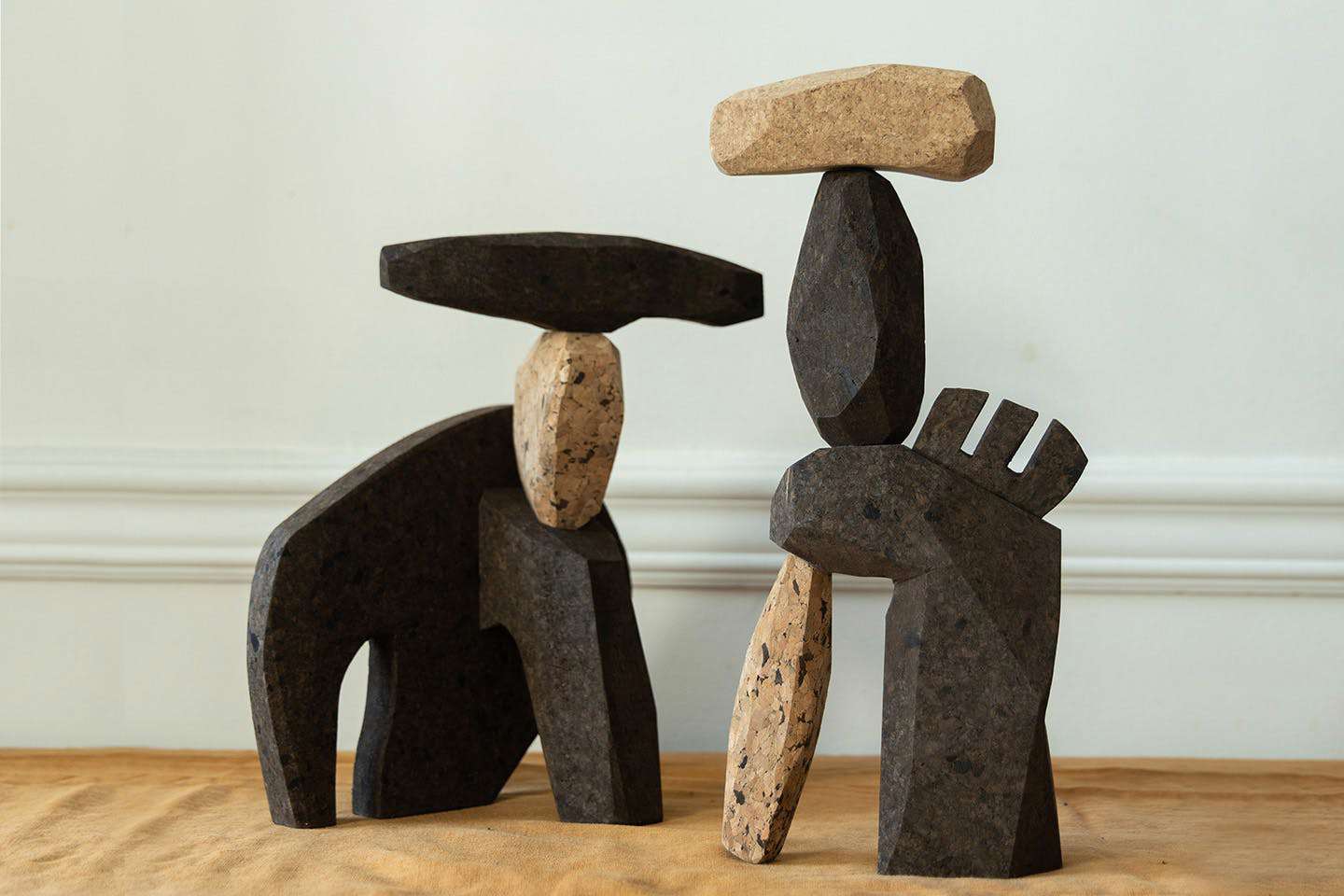
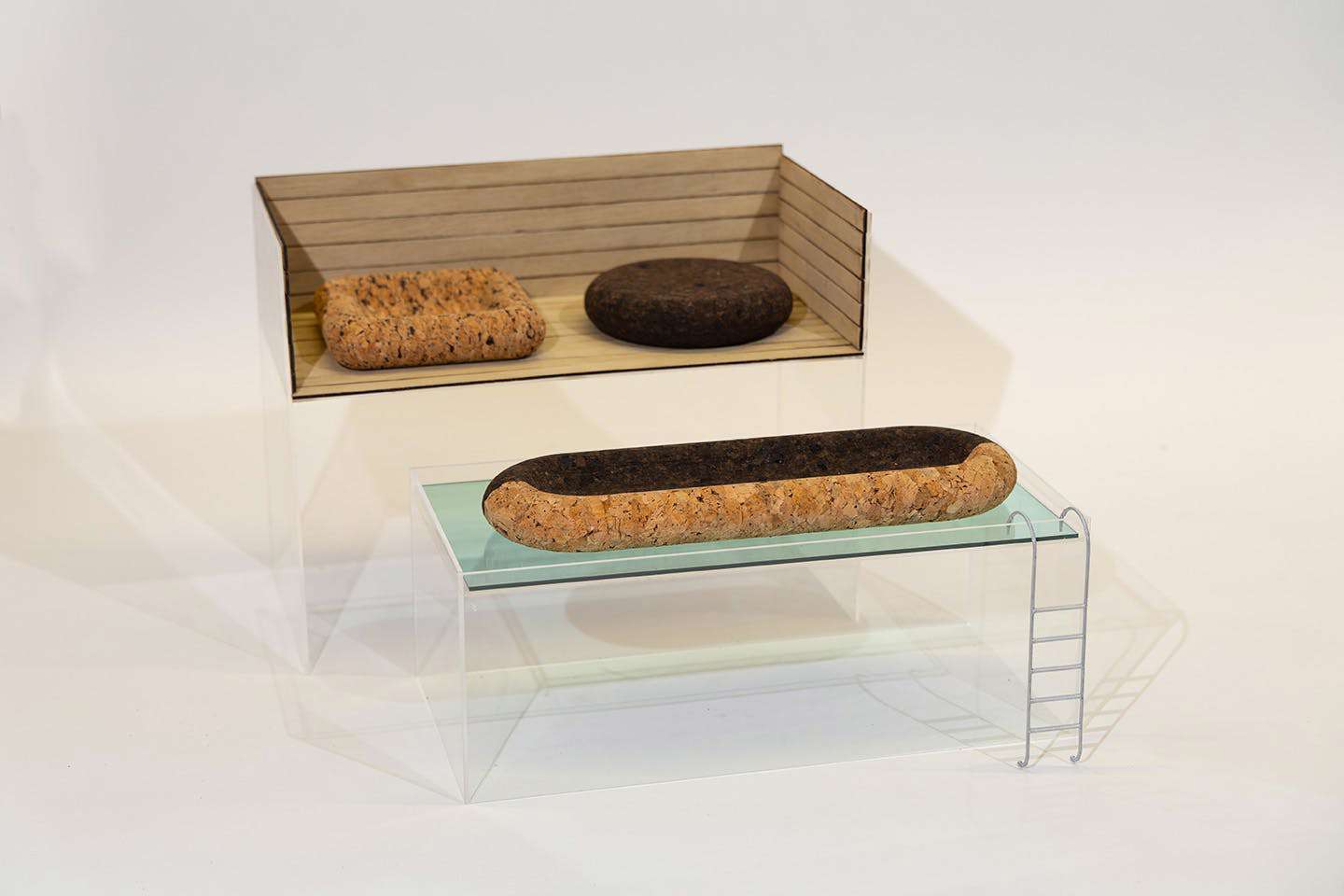
Linnea (Hanna) Wallin, an Interior Design student at Parsons visiting from Stockholm’s Konstfack University of Arts, Crafts, and Design, says, “I previously took a course at my home university in Sweden, where we discussed sustainable materials, but at Parsons, I was able to actually work with the material and understand its capabilities.” In the Parsons course, Wallin created Saca Pedra (the name means “open stone” in Portuguese), a set of bottle openers made of carved recycled cork. Designed to be displayed rather than hidden in a drawer, they resemble boulders or the abstract sculptures of Joan Miró or Alexander Calder.
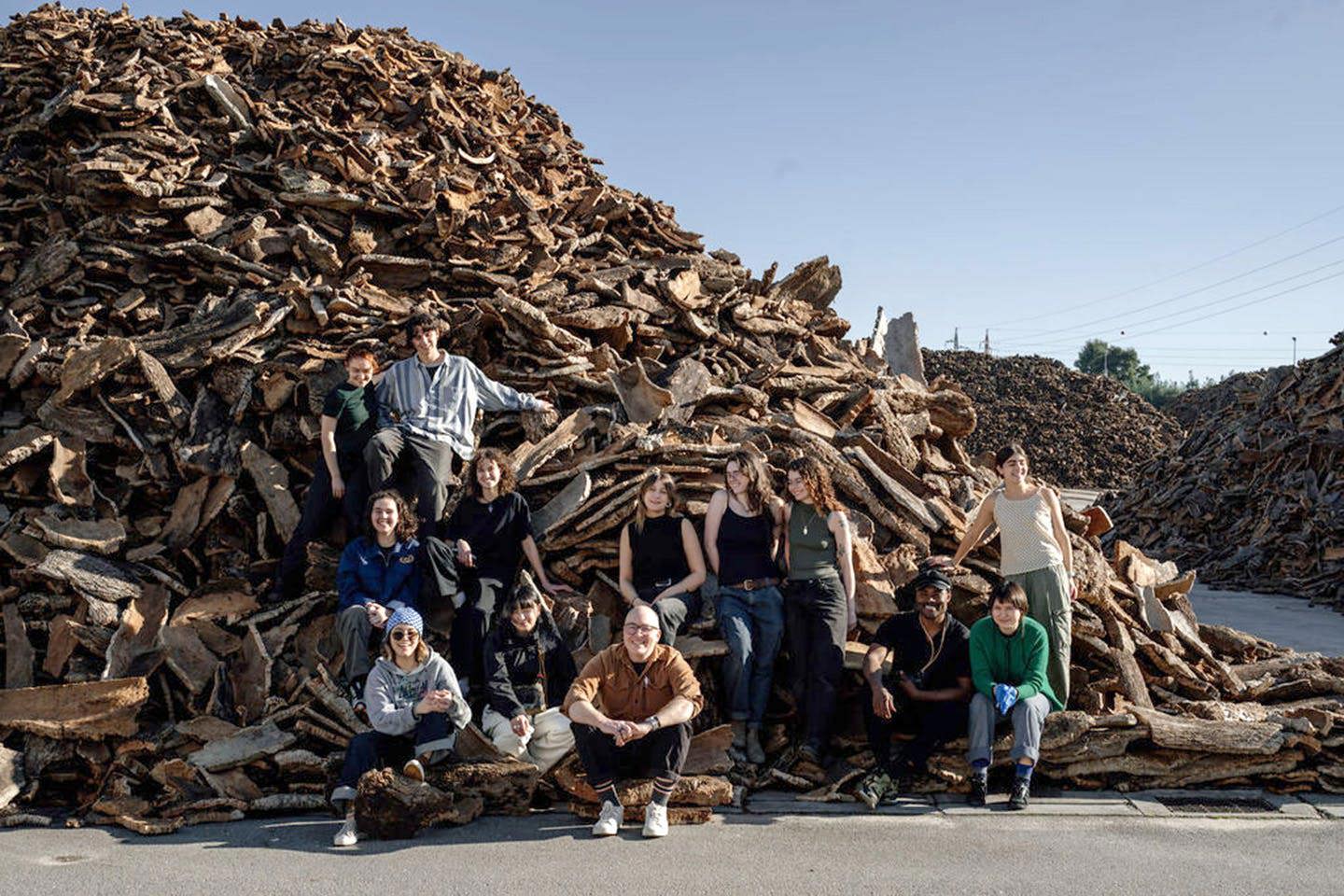
Modern artists weren’t Wallin’s only influences; the trip to Amorim’s facilities also played a major role in shaping her idea. “It was inspiring to go to Portugal and see the whole circle of the material—the cork seed, harvesting, processing, and the varieties with different densities,” she says. For Miñana, inspiration came from another leg of the class’s sojourn in Portugal—a visit to a montado, a rich ecosystem of cork oak forests. Miñana went on to create Montado, a series of serving trays incorporating the “textures, patterns, and organic rhythms of the landscape.” Cristina Rio Amorim, Corticeira Amorim’s chief sustainability officer, says the student visits are part of her company’s goal of “cultivating awareness around circularity, regeneration, and the importance of working with materials that respect natural cycles. We hope to spark a lifelong commitment to sustainable design.”
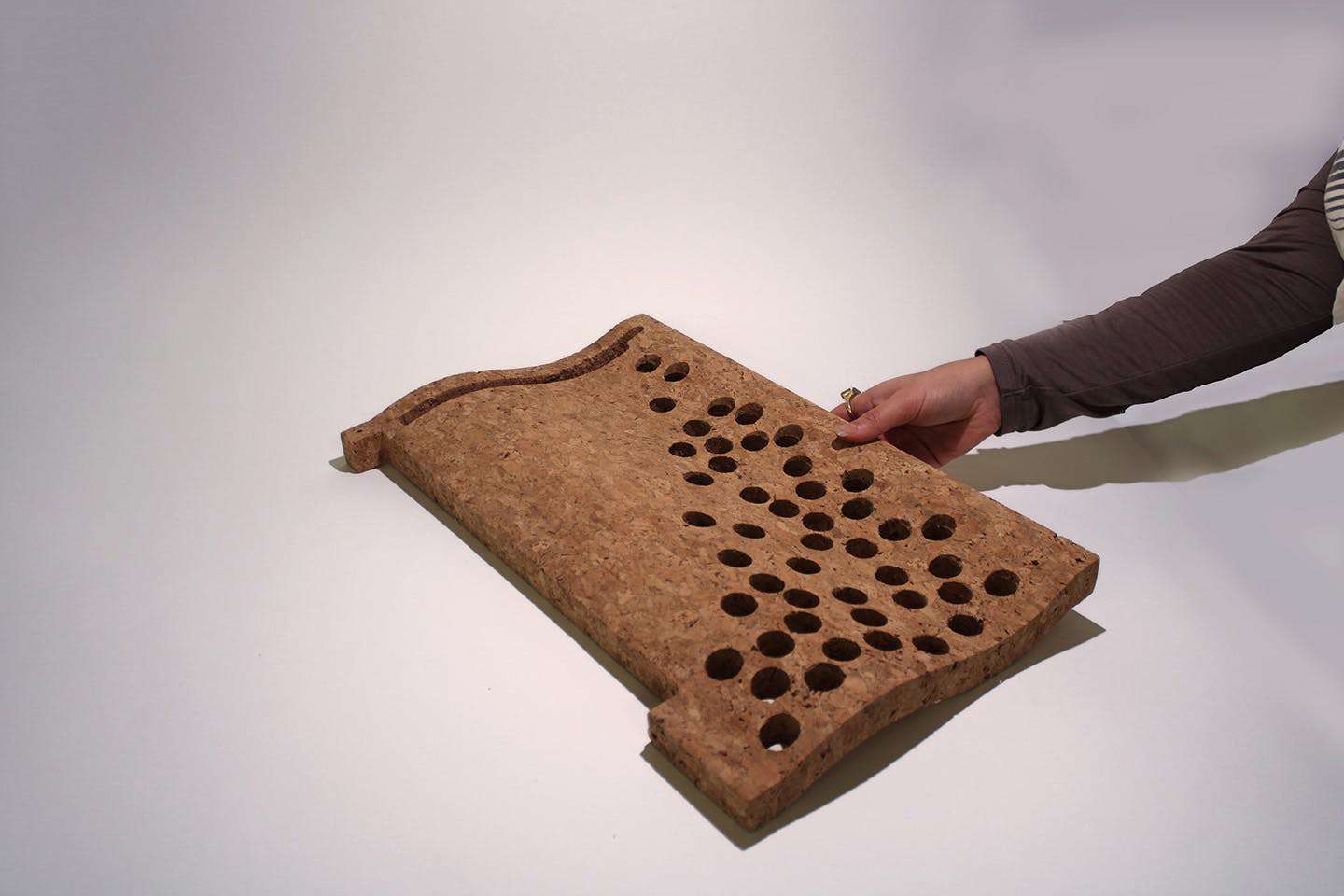
It was research on Portuguese building typologies that enabled BFA Architectural Design student Rucha Kumthekar to solidify her concept. “Because I come with a background in architecture, I spoke with Dan before the course about the ways cork could be used for insulation—that was my first impression of cork in the built environment. In the class, I saw a much deeper potential for cork in architecture; I then investigated local Portuguese tiling techniques and found new opportunities. I was looking at the way people made their terracotta tiling and floor mosaics, and I ended up creating Tapeçaria, my tile project.” Kumthekar’s perforated cork tiles can be connected to make roofs or screens. They filter light and cast striking shadows through their intricate patterns while providing insulation.
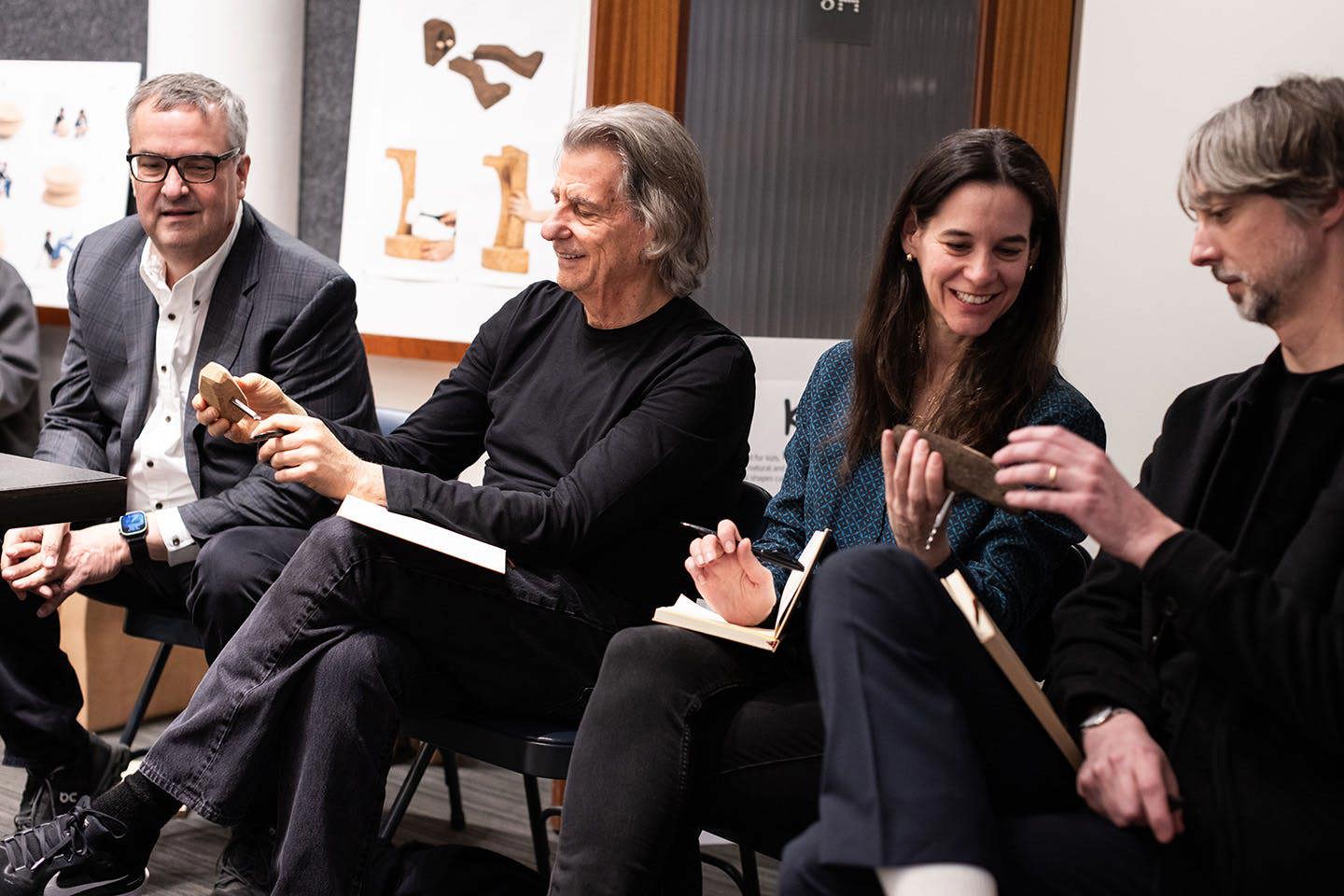
In March, Michalik drew on Parsons’ and Rockwell Group’s myriad industry connections to assemble a distinguished jury for the final critique and selection of projects to appear at Casa Cork, alongside the work of students from Politecnico di Milano: David Rockwell; Carlos Bessa, Amorim’s marketing director; Paola Antonelli, MoMA’s chief design curator; Susan Sellers, a founding partner of the design studio 2x4; Noah Schwarz, head of product development for MillerKnoll; John McPhee, CEO of the textile innovator Chilewich; and Annie Block, the executive editor of Interior Design magazine.
Jury members point out that the benefits of Parsons–industry partnerships go both ways. “We love working with Parsons students for the fresh perspectives they offer,” says McPhee, who notes that Chilewich is exploring ways to integrate cork into its product line and investigating other sustainable, rapidly renewing, and recyclable materials. “The students don’t know what they don’t know, which is often very helpful. They don’t know, ‘Oh, you can’t do that’ or ‘Oh, we’ve tried that before.’ The new ideas they bring are super-beneficial. They open our eyes. We learn from them.” Rios Amorim echoes McPhee’s observation: “Parsons offers an incredible ecosystem of creativity and critical thinking, and its students bring ideas that challenge and inspire us.”
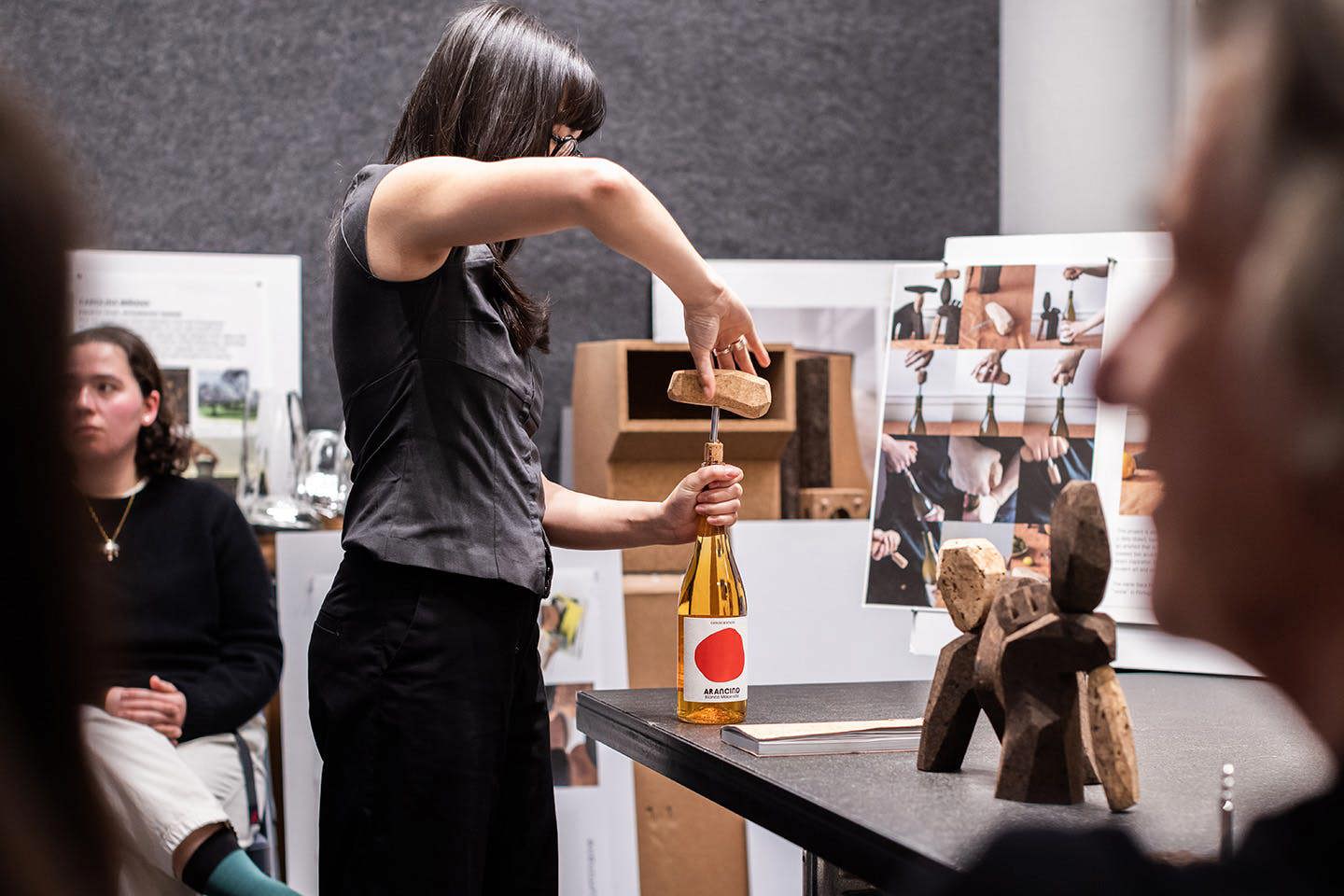
“The students presented at the final crit with an impressive level of professionalism,” says Michalik, noting that before the nerve-wracking final round, he assured students that they were “starting from a position of winning” by undertaking the robust research and design process. For Kumthekar, the critique demonstrated the importance of trusting her gut instincts. “Initially I thought I had to make an industrial design project, but I went forward with exploring techniques as an architecture student. It helped me learn how to model a product at a small scale that could be scaled up spatially as needed,” she says. Similarly, Wallin says that the presentation was a “good test” for her, teaching her how to address a client’s needs while staying true to herself as a designer. Kubrak recalls that Schwarz said she had taken the brief in an interesting direction. “It was really validating, because I didn’t want my use of glass to overshadow how I used the cork. But he told me that he could see how the cork was used to give the glass its shape and texture, which made me really happy,” Kubrak says.
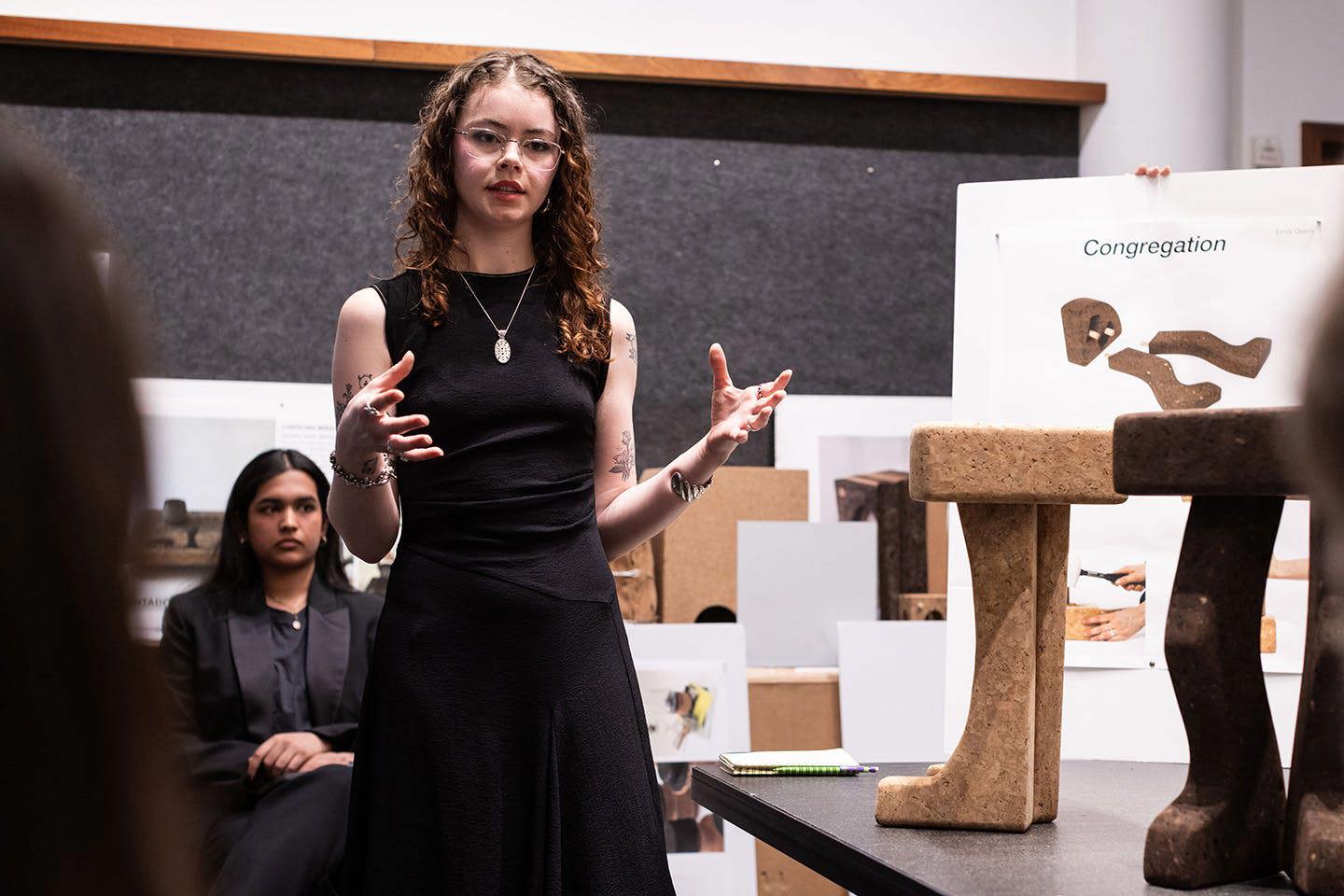
After a long, passionate debate, the judges selected six projects to be exhibited in Casa Cork during Milan Design Week. According to Cristina Rios Amorim, “What impressed us most was the way they engaged with cork not just as a raw material but as a living medium—something with history, texture, memory, and enormous potential.” Rather unexpectedly, Rockwell also purchased Wallin and Kubrak’s designs at the final critique. “It was a big surprise, and we had to very quickly come up with a price,” recalls Michalik.
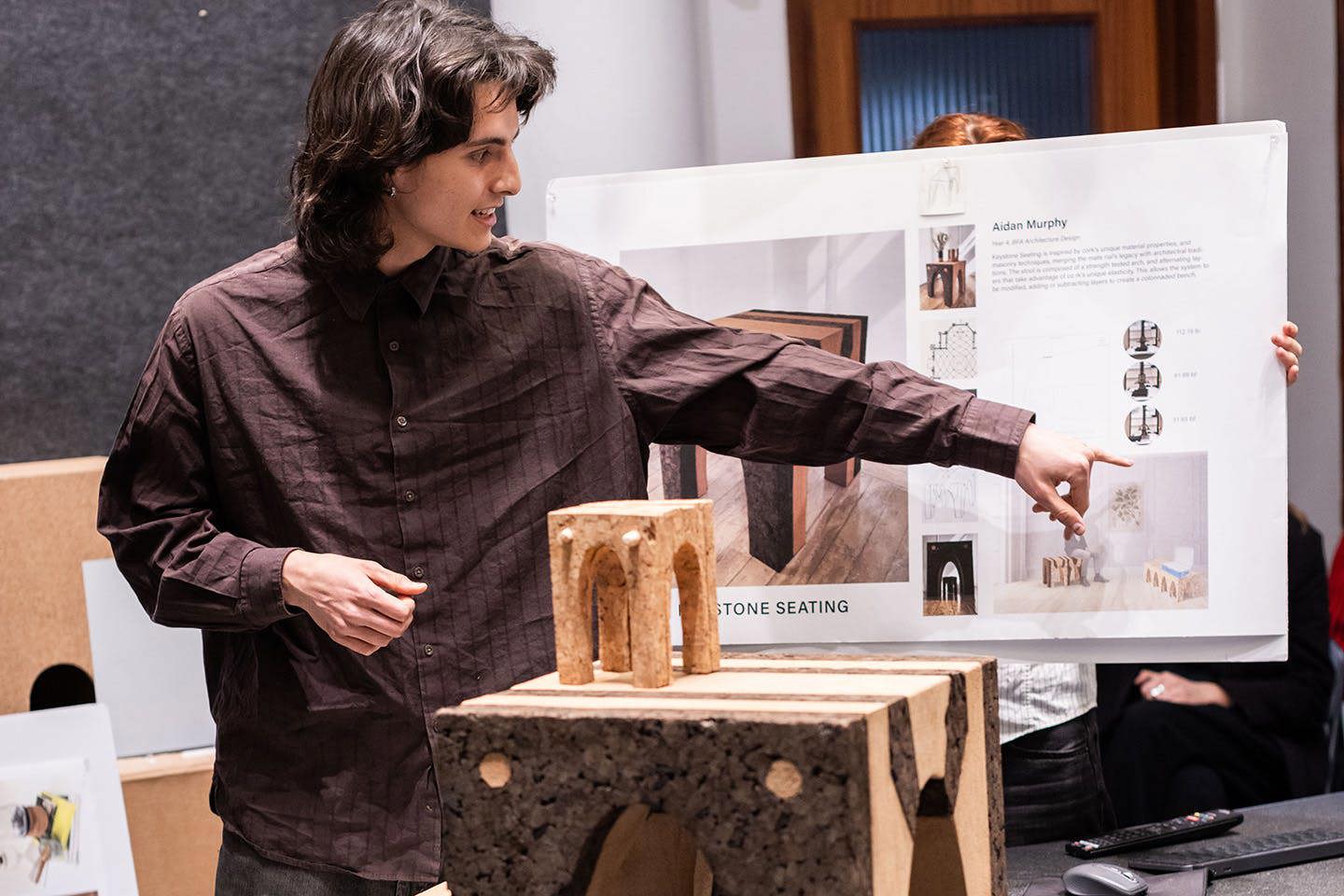
Like Kumthekar, BFA Architectural Design student Aidan Murphy wanted to explore the use of cork in a constructed environment. “I wanted to make people consider this lesser-known material’s potential in design. So I combined it with the parabolic arch and keystone masonry technique, which are staples of architecture,” Murphy says. His project, Keystone Seating, which was selected for Casa Cork in Milan, is an elegant stool that calls to mind classical architecture. The stool’s parabolic arch distributes weight efficiently, making it strong and light. Murphy constructed the object with alternating sections of light and dark cork, adding visual interest and enabling users to attach sections to create a colonnaded bench. The feature also made the stool easy to disassemble, thereby meeting one of the contest requirements: The projects had to be portable and fit into the airplane to Milan. Says Murphy, “This lightness was essential—thinking about transporting the stool in my suitcase turned my thoughts to brickwork, where separate elements come together in an arch but can still be split apart.”
Getting Kubrak’s lamps to Milan was no easy feat; TSA rifled through her carry-on, which held newspaper- and bubble-wrapped pieces. “I was so stressed. I was like, ‘These are design pieces for a design exhibition in Milan. Please be careful; I need to bring them in one piece. They’re made of cork, which is a really cool material!’” The students’ projects all arrived safely. Kubrak describes the process of setting up the Casa Cork exhibit as similarly “chaotic” but extremely positive. “There were so many people assembling and putting final touches on displays—we saw Carlos from Amorim and people from Rockwell Group. Everyone was excited to show the work to the public, and it was such a fun experience. I’d never taken part in a show before.” Wallin was particularly impressed by Amorim and Rockwell Group’s pavilion. “Their installation was amazing—they had aprons and curtains made of cork; everything was cork, to showcase its material qualities. I was happy our whole class got to go to Casa Cork; it was such a good mission.”
At Casa Cork, Quinn and Miñana presented a cork-molding workshop that was open to all fairgoers. “It was the widest demographic of people— designers, people who live in Milan, other students—who all wanted to know more about the material,” Miñana recalls. Their objective was to provide an overview of the material they had grown so familiar with. Says Quinn, “Because we went to Portugal and Dan is such an expert, I felt really confident presenting and answering questions—it was a full-circle moment for me, having been the one asking the questions only a few months before.” Michalik adds that it was rewarding to see the students transfer their classroom learning, “sending it out into the world in a literal way.”
Having gained facility with using cork, many of the students plan to continue working with the material as their careers progress. They also cite the course as a major driver in their growth as designers. Says Murphy, “This class really built my confidence
in my design work—having to give a high-stakes presentation to leaders in the design world and work on such a tight deadline, with so many real-world constraints. It was a challenge, but everyone in this class was supportive, and I got through it.
Now I know more about what I am capable of.” Murphy’s sentiments are echoed by Rockwell, who cites the numerous benefits for his own projects of working with Parsons students. “I talk to other designers and clients about how important it is to have
the chance to look outside your own set of ideas and get different points of view,” Rockwell says. “If you’re lucky enough to do that with a group of students as smart as the students at Parsons, who have a whole different point of reference, you’re
going to make your work better and you’re more likely to come up with something that’s going to resonate.”