Fattori Fraser
A Desert Myth in Four Parts
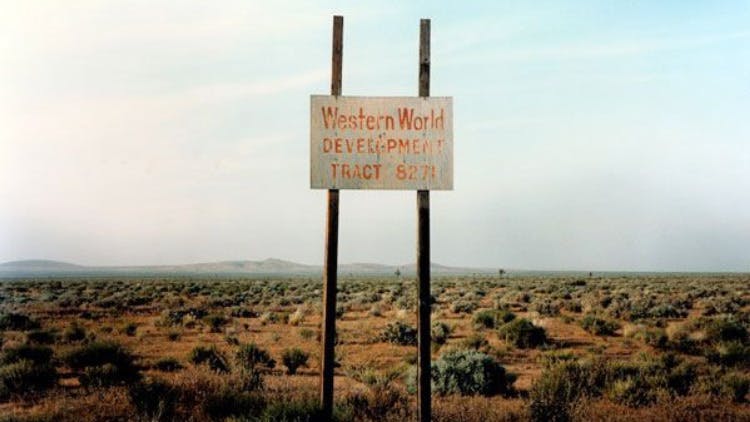
The American desert has been a site of transfiguration, assimilation and exploitation for over two hundred years. Post-war developments accelerated the intrigue of critics, activists and artists, as constant cycles of creation, consumption and destruction across the American nation prompted the need to design outside of cities and suburbs, in a geography we define as remote. Decoding and deciphering the desert myths has been the subject of my project. The desert myth can be divided into fragments. In my study I identify four fragments. Through analysis of designed objects, industrial technologies, land use, indigenous archives, and literary and media aesthetics, we can trace thematic lineages through which desert myths came to be. The constitution and re-packaging of desert myths over time rests on the affixing of identities to desert inhabitants (human and nonhuman). Within each of these myths is some form of tension, indicating a resistance to its rigid categorization and modes of spatial production. Similarly, the very nature of myths is not stable, as they respond to a need for significance that changes over time. A myth can accommodate multiplicities and frictions that in turn might lead to positive reconsiderations. The deconstruction and reconstruction of myths of the desert opens up potential avenues and agencies for more humble, sustainable, future desert practices in the face of environmental risk.
Fattori Fraser
A Desert Myth in Four Parts
Fattori Fraser
A Desert Myth in Four Parts
Fattori Fraser
A Desert Myth in Four Parts
Fattori Fraser
A Desert Myth in Four Parts