Ashima Yadav
Urban Landscape of Grief: Exploring the Transformative Dynamics of Grief, Rituals, and Interior Typologies
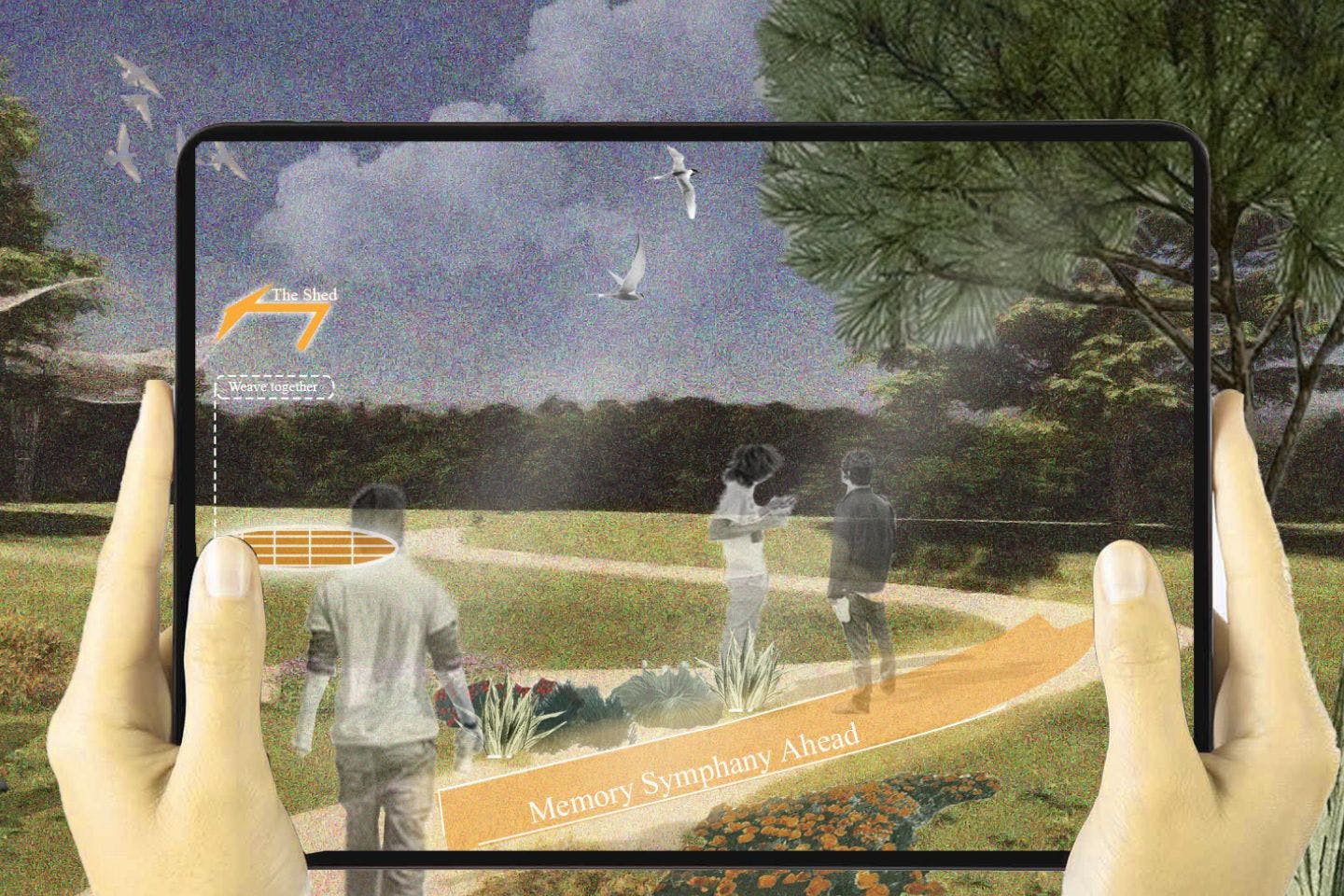
The Urban Landscape of Grief project explores the way the urban environment has influenced the expression of grief following the arrival of the COVID-19 epidemic. Viewing the cityscape as a layered canvas, it reflects on life's vibrancy but also serves as a manifestation of social interactions and customs related to death and remembrance. The collective grief brought about by COVID-19 has been largely confined to the private sphere and has never been publicly acknowledged since the lockdown ended. There are no commemorative sites dedicated to mourning the losses caused by the disease.
Grieving, a structured process rooted in early human civilizations, revolves around specific spaces, objects, and rituals. These rituals have multiple purposes and enable society to manage an overwhelming sense of loss. People often use informally chosen spaces as sites of commemoration, finding that existing environments are inadequate for that purpose.
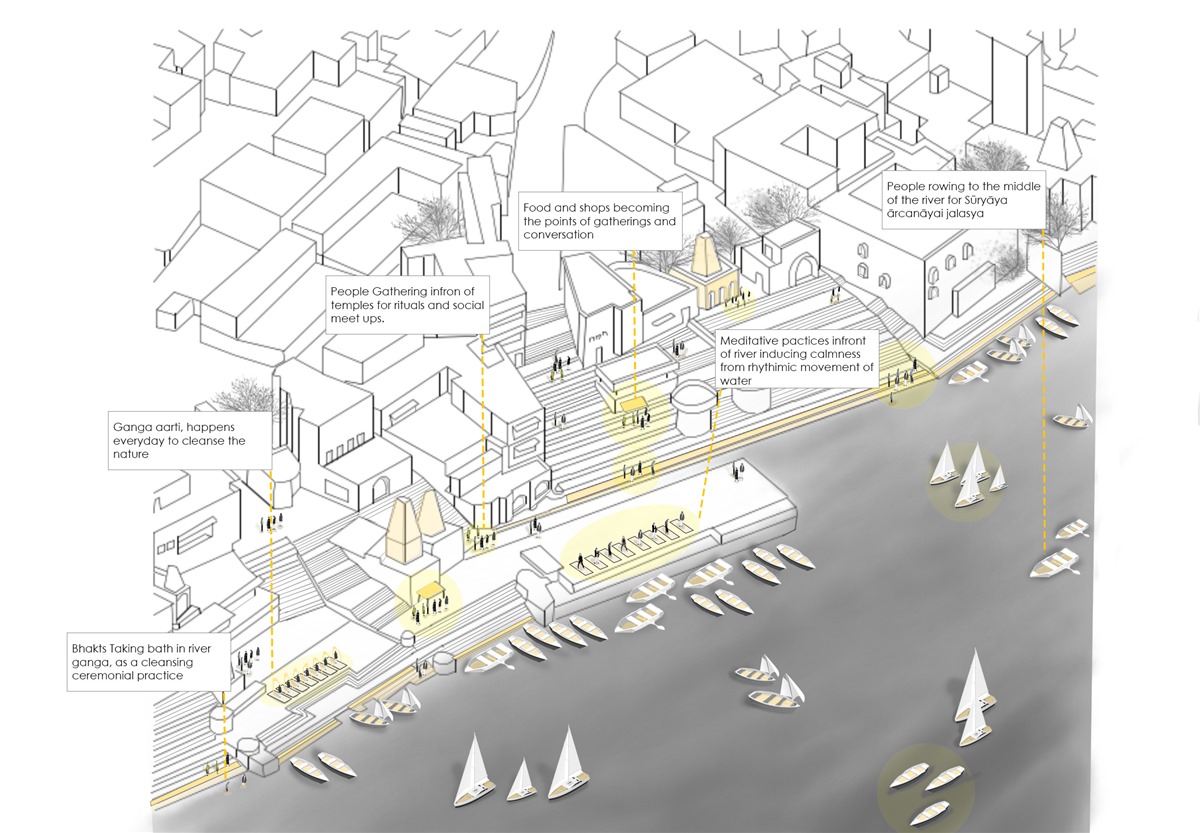
In this study, I examine the integral role played by place in the grieving journey and explore spatial aspects of mourning and loss. In my research, I investigated Hindu mourning sites such as Varanasi, probing their complex relationship to individuals' grief cycle. This exploration illuminates the interconnections between these spaces, rituals, and experiences and the process and emotional landscape of grief.