Annabelle Walsh
What's Shakin' on Shakedown Street: Dress, Identity Construction, and Meaning-Making in the Grateful Dead Vending Scene
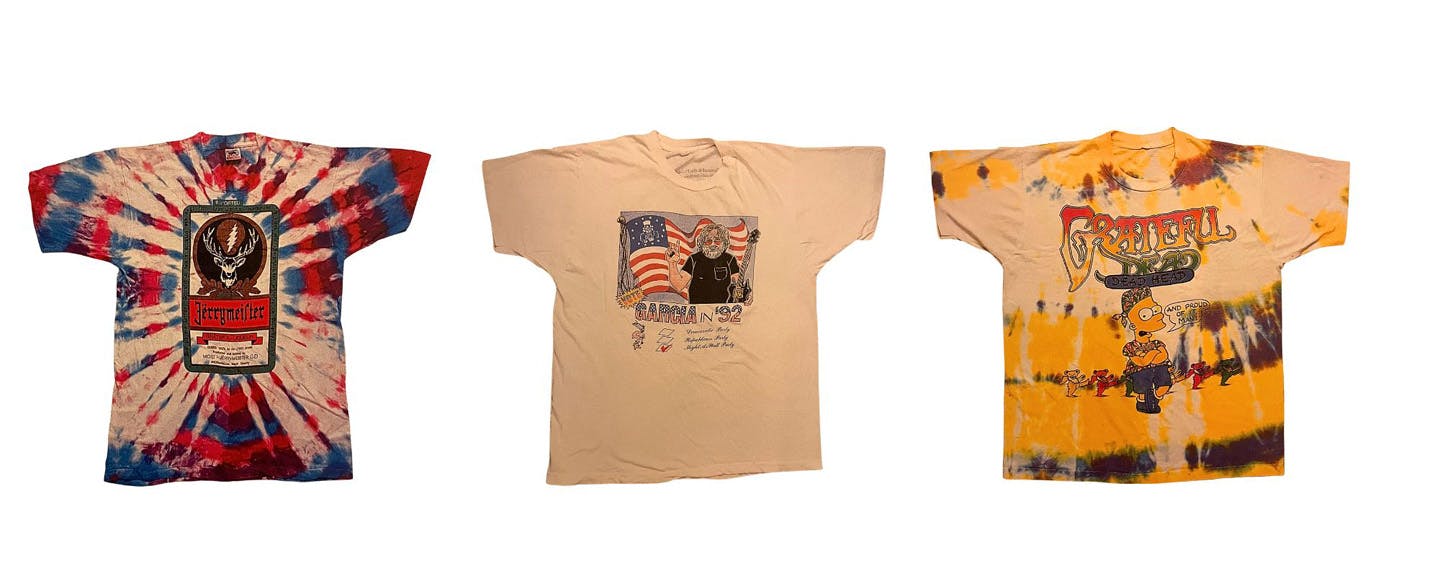
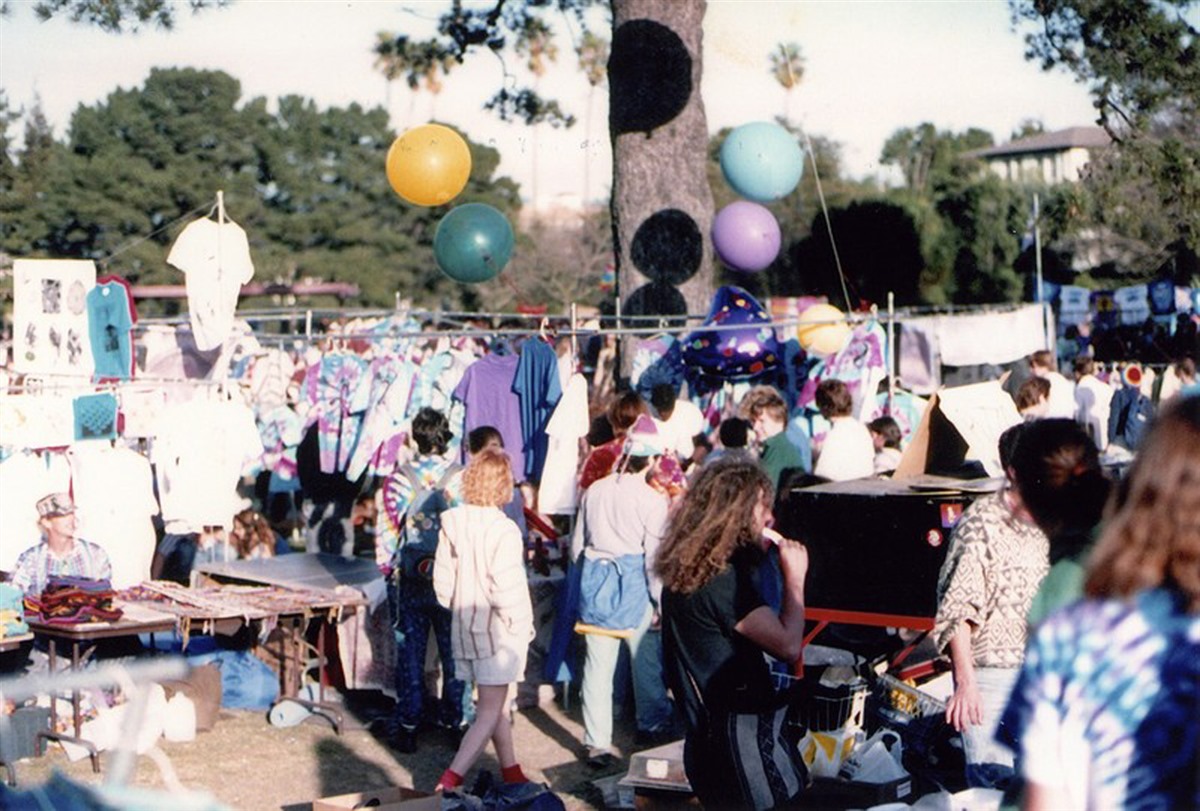
This thesis investigates the evolution of apparel vending and fan-made clothing within the Grateful Dead fan community, with a focus on the informal marketplace that emerged in parking lots outside concert venues. A critical focus of this research is the proliferation of vending activity after 1987, a phenomenon precipitated by the Grateful Dead’s unprecedented success following the release of their first and only top-ten single, "Touch of Grey.” This sudden mainstream recognition triggered significant shifts in the scene, resulting in negative media coverage and increased law enforcement intervention. These dynamics are mirrored in the aesthetic shifts in vendor apparel, with T-shirt artists progressively adopting more esoteric and parodical designs. In this thesis, I use the term "parody" to refer to the hijacking and subversion of mainstream symbols and texts, from corporate logos to cartoon characters, used on T-shirts designed by fans. Analyzing content published in three prominent fan zines—Relix, Golden Road, and Dupree’s Diamond News—in conjunction with the visual and textual imagery of parody t-shirts, I examine fans’ responses to the band's sudden mainstream exposure and the way these responses correlate with shifts in their material culture.
Given that parody is a mode of expression that often gains popularity during periods of transition, the proliferation of parody T-shirts is framed as a means by which Grateful Dead fans adapted to the instabilities of the post–"Touch of Grey" era (1987–1995). Rather than functioning as radical acts of dissent, parody T-shirts exemplify de Certeau's theory of adaptation as the foundation of popular resistance tactics, in which dominant systems, texts, and ideologies are employed rather than being rejected. I contend that embedding sociocultural commentary in fashion objects like T-shirts renders potential resistance obscure, ambiguous, and nearly imperceptible, allowing it to infiltrate spaces more overt forms of resistance cannot.
Annabelle Walsh
What's Shakin' on Shakedown Street: Dress, Identity Construction, and Meaning-Making in the Grateful Dead Vending Scene