Justin Lovell
He began searching for graduate programs and discovered that The New School was one of the few universities chosen by the Peace Corps as a partnering institution and offered the Paul D. Coverdell Fellowship Program for Returned Peace Corps Volunteers (RPCV).
Lovell says that he was intrigued both by the fellowship program and The New School for Social Research's hands-on coursework, which emphasizes real-world practice and impact. He applied that hands-on approach in many of the projects and collaborations he conducted with the MS Public and Urban Policy program. For example, his capstone project was an in-depth assessment of how the Planning Department of Ulster County, New York, could advocate for planning issues within a new county government structure. In the Urban Policy Lab, his team worked for the mayor of Kingston, New York, researching ways the city could start revitalizing its midtown neighborhood.
“This project got to the forefront of questions like what are federal funds and different funding options and how economic development works in a local government,” explains Lovell.
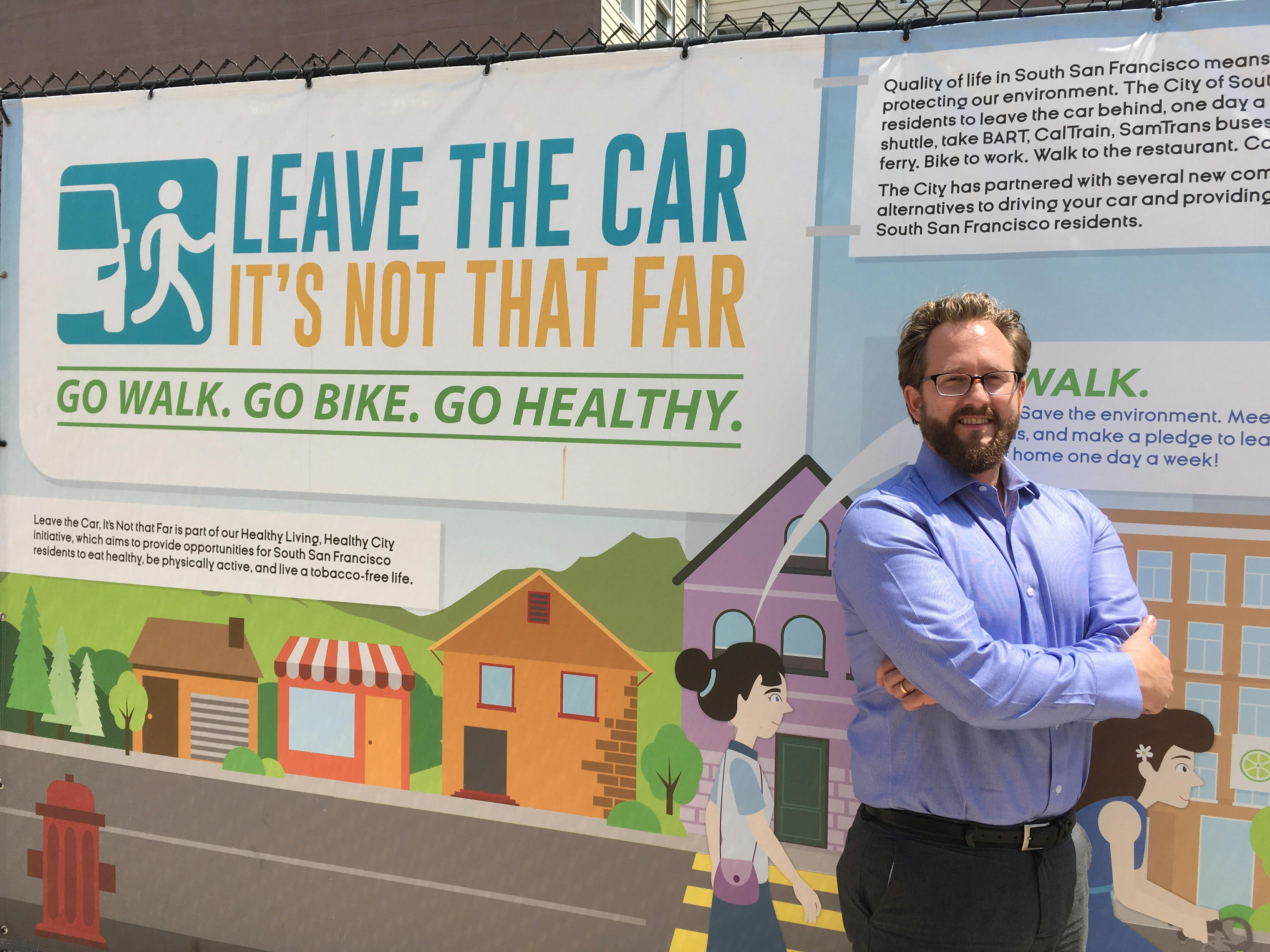
After graduating from The New School, Lovell started working with the City of South San Francisco as a financial analyst. Since then, Lovell has been promoted and is now the financial services manager, a position in which he oversees the citywide operating and capital improvement program budget and accounting functions including special projects. As he works through these projects, he says, he is applying the theories, values, and tools developed through his experiences at The New School.
“The two most important lessons I learned at The New School were, one, being able to take a policy with no prior knowledge, research it, and come up with recommendations while engaging in the dialogue of what is currently happening and thinking of how to stay at the forefront and, two, dealing with equity and social justice issues by providing effective policy solutions that are equitable and help a broader range of people,” he says.