Alexandra Bell: International Security
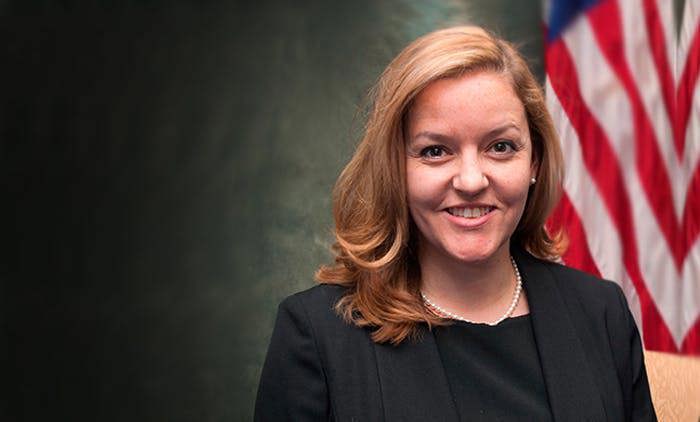
“I knew I wanted to pursue a degree that would allow me to focus on conflict and security issues. On a less academic note, I knew I wanted to study in New York. The New School's graduate programs in International Affairs allowed me to do both. The program provided a base of knowledge essential to pursuing a career in international security, while also giving me the freedom to explore my interests,” said Alexandra Bell, a New School alumna.
When asked what was the best part about being a student at The New
School, Alexandra replied, “The other students were the best part! So
many of my classmates are now doing amazing things around the country
and the world, and I am glad to call them friends.” Furthermore, she
added, “I was also a huge fan of the fact that the International Affairs
program wanted me to help shape my experience there. When I wanted to
spend the summer between my first and second year working at a media
outlet in Hong Kong, my professors helped facilitate that. When I wanted
to go in a slightly less common direction [for an international affairs student] and write my thesis about issues relating to biological weapons, my
professors supported me wholeheartedly. I don’t know if that would have
happened at every school.”
After graduating from The New School in 2006, Alexandra served in a variety of positions: as a nuclear policy research assistant at
the Center for American Progress, a project manager at the Ploughshares
Fund, and a public and congressional affairs advisor in the Department of
State Bureau of Arms Control, Verification and Compliance. She is now the director for Strategic Outreach in the Office of the Under
Secretary for Arms Control and International Security at the Department
of State.