Site-Specific Creativity
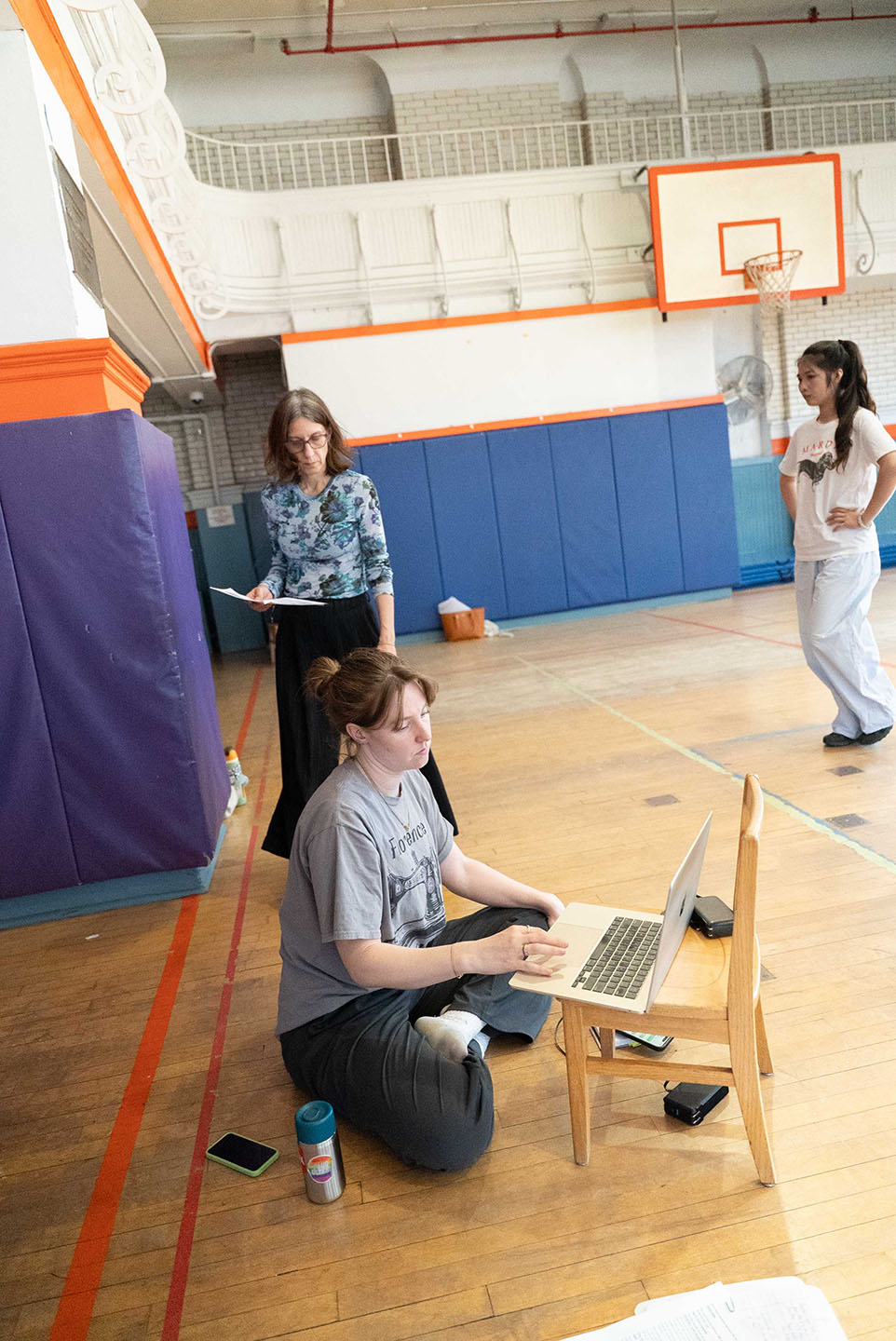
Old floors creak beneath performers’ feet. Moments overlap and bleed into one another as the shape of a piece emerges in real time. A door opens, then slams shut. The city leaks in. In an old gymnasium on the Lower East Side, sunlight spills through barred windows as a group of students from The New School’s MFA Contemporary Theatre and Performance program rehearse a site-specific theater piece.
They move between scenes: an English class for new arrivals, young girls learning to cook, a basketball game once played out on this very floor. These scenes are part of the performance, drawn from the life of the building and layered onto the space itself.
That space—soon to become their stage—is University Settlement, one of the oldest settlement houses in the United States. Founded in the late 19th century, it served newly arrived immigrants—primarily Jewish and other Eastern European families—offering education, social services, and community programming, including kindergartens, public baths, libraries, and cultural assimilation classes. The gym, one of the oldest of its kind in New York, has been a place of gathering, movement, and adaptation for generations.
Now it holds something else.
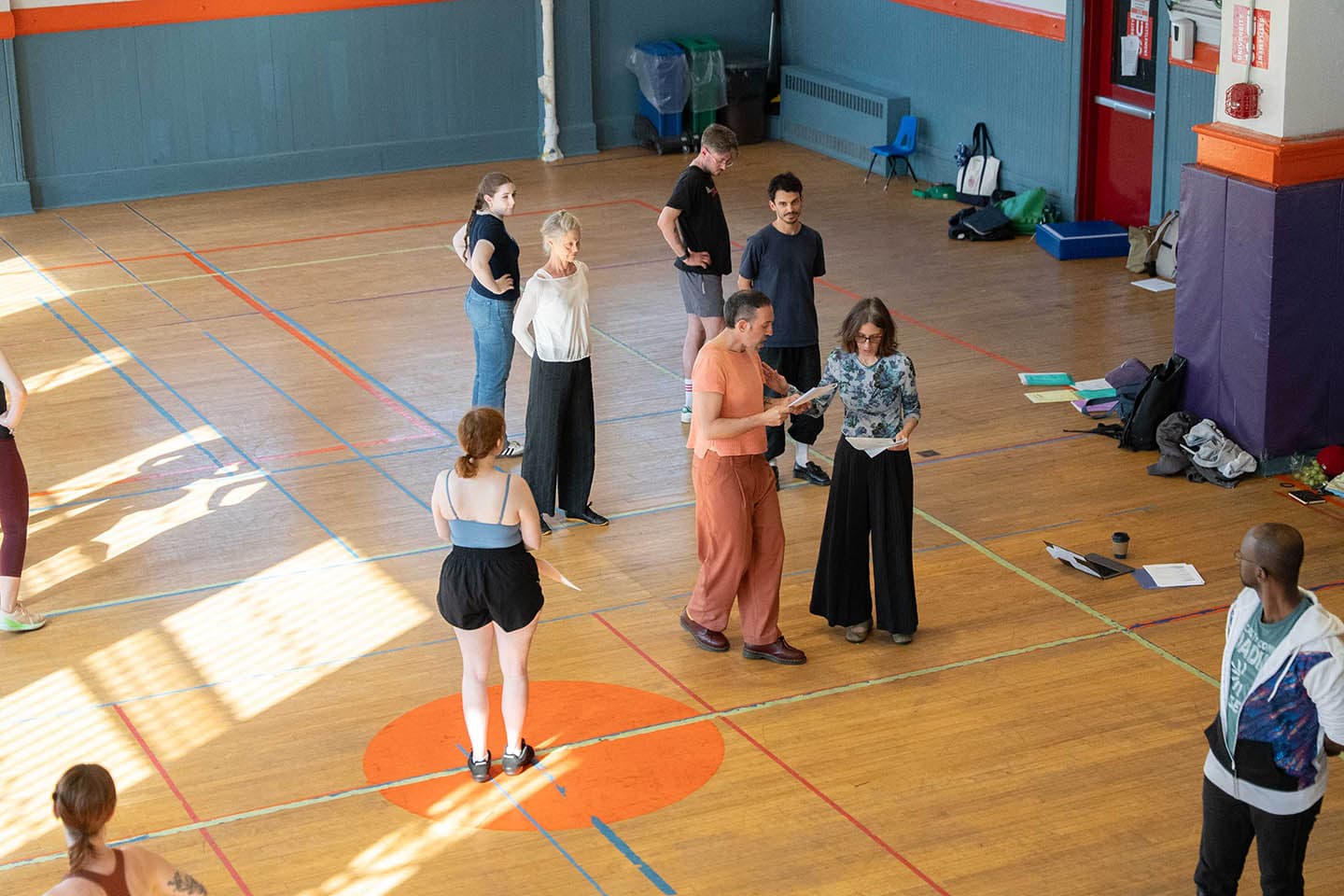
The MFA students are building a performance that doesn’t just take place in the building but comes from it. This work is part of a course called Project: Site Specific, led by award-winning theater director and School of Drama professor Irina Kruzhilina. It begins without a script, without a stage, and without the usual boundaries that separate theater from the world around it.
Four students serve as hosts, guiding the audience through moments in the settlement house’s history. The rest take on roles inspired by immigrants who once passed through the space, representing points along a timeline and carrying fragments of story, memory, and gesture. The ensemble—a mix of first- and second-year MFA students—builds the piece collectively from the ground up. “How you’re going to tell 140 years of stories I’m not sure yet,” Kruzhilina says. “And we will find different ways.”
Those stories are not invented; they are uncovered. Early in the semester, students worked with archival materials from the University Settlement, much of it preserved on microfilm. Boxes of records—letters, reports, remnants of daily life—trace the experiences of immigrants who passed through the building more than a century ago. Excerpts of those records appear verbatim in the performance or are translated into movement and gesture.
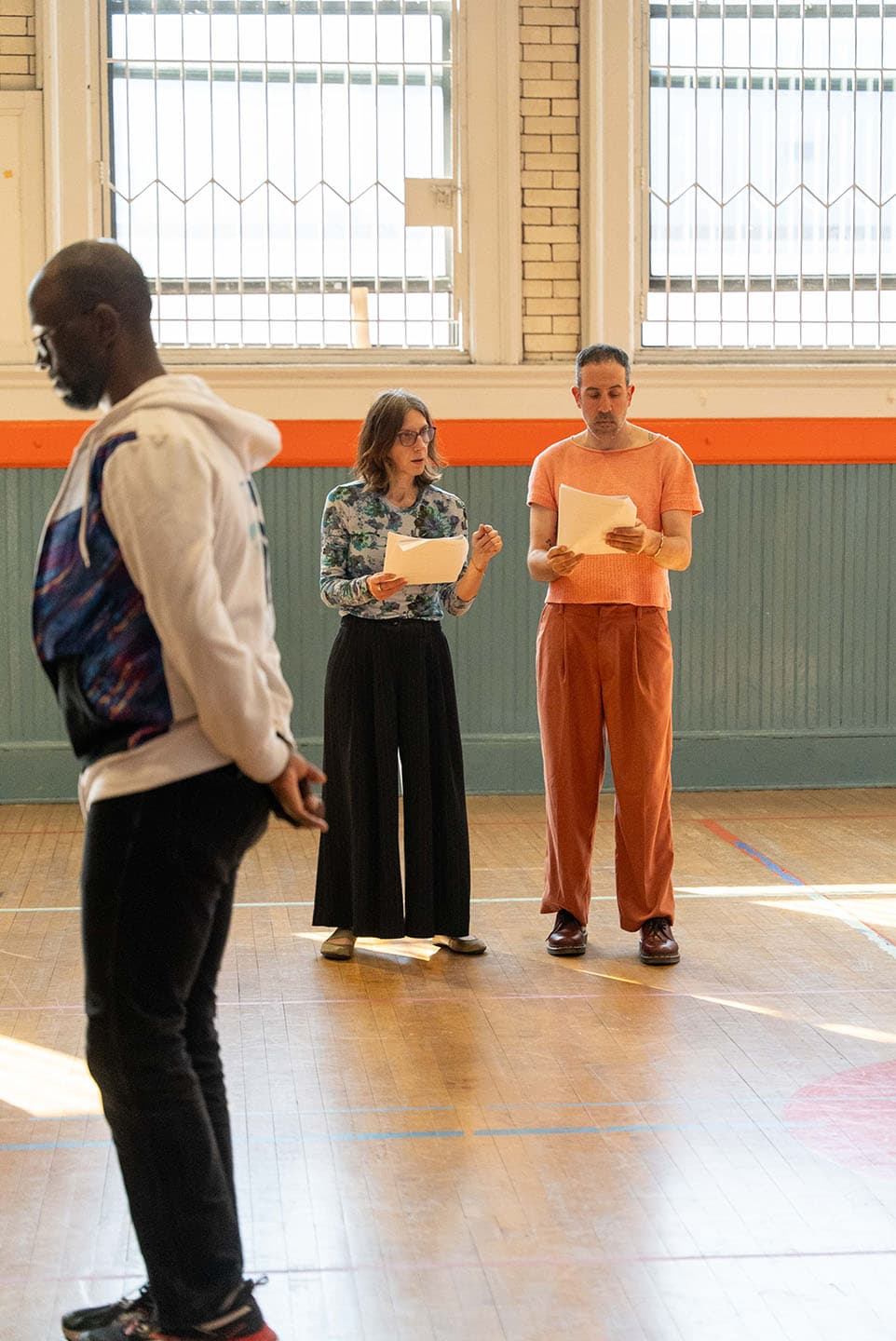
Interwoven scenes unfold, guided by the student hosts. The sound of children playing carries between floors. Pipes clang. Life continues around the rehearsal, not outside of it. Kruzhilina steers the process with a steady yet light hand. During one sequence, she stops the group, saying, “The whole thing is a dance. Find a graceful way to get there.”
“When we started the MFA program, we were thinking where and what and how we can create performance,” Kruzhilina says. “The idea was to offer students one course where they get a chance to create a performance outside of a traditional theater building.”
There’s an ease to the process, a sense of play and exploration. But at times, the space pushes back. It is not a theater—it’s a working building. The limitations are real. The gym is large, but access is narrow; the audience is limited to around 40 people. That number includes community members, whose presence, for Kruzhilina, is essential, especially as the settlement house marks its 140th year. The performance is as much for those who inhabit the space now as it is for anyone else.
There is no lighting grid, no clear place to hang lights, only a few power outlets upstairs, forcing the students to improvise. Yet such challenges—projection, acoustics, sight lines—shape the work, creating a sense of immediacy that can’t be designed. The past does not feel staged here. It feels present, intermingling with the life of the building now.
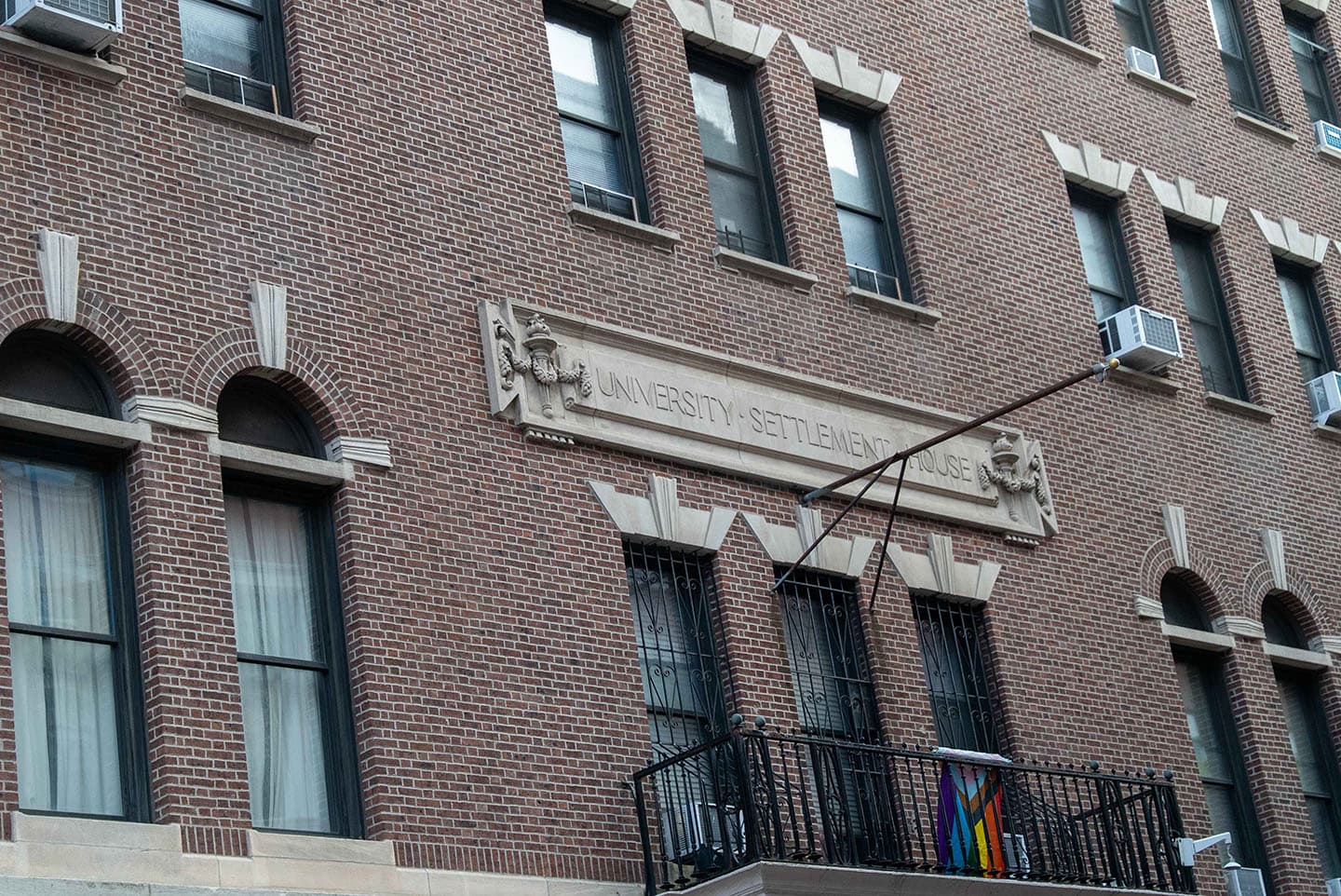
According to Leslie Martinez, a second-year MFA student, the way Kruzhilina’s mind works is a bit of a mystery; it is also part of what makes this process and course so compelling. Sitting in the wings during a rehearsal break, Martinez reflects on the experience. She has worked in nontraditional theater spaces before but has never participated in a site-specific performance. “What’s exciting about working in this space is the variables—all of the things that you can’t expect,” she says. “The space is beautiful. Being in the gym is fun. It’s very childlike.”
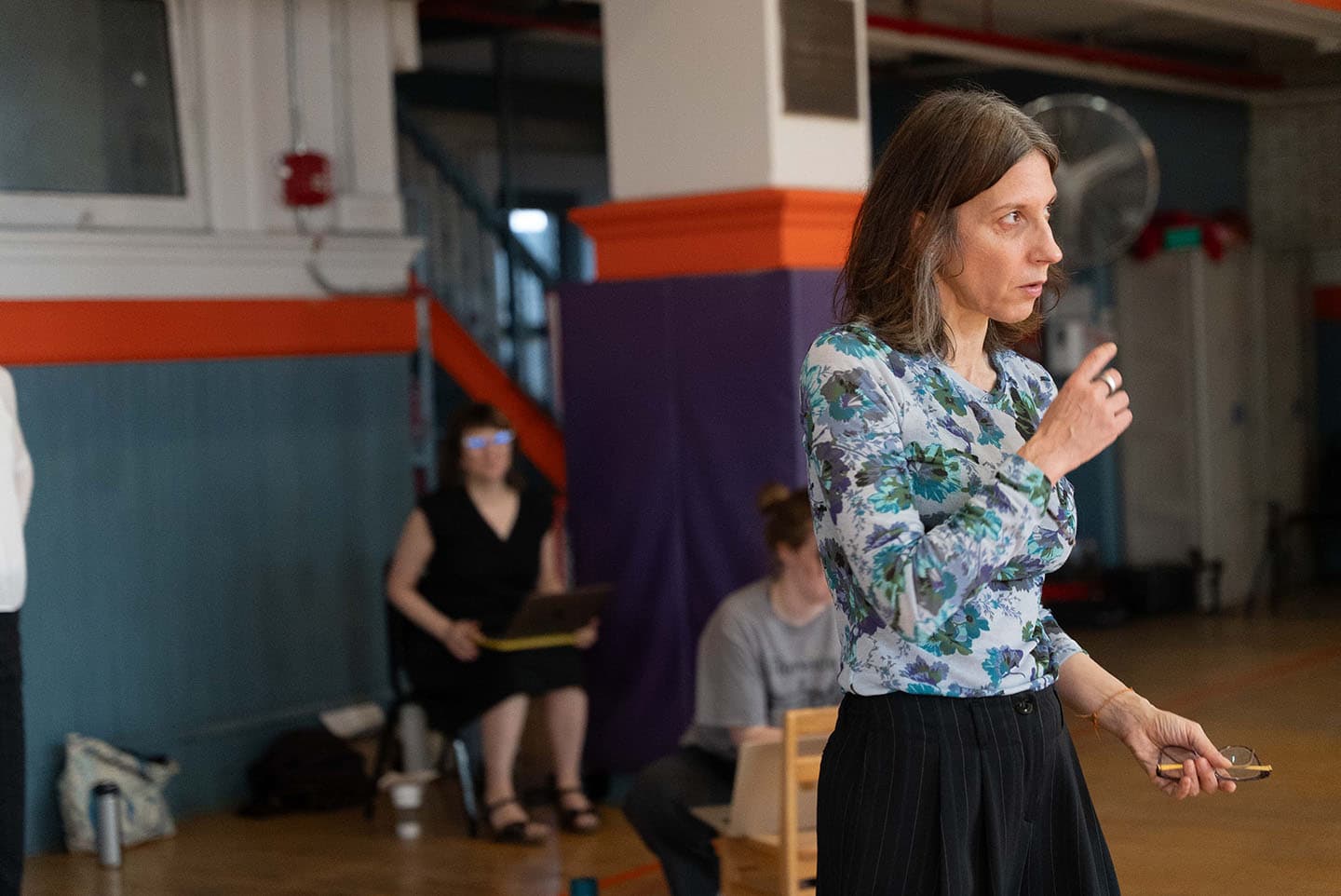
“What does it mean to share in our time?” Kruzhilina asks. “What does it mean to take care of one another? That’s what I want audiences to leave with.” And in a place like this one, meaning is never abstract. It lives in the walls, in the sounds, in the movement of people passing through. Theater doesn’t need to create a world here. It only needs to listen and respond.