NEW SCHOOL, UMICH PSYCHOLOGISTS: RELIGION IS A POTENT FORCE FOR COOPERATION AND CONFLICT
|
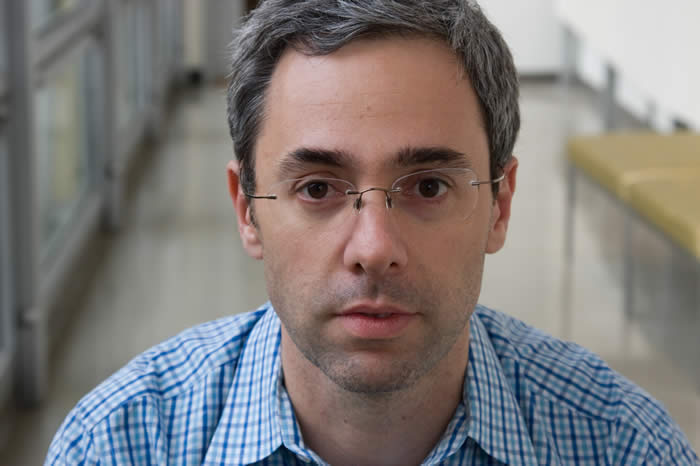
"Moralizing gods, emerging over the last few millennia, have enabled large-scale cooperation and sociopolitical conquest even without war," said Jeremy Ginges, a psychologist at The New School for Social Research in New York, who co-authored the article with University of Michigan anthropologist Scott Atran. "Sacred values sustain intractable conflicts like those between the Israelis and the Palestinians that defy rational, business-like negotiation. But they also provide surprising opportunities for resolution." Ginges and Atran identify what they call the "backfire effect," which dooms many efforts to broker peace. In many studies that Ginges and Atran carried out with colleagues in Palestine, Israel, Iran, India, Indonesia and Afghanistan, they found that offers of money or other material incentives to compromise sacred values increased anger and opposition to a deal. "In a 2010 study, Iranians who regarded Iran's right to a nuclear program as a sacred value more violently opposed sacrificing Iran's nuclear program for conflict-resolution deals involving substantial economic aid, or relaxation of sanctions, than the same deals without aid or sanctions," the researchers write. "In a 2005 study in the West Bank and Gaza, Palestinian refugees who held their 'right of return' to former homes in Israel as a sacred value more violently opposed abandoning this right for a Palestinian state plus substantial economic aid than the same peace deal without aid." The authors also discuss studies that show how group interests can be transformed into sacred values during times of conflict through their incorporation with religious ritual and sacred rhetoric. In one study conducted by Hammad Sheikh, a New School for Social Research graduate student working under the supervision of Ginges, participants primed with reminders of religious ritual were more likely to consider political preferences to be non-negotiable. And in a longitudinal study, Palestinian adolescents who most frequently took part in religious ritual, and who saw Palestinians as being most threatened, were most likely to think of issues like the Palestinian "right of return" as sacred. Jeremy Ginges can be reached for interview at [email protected]. |
About The New School ### |
 |
COMMUNICATIONS AND EXTERNAL AFFAIRS |
| 79 Fifth Avenue, New York, NY 10003 www.newschool.edu |
PRESS RELEASE |
Media Contacts: Sam Biederman, |

|